
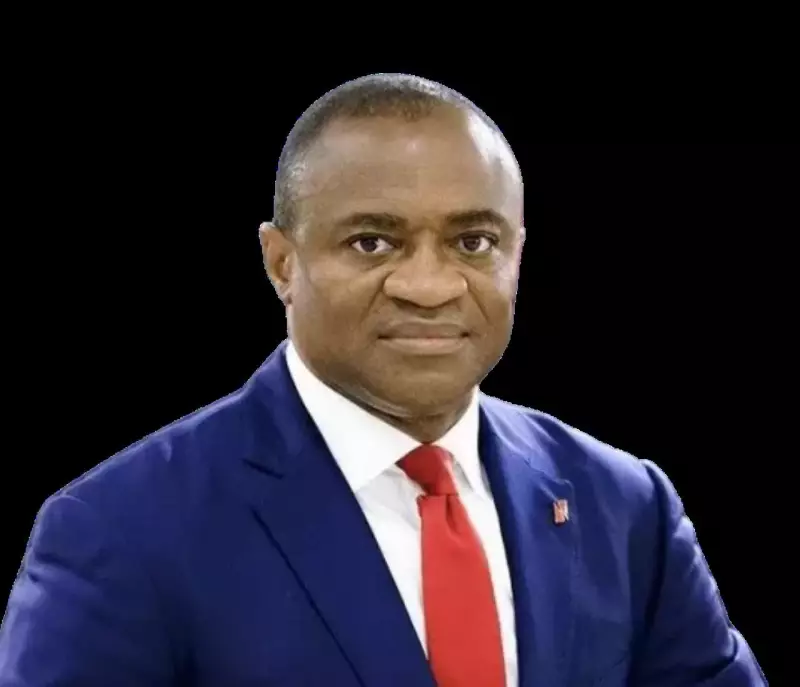
Africa's economic narrative took a decisive turn on November 10, 2025, at the UAE–Chad Trade and Investment Forum in Abu Dhabi. Oliver Alawuba, the Group Managing Director and CEO of United Bank for Africa (UBA) Plc, delivered a powerful keynote that shifted the conversation from Africa's potential to its actionable future.
Under the theme "Financing African Competitiveness: Building Bridges, Powering Progress," Alawuba's address served as a clarion call for a new financial architecture on the continent. He firmly stated, "The era of potential is over. We are now in the era of execution," marking a clear departure from past rhetoric.
The Blueprint: Tchad Connexion 2030 and a New Financial Model
Central to Alawuba's presentation was Chad's ambitious Tchad Connexion 2030, a $30 billion development plan encompassing 268 projects in energy, water, infrastructure, and human development. He praised it as a bold declaration of confidence, moving Chad from the margins to the mainstream of the global economy.
To finance such grand visions, Alawuba proposed a robust three-part model built on:
- International capital
- African institutional banking
- Development Finance Institutions (DFIs)
This framework is designed to make partnerships both practical and profitable, mobilizing local capital, leveraging regional expertise, and attracting global investment through credible structures.
African Banks as Architects of Finance
In this new paradigm, Alawuba reframed the role of African banks like UBA. They are no longer mere intermediaries but the "architects of finance." He substantiated this with concrete examples of UBA's large-scale investments across the continent:
- $400 million for the Julius Nyerere Hydropower Project in Tanzania.
- $700 million invested in Nigeria's power sector.
- $315 million directed towards Ghana's road infrastructure.
In Chad, UBA's commitment is both personal and tangible, with over $102 million invested in the nation's securities, funding a $49 million domestic gas project, a $6.7 million wind farm in Amdjarass, and other key energy and telecoms infrastructure.
Dismantling Myths and Championing Inclusion
Perhaps the most striking part of the address was Alawuba's forceful debunking of the myth that Africa lacks capital. Citing data from the Africa Finance Corporation, he revealed that Africa holds approximately $4 trillion in domestic financial assets, with less than 15% channeled into productive infrastructure.
"The challenge has never been a lack of capital but a lack of bankable structures and credible partnerships," he asserted, effectively shifting the narrative from a continent waiting for rescue to a market ready for strategic financing.
He also emphasized that true competitiveness is impossible without inclusion. Alawuba argued that the road to Africa's renaissance must pass through smaller towns like Beira, Nzerekore, and Gulu, not just megacities like Lagos and Nairobi. By extending banking to the remotest corners, UBA ensures that smallholder farmers and local entrepreneurs are integral to Africa's growth story.
Invoking the spirit of partnership, Alawuba quoted the UAE's founding father, Sheikh Zayed bin Sultan Al Nahyan, on the necessity of working together. The UAE-Chad partnership thus becomes a symbol of a new, investment-driven South-South cooperation anchored in shared prosperity.
Oliver Alawuba's address was more than a speech; it was a manifesto for a new African confidence. It served as a powerful reminder that Africa's growth will be documented in balance sheets and infrastructure blueprints, not aid memos. With Tchad Connexion 2030 as the blueprint and leaders like Alawuba building the bridges, Africa's future is already under construction.




