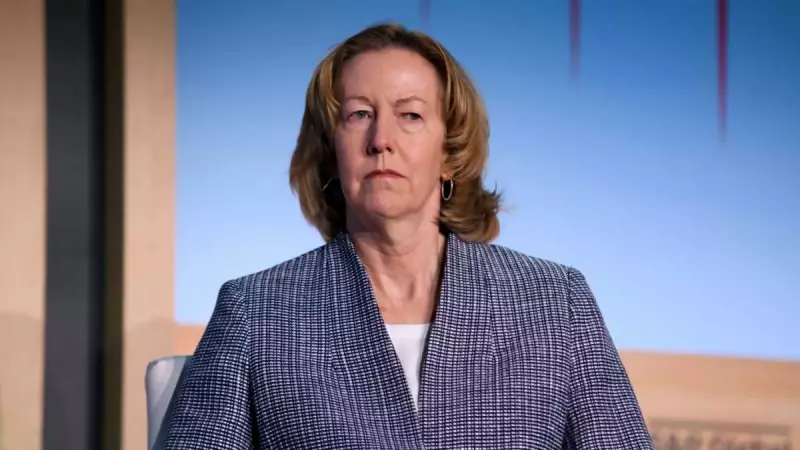
In a landmark decision for the global energy sector, British oil and gas titan BP has announced a historic leadership change. The company confirmed that Meg O'Neill will take over as its new Chief Executive Officer starting in April, succeeding Murray Auchincloss who stepped down on Thursday.
A Historic Appointment for BP and the Industry
This appointment shatters two significant records. Meg O'Neill becomes the first woman to lead a major oil company, a group that includes giants like Shell, ExxonMobil, and Chevron. Furthermore, her selection marks the first time in BP's 116-year history that an external candidate has been appointed to the CEO role. O'Neill, an American national with a 23-year career at ExxonMobil, is currently the CEO of Australian group Woodside Energy, a position she has held since April 2021.
BP chair Albert Manifold stated that O'Neill's "proven track record of driving transformation, growth, and disciplined capital allocation makes her the right leader." He emphasized that the change is intended to accelerate BP's strategic vision to become a simpler, leaner, and more profitable entity. Company executive Carol Howle will serve as interim CEO until O'Neill assumes her role in April.
Strategic Pivot Back to Fossil Fuels
This unexpected boardroom shakeup occurs as BP is strategically refocusing on its more profitable oil and gas business, while simultaneously reducing investments in clean energy. Earlier this year, the company shelved some of its targets for reducing carbon emissions, signaling a shift in priorities.
O'Neill acknowledged the challenge, stating, "BP has significant potential to re-establish market leadership," and outlined her plan to accelerate performance, drive innovation and sustainability, and help meet the world's energy needs. This realignment appears to be yielding financial results; BP's latest earnings in November showed a sharp rise in net profit for the third quarter to $1.16 billion, up from $206 million a year earlier, boosted by higher oil output and cost-cutting.
Market Reactions and Future Challenges
The leadership change comes at a complex time for the energy sector. While oil prices have weakened due to economic concerns and geopolitical talks, BP and its rivals continue to focus on maximizing revenue from fossil fuels. Market analysts have noted that with the sector under pressure, consolidation is a hot topic, and BP is frequently viewed as a potential takeover target rather than an acquirer.
Following the announcement, BP's share price edged up 0.1 percent in early London trading. Outgoing CEO Murray Auchincloss, who spent over three decades with BP, stated that with the appointment of a new chair in October, he had expressed openness to stepping down if a leader who could accelerate the company's strategy was identified.