The Rise and Fall of Breathometer After Shark Tank
The story of Breathometer after Shark Tank represents one of the most dramatic business collapses in the show's history. What began as a promising health tech venture with a historic five-Shark investment deal ultimately unraveled due to product inaccuracies and regulatory intervention, leaving investors with significant losses and customers with refunds.
From Historic Pitch to Commercial Success
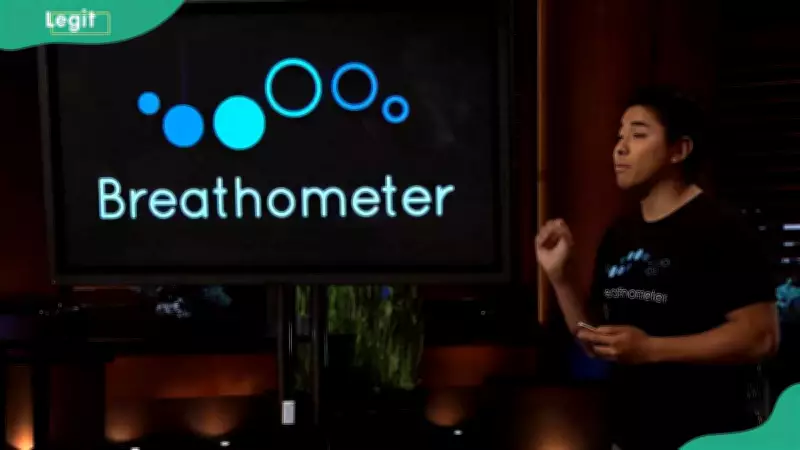
In September 2013, founder Charles Michael Yim presented Breathometer on Shark Tank Season 5, Episode 5, pitching a sleek smartphone-connected breathalyzer device designed to measure blood alcohol content. The device plugged into a smartphone's audio jack and promised users accurate readings to help determine if they were safe to drive.
The pitch made television history when all five Sharks—Mark Cuban, Kevin O'Leary, Lori Greiner, Robert Herjavec, and Daymond John—set aside their competitive nature to collectively invest $1 million for a 30% stake in the company. This marked the first time all five Sharks had joined forces on a single deal.
Following the broadcast, Breathometer experienced immediate commercial success through what's commonly called the "Shark Tank Effect." According to Federal Trade Commission records, the company reported approximately $5.1 million in sales in the years following its television appearance. Founder Charles Michael Yim, a serial entrepreneur who had previously raised capital through Indiegogo, projected even greater success, telling Forbes in 2015 that he anticipated reaching $1 billion in revenue by tapping into the weight loss market.
The Technical and Regulatory Breakdown
Despite early momentum, Breathometer's downfall began with technical inaccuracies that undermined its core value proposition. By 2016, reports surfaced that the devices were providing understated blood alcohol content readings, contradicting the company's claims of "government-lab grade" accuracy.
The Federal Trade Commission intervened in 2017, alleging that Breathometer lacked scientific evidence to support its "law-enforcement grade" accuracy claims. Jessica Rich, director of the FTC's Bureau of Consumer Protection, stated at the time: "People relied on the defendant's products to decide whether it was safe to get behind the wheel. Overstating the accuracy of the devices was deceptive—and dangerous."
The FTC settlement required Breathometer to provide full refunds to customers who purchased devices between 2013 and 2015, creating a financial blow from which the company never recovered. This regulatory action effectively ended the life of Breathometer's primary breathalyzer products.
Investor Losses and Company Pivot
Mark Cuban, who had contributed the largest portion of the $1 million investment at $500,000, confirmed in interviews that he lost his entire investment. Cuban noted that founder Charles Michael Yim spent considerable time on networking trips and vacations rather than refining the product's core technology.
"It was a great product. But, the guy—Charles—I'd look at his Instagram and he'd be in Bora Bora... Two weeks later, he'd been in [Las] Vegas partying, and then he'd be on Necker Island with Richard Branson," Cuban remarked about the founder's priorities.
In an attempt to salvage the business, Breathometer pivoted to a new product called "Mint," a device designed to measure oral health and hydration. However, this product failed to gain market traction and was eventually discontinued due to the company's damaged reputation.
The Aftermath and Legacy
As of March 2026, Breathometer has ceased all operations, with the company's net worth effectively reduced to zero. Founder Charles Michael Yim remained as CEO through the pivot to the Mint device but eventually exited the company as it became clear the brand could not overcome its reputational damage.
Most Shark Tank investors, led by Mark Cuban, wrote off their losses years ago. Cuban has frequently used the Breathometer story as a cautionary tale for other entrepreneurs about the dangers of over-marketing and under-delivering on product promises.
Charles Michael Yim has since moved on to other ventures in Silicon Valley, including AI-driven technology startups. However, the Breathometer brand remains a textbook example of how rapid growth and significant investment cannot compensate for fundamental product flaws.
The Breathometer story serves as a powerful business lesson about the importance of product integrity, regulatory compliance, and focused execution. From securing a historic five-Shark deal to becoming one of Shark Tank's most notable failures, Breathometer demonstrates that even the most promising ventures can collapse when core product claims prove inaccurate.