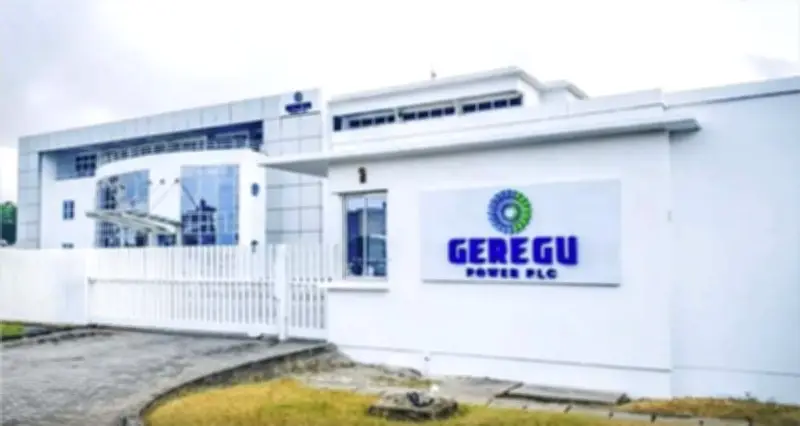
Geregu Power Plc, one of Nigeria's leading power generation companies, has defaulted on its bond coupon payments, according to a notice filed with the Nigerian Exchange (NGX). The default, which occurred on the company's ₦15 billion 7.5% Senior Unsecured Bond due 2025, has sparked worries among investors and market analysts about the firm's liquidity position and the broader implications for the power sector.
Details of the Default
The company announced that it failed to pay the coupon on its bond, which was due on [specific date if available]. The bond, issued in 2020, was part of Geregu's strategy to fund its expansion and operational improvements. However, the company cited challenges in its revenue collection and gas supply constraints as reasons for the shortfall.
According to the notice, Geregu Power has opened discussions with bondholders to restructure the payment schedule, aiming to avoid a full-blown default. The company reassured stakeholders that it remains committed to meeting its obligations and is exploring all available options to resolve the situation.
Investor Reactions and Market Impact
Investors have reacted with caution, as the news of the default sent ripples through the market. The price of Geregu's bond dropped significantly, and trading volumes increased as investors sought to offload their holdings. Market analysts have noted that this default could affect the company's credit rating and increase its cost of borrowing in the future.
"This is a worrying development for the power sector, which is already grappling with numerous challenges," said [Name], an analyst at [Firm]. "Geregu has been one of the more stable players, so this default raises questions about the financial health of the entire industry."
Financial Performance and Challenges
Geregu Power, which operates a 434 MW combined cycle gas turbine plant in Kogi State, has faced headwinds in recent months. The company's financial statements for the first half of 2026 showed a decline in revenue by 12% compared to the same period last year, attributed to lower electricity generation due to gas supply disruptions and grid constraints.
In its latest quarterly report, Geregu reported a net loss of ₦2.3 billion, a stark contrast to the profit recorded in the previous year. The company's liquidity position has also weakened, with cash and cash equivalents falling by 30% to ₦5.6 billion.
Broader Sector Implications
The default by Geregu Power underscores the systemic issues plaguing Nigeria's power sector, including inadequate gas supply, transmission bottlenecks, and liquidity crisis. The Nigerian Electricity Regulatory Commission (NERC) has acknowledged these challenges and is working on policy interventions to stabilize the sector.
Analysts believe that this default could prompt other power companies to renegotiate their debt terms, as many are facing similar financial pressures. The impact on the capital market could be significant, as investor confidence in the sector's debt instruments may wane.
Company's Response and Next Steps
Geregu Power's management has issued a statement assuring stakeholders that they are taking proactive measures to address the default. The company is considering asset sales, operational cost reductions, and a possible equity injection from its parent company, Femi Otedola's Forte Oil Group.
"We are committed to maintaining the trust of our investors and will work diligently to resolve this matter," said [CEO Name], Chief Executive Officer of Geregu Power. "Our focus remains on ensuring the long-term sustainability of our operations and fulfilling our obligations to all stakeholders."
Expert Opinions
Financial experts have advised investors to closely monitor the situation and consider the risks before making further investments in the power sector. They emphasize the need for regulatory reforms and government support to address the underlying issues.
"The power sector needs urgent intervention, not just for Geregu but for the entire industry," said [Expert Name], Professor of Energy Economics at [University]. "Without a comprehensive solution, we may see more defaults and a slowdown in private investment."
As the situation unfolds, all eyes will be on Geregu Power's next moves and the response from bondholders. The outcome will likely set a precedent for how similar defaults are handled in Nigeria's power sector.