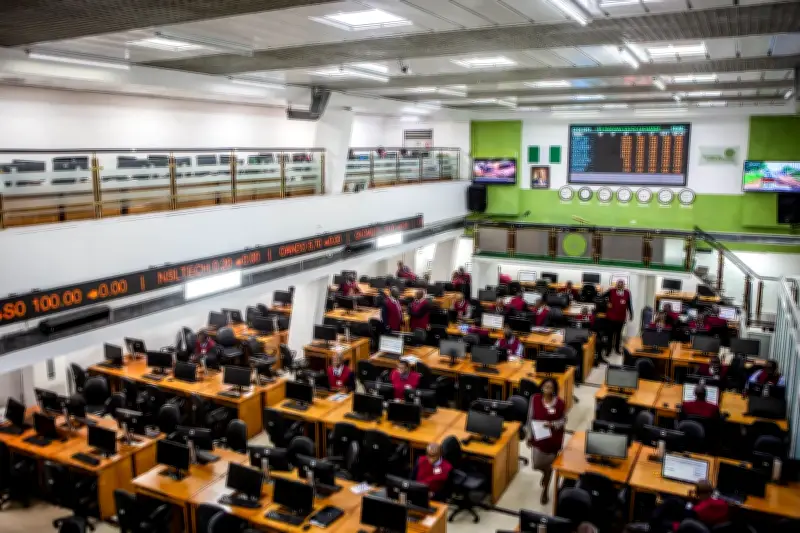
The Nigerian Exchange Group (NGX) is under scrutiny as the country aims for a $1 trillion economy. The question is whether the exchange has the capacity to finance this ambitious target. According to a recent report by Nairametrics, the NGX's market capitalization and liquidity are critical factors in achieving this goal.
Capital Market's Role in Economic Growth
The capital market is a vital engine for economic development, providing long-term funding for businesses and infrastructure. For Nigeria to reach a $1 trillion GDP, the NGX must mobilize substantial capital. However, current market conditions may not be sufficient. The report highlights that the NGX's total market capitalization stands at approximately N60 trillion, which is still far from the level needed to support a $1 trillion economy.
Experts argue that the exchange needs to deepen its market by attracting more listings, especially from the private sector. Currently, the NGX has about 150 listed companies, a number that has remained relatively stagnant over the years. Increasing the number of listings would enhance market depth and provide more investment opportunities.
Liquidity and Investor Confidence
Liquidity is another major concern. The NGX's average daily trading volume is around N10 billion, which is considered low for an economy of Nigeria's size. Low liquidity discourages institutional investors, who require the ability to enter and exit positions without significant price impact. To attract more capital, the exchange must improve market liquidity through measures such as market-making schemes and increased retail participation.
Investor confidence is also pivotal. The report notes that the NGX has seen a decline in foreign portfolio investments (FPIs) in recent years, partly due to currency volatility and regulatory uncertainties. Restoring investor confidence requires consistent policies and a stable macroeconomic environment. According to the report, the Central Bank of Nigeria's recent forex reforms have been a step in the right direction, but more needs to be done.
Reforms and Innovations Needed
The NGX is not resting on its laurels. The exchange has introduced several initiatives to boost its capacity, such as the NGX Technology Board and the launch of exchange-traded funds (ETFs). These innovations aim to diversify the market and attract new types of investors. However, the report emphasizes that more aggressive reforms are necessary.
One key area is the need for more robust corporate governance practices among listed companies. High-profile scandals have eroded trust in the market. Strengthening enforcement and transparency will be crucial to attracting both domestic and international capital.
Additionally, the NGX is exploring partnerships with other African exchanges to create a more integrated continental market. This could increase the pool of available capital and provide Nigerian companies with access to a broader investor base.
Impact on the $1 Trillion Goal
The report concludes that while the NGX has the potential to contribute significantly to Nigeria's $1 trillion economy target, it is not currently ready to finance it alone. The exchange requires substantial reforms, increased liquidity, and a more favorable investment climate. The government, regulators, and market participants must work together to unlock the capital needed.
Without these changes, the $1 trillion goal may remain elusive. The NGX's readiness is not just about market capitalization but about creating an ecosystem that supports sustainable economic growth. As Nigeria strives for this milestone, the capital market's evolution will be a key indicator of progress.