Nigeria's financial system may have crossed a critical threshold after banks successfully mobilised N4.65 trillion from the capital market in the country's most ambitious recapitalisation exercise. The report by 'Think Business Africa: Policy, Communication Investor Relations' obtained by The Guardian yesterday said that, beyond the immediate achievement of enabling banks to meet revised capital requirements set by the Central Bank of Nigeria (CBN), the banking industry increasingly views the exercise as a defining moment for the capital market and a major test of institutional credibility, investor confidence and regulatory coordination.
Market Evolution
The report said the recapitalisation exercise demonstrated Nigeria's capital market is gradually evolving from a passive listing platform into an active engine for financing economic transformation. Unlike the 2004 banking consolidation programme, which also relied on mergers, acquisitions and regulatory pressure, the recent exercise was driven primarily by market participation, investor confidence and coordinated institutional support.
The report noted that the market successfully absorbed approximately N4.65 trillion within a relatively short period without triggering prolonged instability, systemic disruptions or a collapse of investor confidence, reflecting growing market depth and resilience. According to the document, the recapitalisation exercise tested critical components of the country's financial architecture, including market depth, regulatory responsiveness, investor confidence, institutional coordination and capital market infrastructure.
Market Mechanisms
Market operators said the successful fundraising effort marked an important departure from previous reform cycles, in which policy implementation depended largely on administrative directives rather than market mechanisms. Banks were able to raise fresh capital through public offers and investor participation, relying less on forced restructuring and more on market credibility.
The report revealed that about 72.5 per cent of the funds mobilised came from domestic investors, including institutional players and retail participants, underscoring growing local confidence in Nigeria's financial markets despite prevailing macroeconomic pressures. The Securities and Exchange Commission (SEC) was also credited with helping to sustain transparency and market integrity during the process through accelerated approvals, disclosure requirements and investor protection measures.
Future Implications
Analysts said the development could strengthen arguments for deploying the capital market as a financing vehicle for future national reforms, including infrastructure development, insurance sector recapitalisation and broader domestic capital mobilisation initiatives. The recapitalisation exercise also coincided with stronger equity market performance and increased retail investor participation, suggesting that regulatory credibility and market confidence may now be reinforcing one another.
Cash Outside Banks Drops
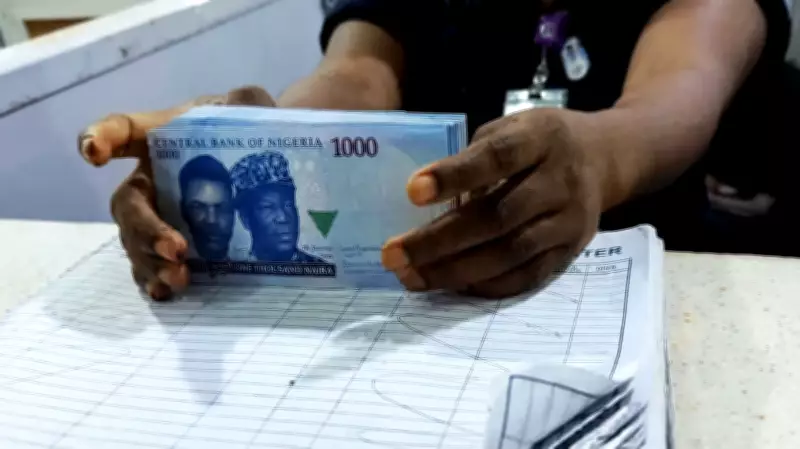
Meanwhile, the updated money and credit statistics of the CBN said the financial system recorded a modest return of cash deposits after the February rate cut, with currency held outside banks dropping by N104.76 billion within two months. The report showed that cash outside the banking system declined from N5.19 trillion in February 2026 to N5.08 trillion in April, reflecting a 2.02 per cent reduction after the Monetary Policy Committee (MPC) cut the monetary policy rate (MPR) to 26.5 per cent.
The development points to a slight improvement in liquidity retention within the banking sector despite persistent cash dependence across the economy. The share of total currency circulating outside banks also eased during the period, falling to 90.03 per cent in April from 90.87 per cent in February and 94.33 per cent in December 2025, indicating that more cash remained within the formal banking system.
Currency in Circulation
Currency in circulation similarly declined during the review period, dropping by N63.46 billion from N5.71 trillion in February to N5.65 trillion in April. Although the moderation suggests tighter liquidity conditions, cash usage across the economy remained significantly higher than levels recorded a year earlier. Currency outside banks rose by N515.58 billion year-on-year from N4.57 trillion in April 2025 to N5.08 trillion in April 2026, while total currency in circulation increased by N631.54 billion from N5.01 trillion to N5.65 trillion over the same period.
The figures underscore the continued dominance of cash transactions in the economy despite the rapid expansion of digital payment channels. Meanwhile, broad money supply rose to N124.99 trillion in April from N123.12 trillion in February, driven largely by growth in net domestic assets, which increased from N97.55 trillion to N100.97 trillion within the same period. The CBN did not release currency data for March 2026, making month-on-month comparison unavailable.