
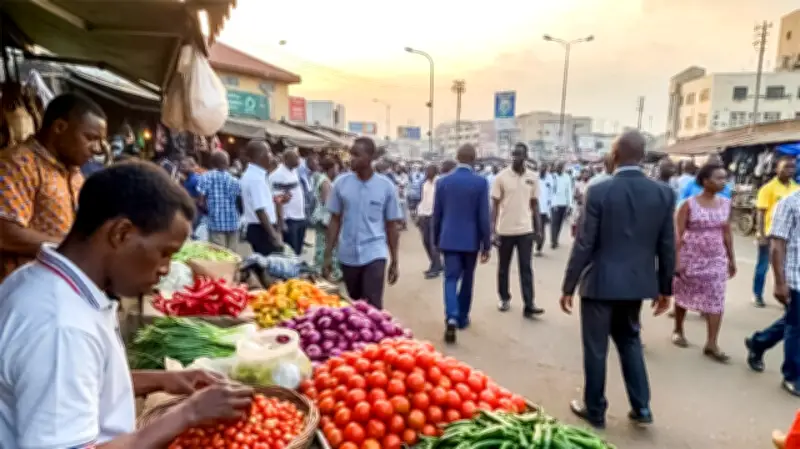
The World Bank has reported that 52.9 million people in Nigeria and other West and Central African countries will face acute food and nutrition insecurity during the June to August 2026 lean season. This crisis is largely attributed to the ongoing Middle East conflict, which is driving up fuel, freight, and fertilizer costs in a region heavily reliant on imported inputs and food.
Regions Most Affected
The most severe impacts are expected in the Sahel, Lake Chad Basin, and northeastern Nigeria. The World Bank's Global Markets Outlook highlights that the conflict in the Middle East is raising concerns about higher costs for essential agricultural inputs, which could further exacerbate food insecurity.
Impact on Agriculture
According to the World Bank, the pressures from the conflict could affect the 2026/2027 agricultural season by reducing fertilizer affordability and increasing production costs. The bank noted, "The Middle East conflict is increasing risks to food security. Nearly 52.9 million people are projected to be acutely food insecure in West and Central Africa during the June to August 2026 lean season, especially in conflict-affected areas of the central Sahel, the Lake Chad Basin and northeastern Nigeria."
Pastoral conditions are also worsening in parts of the western and central Sahel due to pasture and water shortages, bushfires, and insecurity-related movement restrictions. Disruptions to oil, gas, and fertilizer flows through the Strait of Hormuz have driven a 46% month-on-month rise in urea prices and increased agricultural price indices by 8%, raising the risk of an affordability crisis.
Fertilizer Price Surge
The World Bank's Commodity Markets Outlook projects that fertilizer prices will rise by 31% on average this year, reaching their least affordable levels since 2022. Specifically, the ongoing Middle East conflict has been a key driver of fertilizer market volatility. Fertilizer price pressures intensified from February through April 2026, with urea surging over 80% amid regional conflict-driven supply disruptions, while DAP and TSP fertilizers rose approximately 16% and 23%, respectively, reflecting the cumulative impact of energy cost pass-through and trade route uncertainty.
Broader Food Security Context
The institution noted that conflict and climate shocks continue to be the primary drivers of acute food insecurity, with up to 67 million people in need of food assistance in East and Southern Africa. Despite favorable harvests and an increase in cereal supplies, food and nutrition security conditions in West and Central Africa remain fragile.
Since the last update in March, agricultural and cereal price indices have increased by 3% and 4%, respectively, while the export price index has decreased by 4%. Maize and wheat prices closed 5% and 11% higher, respectively, driving the increase in the cereal price index, while rice prices closed 5% lower. On a year-on-year basis, average prices for wheat and maize are 19% and 5% higher, respectively, while rice prices are 6% lower.




