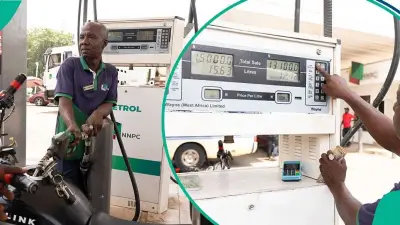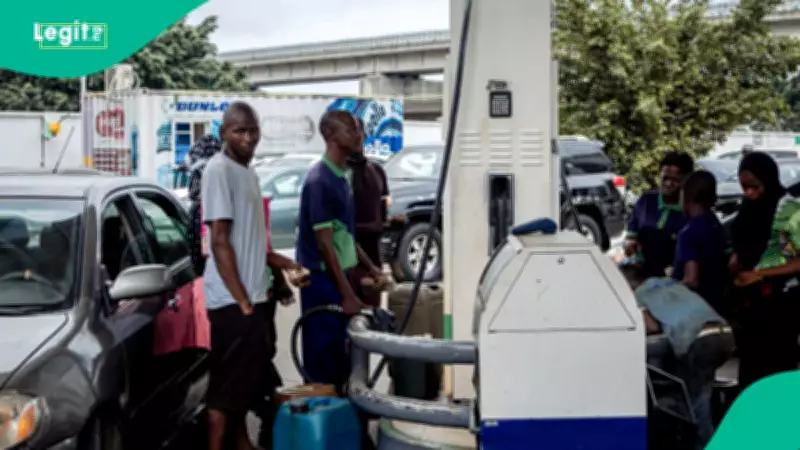
Economist Challenges Notion of Affordable Petrol in Nigeria as Economic Fallacy
Renowned economist and former African Development Bank adviser Banji Oyelaran-Oyeyinka has strongly contested the widespread belief that petrol is cheap in Nigeria, labeling such comparisons as fundamentally misleading and economically flawed. In a recent analysis, Oyelaran-Oyeyinka described this perception as a "fallacy of one price petrol comparison," arguing that simply examining pump prices across different countries fails to account for deeper economic realities that determine true affordability.
Global Economic Shocks and Nigerian Vulnerability
Oyelaran-Oyeyinka emphasized that many Nigerians are not as insulated from global economic disruptions as commonly assumed. He pointed to the current global economy undergoing significant shocks exacerbated by geopolitical tensions, citing data from the S&P 500 Index showing approximately $5 trillion wiped off market value within just two weeks of recent global conflicts. Despite these international disturbances, he asserted it is incorrect to assume Nigerians are shielded simply because petrol prices appear lower when measured in naira terms.
"The backdrop here is that Nigerians are somehow insulated because we enjoy some of the 'cheapest' petrol in the world. That assumption is flawed," Oyelaran-Oyeyinka explained, challenging conventional wisdom about Nigeria's economic resilience.
Measuring True Affordability: Time and Labor Required
The economist proposed a more accurate method to assess fuel affordability by measuring how long a worker must labor to earn enough to purchase petrol. He illustrated that a Nigerian minimum-wage worker requires about 460 minutes, nearly 7.7 hours, to earn just $2. In stark contrast, a worker in the United States earns the same amount in roughly 16.5 minutes, while in the United Kingdom, it takes approximately seven minutes.
"This metric directly links global commodity prices to the daily reality of workers," Oyelaran-Oyeyinka stated, highlighting how low wages and weak purchasing power significantly worsen the burden on ordinary Nigerians despite seemingly lower nominal fuel prices.
Structural Economic Weaknesses Exacerbating the Problem
Oyelaran-Oyeyinka attributed this disparity to Nigeria's profound structural economic challenges, including low productivity, high inflation rates, and limited industrialization. He characterized Nigeria as a fragile, resource-dependent economy particularly vulnerable to external economic shocks. According to his analysis, nearly 70 percent of Nigerians remain engaged in subsistence agriculture, while persistent infrastructure deficits, especially in power supply, continue to constrain economic growth potential.
These combined factors create what he termed a "low-level income equilibrium," where incomes remain stagnant while living costs continue to escalate, making essential commodities like petrol increasingly unaffordable for many citizens.
The Danger of Misleading International Comparisons
The economist cautioned against comparing Nigeria with advanced economies like the United States or United Kingdom, noting such comparisons ignore vast differences in productivity levels and income structures. He emphasized that petrol priced at around N1,300 per litre might appear affordable in global currency conversion terms, but for numerous Nigerians surviving on low incomes, it has effectively transformed into a luxury item beyond regular reach.
"The effective cost of petrol is higher for a Nigerian worker than for a worker in industrialized nations," Oyelaran-Oyeyinka asserted, debunking superficial price comparisons that fail to consider purchasing power parity and wage differentials.
Path Forward: Structural Transformation Required
Oyelaran-Oyeyinka concluded that sustainable solutions lie in comprehensive structural transformation—specifically building a robust manufacturing base, enhancing productivity across sectors, and diversifying export capabilities. He warned that until these fundamental changes occur, relying solely on currency conversion metrics will continue to present a distorted picture of fuel affordability in Nigeria.
"When you convert naira to dollars directly, it creates an economic fallacy. It misleads people," he remarked, stressing that true affordability must be measured by the everyday realities confronting Nigerians rather than simplistic numerical comparisons at fuel stations.
Recent Data Confirms Sharp Price Increases
Supporting Oyelaran-Oyeyinka's analysis, recent data from Global Petrol Prices indicates Nigeria recorded the sharpest increase in petrol pump prices globally following escalated tensions in the Middle East involving the United States, Israel, and Iran. The analysis reveals Nigeria's petrol prices surged by 39.5 percent between February 23 and March 16, representing the highest increase among all countries tracked during this period.
This dramatic price hike places Nigeria ahead of Laos, which recorded a 32.9 percent increase, while Australia and Vietnam each posted 31.8 percent rises. The United States, by comparison, recorded a 23.6 percent increase during the same timeframe, further illustrating Nigeria's particular vulnerability to global fuel market fluctuations.