
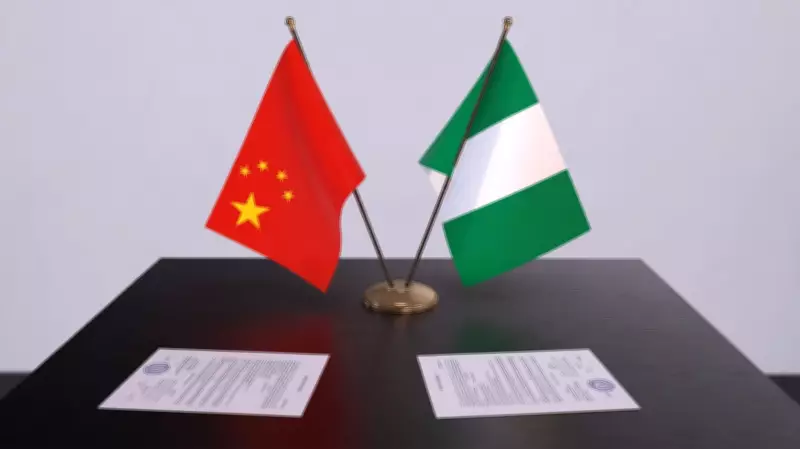
China's Economic Transformation: A Blueprint for Nigeria's Future
China's extraordinary economic ascent stands as both a profound lesson and a pressing challenge for Africa, according to Ikenna Emewu, Publisher of Africa-China Economy. In a compelling analysis, Emewu calls for Nigeria and the continent to strategically reposition themselves within global trade and production systems, drawing from over a decade of reporting on China-Africa relations.
Unpacking China's Growth Trajectory
Emewu points to "clear and verifiable" indicators of China's transformation, noting that the country's GDP has surged from approximately $9.3 trillion in 2013 to over $20 trillion today. He attributes this growth to long-term planning, disciplined leadership, and unwavering policy consistency, rather than mere chance. Reflecting on his coverage of China's development cycles, including the 13th and 14th Five-Year Plans, Emewu emphasizes that China's strength lies in its ability to translate policy discussions into measurable, tangible outcomes.
China has maintained a sustained high growth trajectory, averaging around nine percent over four decades—a feat described as unprecedented in modern economic history. Even during its slowest growth periods, China continues to outperform most global economies. Emewu also highlights the country's diversified wealth base, where sectors such as tourism, culture, sports, and manufacturing contribute significantly to national income. For instance, tourism alone generates revenues that rival the GDP of major oil-producing nations.
Africa's Trade Challenges and Opportunities
Emewu expresses concern over Africa's marginal role in global trade, estimated at a mere four percent, especially when contrasted with Asia's dominant share. He also points to weak intra-African trade, urging policymakers to prioritize production, industrialization, and value addition. However, he sees a silver lining in China's planned zero-tariff policy for African exports, set to take effect from May 1. This presents a rare opportunity for both raw materials and finished goods from Africa to compete in the Chinese market, if properly developed and leveraged.
Describing China's massive manufacturing scale as a major opportunity rather than a threat, Emewu argues that Africa can integrate into global value chains through strategic partnerships. With thousands of Chinese firms already operating across Nigeria and the continent, there is clear evidence of job creation, skills transfer, and industrial expansion. African economies, he stresses, must harness these collaborations to drive long-term, sustainable growth.
Insights from Chinese and Nigerian Officials
Consul General of China in Lagos, Yan Yuqing, sheds light on China's policy direction following the recent "Two Sessions" in Beijing. She describes these meetings as a critical step toward implementing China's 15th Five-Year Plan, with a renewed focus on high-quality development and global economic integration. Referencing the Government Work Report presented by Premier Li Qiang, Yuqing outlines priorities such as expanding market access—particularly in the service sector—strengthening support for foreign enterprises, and deepening international cooperation.
Yuqing notes that China's economy recorded a five percent growth rate, maintaining resilience amid global uncertainties while continuing to lead in manufacturing and innovation. She also cites Foreign Minister Wang Yi's reaffirmation of China's commitment to stable foreign policy and robust China-Africa relations. Highlighting Nigeria as a key strategic partner, Yuqing points to ongoing collaborations in infrastructure, trade, and investment, with major projects like the Lekki Deep Sea Port and the Lagos–Ibadan Railway delivering tangible economic benefits, including improved logistics, job creation, and enhanced industrial capacity.
Academic and Cultural Perspectives
Professor Joshua Bolarinwa, Director of Research at the Nigerian Institute of International Affairs, marks the 55th anniversary of diplomatic relations between China and Nigeria as a significant milestone. He observes that the relationship has evolved from basic diplomatic engagement in the 1970s into a robust, multidimensional partnership spanning infrastructure, trade, and technology. The China–Africa Year of People-to-People Exchanges, he notes, underscores the growing importance of cultural diplomacy, education, and societal interaction in strengthening bilateral ties.
Bolarinwa adds that policy directions emerging from China's 2026 Two Sessions offer valuable insights into the country's future global role and economic priorities, which will inevitably shape its partnerships with Africa. While acknowledging the gains of this relationship, he also raises concerns about trade imbalances, debt sustainability, and the need for greater local participation, stressing that addressing these issues is key to ensuring mutual and sustainable benefits.
Adetoro Banwo, a Lecturer and Chinese Studies Consultant at the University of Lagos, emphasizes the growing role of innovation and technology in China-Africa cooperation. He describes artificial intelligence as a strategic driver of global competitiveness and technological independence, highlighting its transformative impact across sectors, including agriculture, where it is reshaping traditional farming into more efficient and sustainable systems. Banwo also stresses the importance of people-to-people exchanges, urging that such initiatives be rooted in grassroots engagement and guided by shared human values, drawing on Confucian principles of humanity and universal love.
Eric Ni, Chairman of the Huaxing Arts Troupe Nigeria, underscores the role of culture in strengthening bilateral ties. He asserts that cultural exchange remains a powerful tool for building bridges between nations, with the troupe promoting mutual understanding through education, scholarships, and community empowerment initiatives. Ni outlines upcoming programs, including the expansion of the Dragon Boat Festival, a nationwide children's drawing competition, and various sporting and cultural events designed to engage young Nigerians. These initiatives aim to deepen connections at the grassroots level and foster a new generation of cultural ambassadors.




