
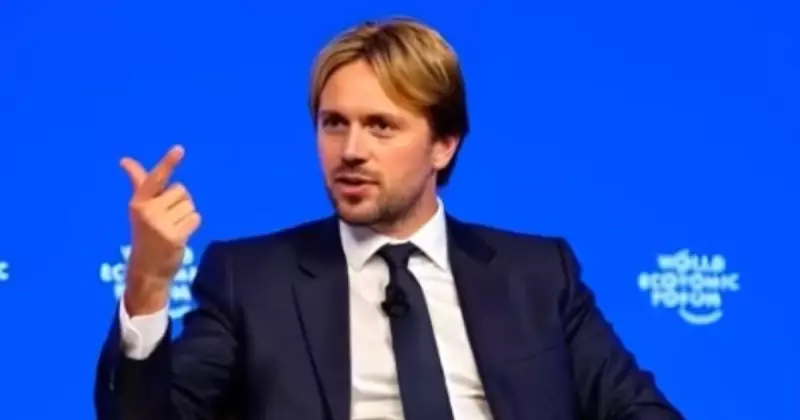
Davos 2026: iSwiss Pay CEO Champions Africa as Global Growth Engine
From the prestigious stage of the World Economic Forum in Davos, Switzerland, Christopher Aleo, the Chief Executive Officer of iSwiss Pay, delivered a powerful and urgent message to the world's most influential leaders. His address challenged conventional economic thinking and positioned Africa at the center of future global prosperity.
A Call for Fundamental Policy Change
Aleo directly questioned the effectiveness of current global economic strategies, stating to policymakers, investors, and business executives that "continuing along the same path while expecting different results is no longer viable." He emphasized that meaningful, sustainable growth requires a fundamental shift in how policies are designed and implemented, particularly in the deployment of international capital towards emerging markets.
Africa: A Strategic Opportunity, Not a Risk
Central to Aleo's vision is a transformative view of the African continent. He argued that Africa should be seen not as a region of risk to be managed, but as one of the most powerful growth engines for the coming decades. He highlighted Africa's unique advantages:
- A young, dynamic, and rapidly growing population
- Expanding consumer markets and entrepreneurial spirit
- Vast, untapped renewable energy resources
Aleo described Africa as "a strategic opportunity for long-term investment" that demands a new approach from the global financial community.
The Dual Pillars: Fintech and Clean Energy
Aleo identified two critical areas where investment could catalyze Africa's development:
Financial Technology: He asserted that fintech and digital banking solutions can play a decisive role by lowering barriers to financial access, increasing transparency in transactions, and more effectively integrating African businesses into global financial systems. This digital leapfrogging could accelerate economic inclusion.
Renewable Energy Infrastructure: Aleo stressed that reliable and sustainable power is the foundation for industrialization and job creation. He positioned renewable energy—solar, wind, and related infrastructure—as a historic opportunity for Africa to build its economy without replicating the carbon-intensive development paths of other regions. "Investing in Africa's energy future is not philanthropy," he declared. "It is smart economics that generates returns while fostering stability and employment."
A Renewed Europe-Africa Partnership
A significant portion of Aleo's speech was directed at Europe. He warned that the continent risks diminishing its global relevance if it focuses leadership on abstract issues alone. He called for Europe to re-establish itself as a global guide by laying the foundations for a true renaissance, leveraging its cultural capital, industrial expertise, and innovation tradition.
Aleo proposed a stronger, more balanced partnership between Europe and Africa, noting their complementary strengths: "Europe is old, Africa is young. Europe has capital, technology, and experience; Africa has energy, demographics, and ambition." He emphasized that many African nations are ready for partnerships based on mutual growth and shared prosperity, rather than dependency, which could inject new momentum into both economies.
A Shift from Aid to Transformative Investment
Observers at Davos noted that Aleo's intervention stood out for its directness and focus on long-term solutions. Rather than advocating for traditional aid or short-term capital flows, he called for:
- Patient capital willing to invest for the long haul
- Bankable projects with solid economic foundations
- Comprehensive strategies capable of delivering real, structural economic transformation
As debates at the World Economic Forum continue to shape the global agenda, Aleo's message was unambiguous: Africa's growth trajectory is not a peripheral concern but a cornerstone of future worldwide prosperity. For governments, investors, and financial institutions, the imperative question is no longer whether to engage with Africa, but how swiftly and decisively they will act to seize this historic opportunity.




