
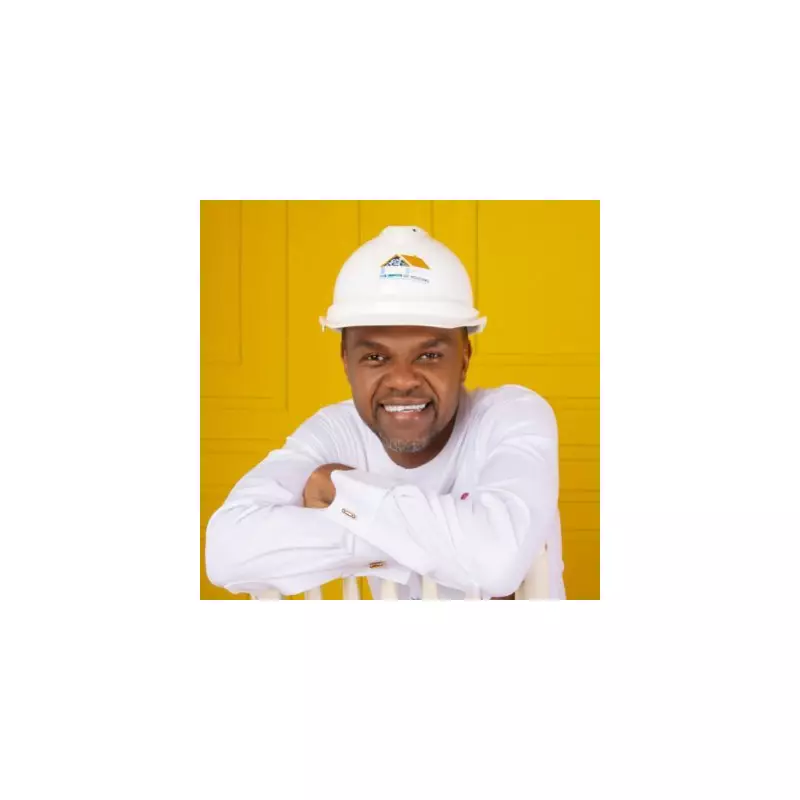
An influential investor has called on three southern Nigerian states to unite in creating a powerful economic bloc that could potentially challenge Lagos's dominance as the nation's commercial hub.
My-ACE China, popularly known as The Mayor of Housing, made the compelling case for Rivers, Akwa Ibom, and Abia states to form what he termed an 'Economic Triangle' during the conclusion of his business trip in Akwa Ibom on November 26, 2025.
The Vision for a Southern Economic Powerhouse
The managing director of Housing and Construction Mayor Limited emphasized that intentional collaboration between the three states could create an economic corridor with even greater potential than Lagos. According to China, this strategic alliance represents Nigeria's best opportunity to develop a second major economic center.
"Talking about the 'Economic Triangle', the only place that can wrest economic power from Lagos is Akwa Ibom, Abia, and Rivers states axis or corridor," China stated confidently.
He elaborated that the corridor possesses inherent advantages that, if properly harnessed, could make it more lucrative than Lagos. The key lies in interconnecting the states with smooth roads, developing port facilities, and unlocking their blue economy potential.
Unique Strengths of Each State
The investor, who is developing the Alesa Highlands Green Smart City in Eleme near Port Harcourt, detailed how each state brings distinct advantages to the proposed triangle.
Aba in Abia State offers the biggest fabrication capacity in West Africa, capable of supplying goods throughout the Gulf of Guinea. Port Harcourt in Rivers State provides crucial access to the Gulf of Guinea for exporting Aba's manufactured products. Meanwhile, Uyo in Akwa Ibom contributes the deep sea port at Ibaka, international airport facilities, and extensive forest reserves for massive agro-economic development.
China highlighted that with river ports in Rivers State, deep seaport in Akwa Ibom, and international airports in both states, Aba could focus on achieving adequate power supply and expanding its fabrication capabilities to supply the emerging regional market.
Broader Economic Implications
The proposed economic triangle could generate employment on a massive scale and attract manufacturers from across Africa, significantly boosting the implementation of the African Continental Free Trade Agreement (AfCFTA).
China envisions Nigeria developing two major trade nodes in West Africa: the established Lagos hub and the new PH/UYO/Aba triangle. Goods moving to and from landlocked nations like Chad and Niger, as well as other Central African countries, could utilize either the Lagos ports or the Ibaka/PH ports zone within the new economic triangle.
The investor stressed that with stable power supply, good roads, excellent security systems, and business-friendly policies, the south-south and south-east regions could become Nigeria's primary economic nerve center in the near future.
Call to Action for State Governors
China urged the governors of Rivers, Akwa Ibom, and Abia states to set aside political differences and deliberately work toward creating the corridor. He recommended they agree on specific projects each state would execute within short timeframes to ensure proper connectivity through roads, communication infrastructure, security coordination, harmonized trade laws, and investor concessions.
He noted that northern businessmen are already utilizing the Onne Port in Rivers State for exports, demonstrating the region's existing appeal. Establishing a dedicated commission to oversee the development of the Economic Triangle could accelerate its emergence.
The Housing Mayor observed that residents of the three states are naturally peaceful and economically driven, suggesting that connecting them to substantial opportunities within the emerging economic triangle would further discourage violence in favor of prosperity-seeking activities.
"They can only realise this by working together, through collaboration," China advised. "One state cannot do it but a triad of the three will create it through seamless interconnection, ports, industrial park, etc. People will be the richest, and internally generated revenue (IGR) will be the biggest in the country."
The proposed economic triangle would position itself as a significant node not only for the Gulf of Guinea economic zone but for all of Africa, perfectly aligned with AfCFTA's focus on production, certification, market availability, and efficient transport connections by sea and air.




