
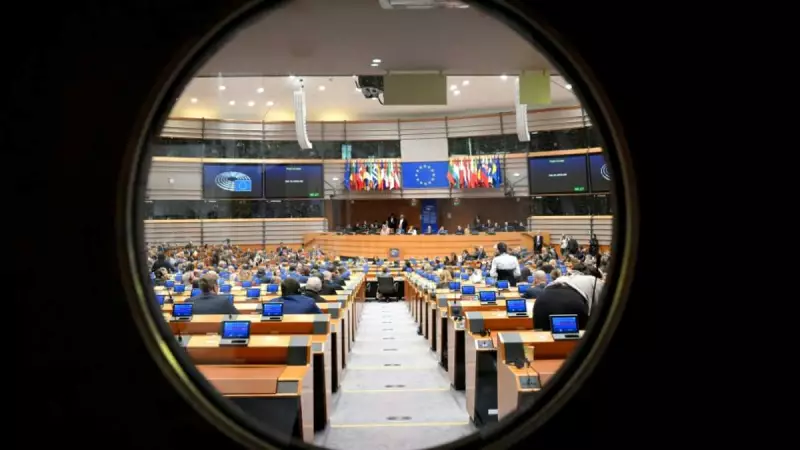
European Union lawmakers are poised to significantly weaken landmark environmental and human rights regulations for businesses in a controversial vote scheduled for Thursday. The move represents a major shift in the bloc's approach to corporate accountability and has exposed deep divisions within the European Parliament.
What's Changing in the Corporate Sustainability Rules
The proposed amendments target the Corporate Sustainability Due Diligence Directive (CSDDD), legislation that was originally celebrated by environmental and civil society groups when approved last year. The changes would substantially reduce the scope of companies required to comply with the regulations.
Under the revised rules, the threshold for companies subject to the directive would increase dramatically. Instead of applying to firms with 1,000 employees, the new requirements would only cover companies with 5,000 workers and generating more than 1.5 billion euros ($1.7 billion) in annual turnover. This aligns with changes previously endorsed by EU member states.
Political Divisions and Industry Pressure
The vote has created unusual political alliances, with the centre-right European People's Party (EPP) potentially joining forces with right and far-right lawmakers to pass the amendments. This development has angered centre and left-wing parties who view the collaboration as problematic.
René Repasi of the Socialists & Democrats (S&D) group expressed frustration, stating that "the EPP has refused to move even an inch" during tough negotiations. An S&D official went further, accusing the EPP of "teaming up with the far right to abuse simplification as a smokescreen to push through a dangerous agenda of uncontrolled deregulation."
The changes come as part of Brussels' new initiative to reduce regulatory burdens on European industries struggling against competition from the United States and China.
Key Provisions at Risk
The CSDDD currently requires large companies to address "adverse human rights and environmental impacts" throughout their global supply chains. This includes monitoring and taking action against issues like deforestation, pollution, and forced labor involving their suppliers and subcontractors.
Another significant change under consideration involves eliminating the European civil liability regime that harmonized company obligations for breaches. Instead, the amendments would refer such matters to national legislation, creating potential inconsistencies across member states.
Jorgen Warborn, an EPP lawmaker who sponsored the text, defended the changes, arguing they would bring greater "predictability" and boost competitiveness while keeping "Europe's green transition on track."
Opposition and Historical Context
The extent of the proposed changes has proven highly contentious. Dutch Social Democrat Lara Wolters, who had championed the original law, walked out of negotiations in protest. Environmental groups have also voiced strong opposition.
Swann Bommier of environmental organization Bloom warned that the amendments would empty the law of its substance, fundamentally undermining its purpose.
The original legislation was proposed by the European Commission in 2022 following parliamentary pressure inspired by the 2013 Rana Plaza garment factory collapse in Bangladesh, which killed at least 1,134 people. Its approval in 2024 was hailed as historic for global environmental protection and workers' rights.
Once parliament votes, final negotiations will begin with member states and the European Commission, with the aim of finalizing all changes by the end of the year.




