
Federal Government Proposes N30.34 Billion for Solar Mini-Grids and Inverters in 2026 Budget
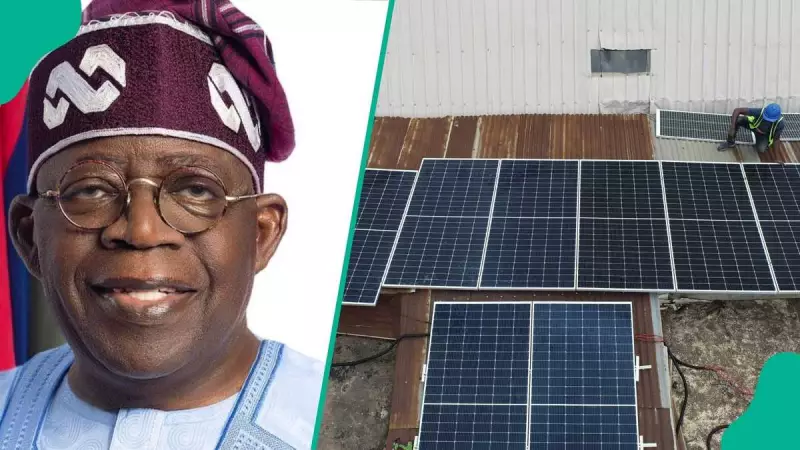
The federal government of Nigeria has put forward a significant allocation of N30.34 billion in the proposed 2026 budget for the deployment of solar mini-grids, inverters, and related renewable energy solutions. This initiative targets ministries, departments, and agencies (MDAs) across the country, aiming to provide alternative power sources for government facilities, educational institutions, and selected communities.
Addressing Power Challenges with Renewable Energy
This budgetary proposal comes as Nigeria continues to grapple with frequent power outages and repeated collapses of the national electricity grid. The funds are specifically earmarked to ensure reliable electricity supply through sustainable means, reducing dependence on the unstable grid. The move reflects a broader shift towards clean energy adoption in response to the persistent energy crisis affecting both public and private sectors.
Breakdown of Major Allocations
A detailed analysis of the budget reveals several key allocations:
- State House: N7 billion for a solar mini-grid to electrify critical infrastructure at the seat of power.
- National Centre for Technology Management (Ile-Ife): N7 billion for constructing and installing sustainable clean energy projects in selected communities, partly to address security concerns.
- Agricultural Research Council of Nigeria: N3.5 billion for eco-friendly solar mini-grids in communities across the South-South and South-East zones to boost agricultural productivity.
- Nigerian Building and Road Research Institute (NBRRI), Lagos: N1.26 billion for solar power generators at the David Umahi Federal University of Health Sciences in Ebonyi State.
- National Productivity Centre: N1.05 billion for mini-grids in schools within Zamfara Central Senatorial District.
Additional provisions include N1.05 billion by NBRRI for a solar-powered mini-grid system at its Abuja headquarters, N910 million by the National Space Research and Development Agency for a 2.5MW solar plant in Abuja, and N700 million each by the Office of the Head of the Civil Service of the Federation and the Nigeria Police Academy in Kano for system upgrades and solar installations.
Widespread Implementation Across States
Several other institutions across states such as Adamawa, Zamfara, Gombe, Delta, Rivers, Ebonyi, Yobe, and Oyo have also allocated funds ranging from N140 million to N490 million for solar mini-grids, renewable energy installations, and rural electrification projects. This widespread allocation underscores the government's commitment to decentralizing power supply and enhancing energy access in diverse regions.
Expert Concerns and Industry Implications
While this shift towards renewable energy is welcomed, experts have raised concerns about its potential impact on the national grid. The growing trend of government agencies and large institutions moving away from grid electricity could lead to revenue losses for distribution companies and further strain the power sector. Industry observers note that as major consumers exit the grid, costs may increase for remaining users due to reduced shared burden.
Adetayo Adegbemle, Executive Director of PowerUp Nigeria, emphasized the need for policies to reintegrate industries and manufacturers into the national grid. He highlighted that manufacturers spend over N45 trillion annually on alternative power, costs that are passed on to consumers through higher goods prices. Adegbemle warned that abandoning the national grid for isolated systems could make electricity more expensive in the long run and called for reforms to make grid power reliable and attractive.
Broader Context and Future Outlook
This budget proposal aligns with recent initiatives like the National Public Sector Solarisation Initiative (NPSSI), which aims to accelerate solar distribution in public sectors. The NPSSI, involving entities such as the Ministry of Finance Incorporated and the Rural Electrification Agency, seeks to install distributed solar systems in government buildings, schools, hospitals, and security stations, supporting Nigeria's clean energy transition.
As Nigeria navigates its energy challenges, this N30.34 billion allocation represents a critical step towards sustainable power solutions, though it also sparks debate on the future of the national grid and the balance between decentralized and centralized energy systems.




