Federal Government Escalates 2026 Borrowing Plan to N29.2 Trillion as Fiscal Deficit Expands
The Federal Government of Nigeria has significantly increased its borrowing plan for 2026 to N29.2 trillion, marking a substantial rise from earlier projections. This adjustment follows the expansion of the proposed national budget, creating a larger fiscal deficit that requires extensive financing through debt instruments.
Budget Expansion Drives Increased Borrowing Requirements
According to official documents and legislative approvals, the revised borrowing figure represents an increase of N11.31 trillion from the initial N17.89 trillion projection outlined in the 2026 Abridged Budget Call Circular. This escalation directly correlates with the expanded budget size of N68.32 trillion, which substantially exceeds projected revenue of N36.87 trillion, resulting in a fiscal deficit of N31.46 trillion.
The National Assembly's approved 2026 Appropriation Bill reveals that total debt financing has risen sharply as government expenditure continues to outpace revenue projections. Borrowing will account for the majority of deficit financing, with other sources contributing relatively minimal amounts. Asset sales and privatization initiatives are expected to generate N189.16 billion, while multilateral and bilateral loans are projected at N2.05 trillion.
Revenue Projections and Expenditure Breakdown
The federal government anticipates generating N25.92 trillion from federation revenues, N4.31 trillion from independent revenues, and N5.85 trillion from government-owned enterprises. Additional revenue streams include N1.37 trillion in aid and grants and N300 billion from special funds. On the expenditure side, debt servicing is projected at N15.81 trillion, making it one of the largest components of the budget.
Recurrent non-debt spending is estimated at N15.43 trillion, while capital expenditure stands at N32.29 trillion, reflecting allocations toward infrastructure development and national projects. Statutory transfers are budgeted at N4.80 trillion. Despite the relatively high capital allocation, financial analysts note that debt servicing and recurrent spending continue to dominate the budget, limiting fiscal flexibility and development capacity.
Legislative Adjustments and Revenue Enhancement Measures
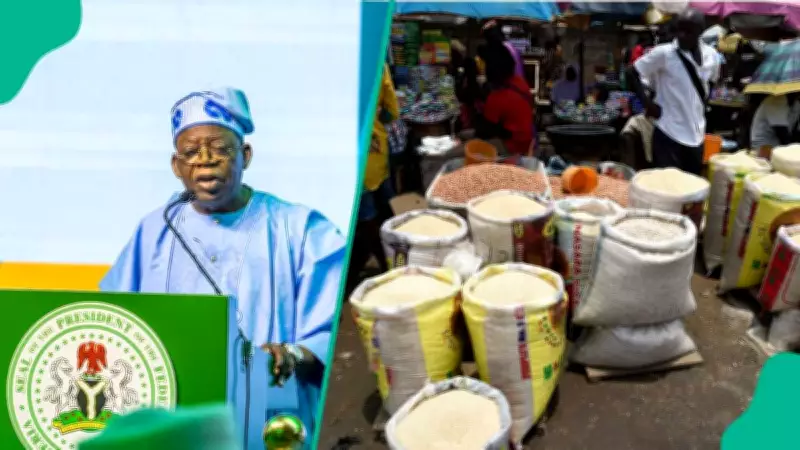
President Bola Tinubu initially requested a N9.09 trillion increase in the 2026 budget, citing anticipated gains from crude oil linked to international conflicts and plans to secure new loans. However, analysis indicates that the approved budget of N68.32 trillion exceeds the executive's revised proposal by approximately N1 trillion. Lawmakers explained that the upward revision aims to settle legacy obligations, fund critical infrastructure, strengthen judicial systems, support healthcare initiatives, and prepare for the 2027 general elections.
To support funding requirements, the government plans to increase the oil benchmark by $10 per barrel, expected to generate about N2.592 trillion in additional revenue. The telecommunications sector is also projected to contribute significantly, with MTN Nigeria expected to generate N724 billion in company income tax, while Airtel Nigeria is projected to contribute N150 billion. Despite these revenue enhancement measures, lawmakers approved an increase in external borrowing by N6.163 trillion to bridge the financing gap.
Growing Concerns Over Nigeria's Debt Profile
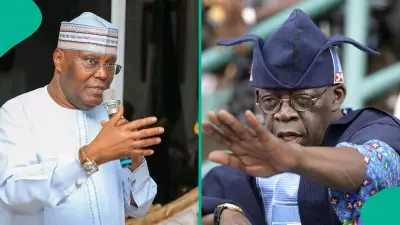
The Senate of Nigeria had earlier approved a presidential request to secure fresh external loans totaling $6 billion to support the budget. This decision has drawn criticism from opposition figures and economic experts who express alarm about Nigeria's escalating debt burden. Former presidential candidate Atiku Abubakar described the move as alarming, warning that excessive borrowing could worsen Nigeria's debt situation and negatively affect future generations.
Similarly, economic commentator Olajide Filani called for greater transparency and fiscal discipline, arguing that higher oil revenues should reduce, rather than increase, borrowing requirements. Economists and stakeholders have raised significant concerns about debt sustainability and inflation risks associated with the expanded borrowing plan.
Expert Warnings About Debt Sustainability Risks
Chief Executive Officer of the Centre for the Promotion of Private Enterprise, Muda Yusuf, cautioned against rising deficits, noting the risk of a debt trap that could undermine macroeconomic stability and trigger inflationary and exchange rate pressures. President of the Nigerian Economic Society, Adeola Adenikinju, questioned the effectiveness of government spending, noting that delayed capital releases often weaken development outcomes and reduce the impact of borrowed funds.
During policy dialogues, stakeholders including Joseph Amenaghawon raised concerns that borrowing has not consistently translated into meaningful development, warning of a potential cycle of debt without corresponding development. Development economist Aliyu Ilias noted that the scale of new borrowing could worsen inflation and increase the cost of living if not properly managed. He emphasized that while borrowing can support economic growth, its impact depends largely on how funds are utilized, with weak implementation of capital projects and delays in budget execution remaining key challenges that reduce the effectiveness of government spending.
The opposition has criticized the reported swift approval of the $6 billion external loan request, describing the process as a dangerous erosion of legislative oversight that threatens Nigeria's economic stability. These developments occur as Nigeria navigates complex economic challenges while attempting to finance national development priorities through increased borrowing amid widening fiscal deficits.