
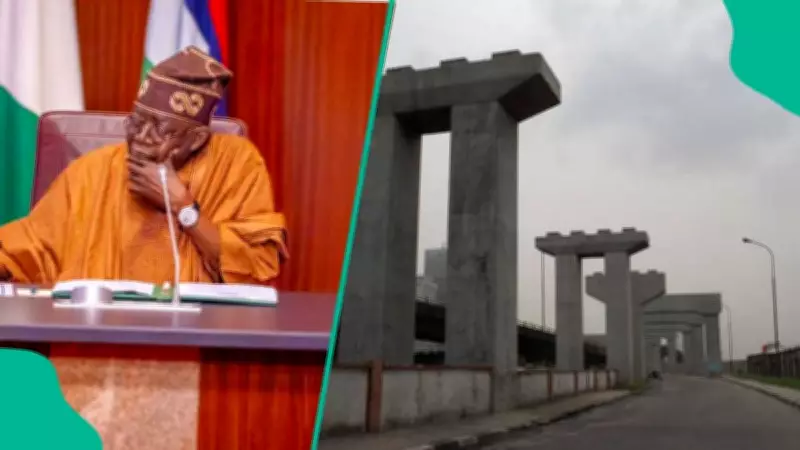
Federal Government Channels N2.45 Trillion Non-Oil Savings to States for Development Projects
Official records have revealed that Nigeria's federal government disbursed a substantial sum of N2.45 trillion to state governments and the Federal Capital Territory (FCT) between March 2024 and August 2025. This significant financial injection was specifically designed to bolster infrastructure development and enhance security interventions across the nation's subnational entities.
Details of the Special Intervention Programme
According to internal documents obtained from the Office of the Accountant-General of the Federation (OAGF), these funds were distributed over a comprehensive 17-month period through a special intervention programme. The entire amount was drawn exclusively from non-oil revenue savings, marking a strategic shift in fiscal resource allocation. These financial records were formally presented during the December 2025 Federal Accounts Allocation Committee (FAAC) meeting, providing transparency into this substantial government initiative.
The intervention programme was established with clear objectives to alleviate fiscal pressure on state governments while simultaneously accelerating critical infrastructure projects and strengthening security mechanisms nationwide. A document titled "Ledger of Savings on Intervention to States Infrastructure and Security" confirmed that the total disbursement reached exactly N2.45 trillion, with the entire balance paid out to states and the FCT, leaving zero remaining funds as of August 25, 2025.
Disbursement Patterns and Presidential Approval
An examination of the disbursement timeline reveals distinct patterns in fund distribution:
- In 2024, N1.184 trillion was released through four separate transactions occurring in April, May, September, and December
- During 2025, disbursements increased to N1.266 trillion across six separate payments made between February and August
Each transaction was officially recorded as "Payment for Intervention to States and FCT" while the corresponding inflows were described as "Transfer from Non-Oil Savings." This systematic approach to fund distribution followed President Bola Tinubu's approval in July 2023 for the establishment of the Infrastructure Support Fund (ISF) for all 36 states, a decision made in the aftermath of the controversial fuel subsidy removal.
Intended Use and Government Expectations
At the time of the fund's establishment, Dele Alake, then Special Adviser to the President on Special Duties, Communications and Strategy, outlined the government's vision for these resources. He emphasized that the Infrastructure Support Fund would enable state governments to invest in critical development areas including:
- Transportation infrastructure
- Agricultural development programmes
- Healthcare facility improvements
- Educational enhancements
- Power generation and distribution
- Water resource management
Alake further explained that a portion of monthly distributable revenues would be systematically saved to reduce inflationary pressures and stabilize the national economy. These savings were intended to complement other fiscal measures aimed at improving living standards across Nigeria.
Accountability Concerns and Implementation Questions
Despite the substantial scale of this intervention programme, significant concerns have emerged regarding how state governments are utilizing these allocated funds. The financial records notably lack a detailed breakdown of individual state allocations and do not clarify whether these payments were made separately from regular monthly revenue distributions.
Auwal Rafsanjani, Executive Director of the Civil Society Legislative Advocacy Centre (CISLAC), has voiced strong criticism regarding what he describes as poor accountability in the use of intervention funds. In an interview, Rafsanjani argued that the funds disbursed for infrastructure and security have failed to deliver expected results, citing persistent insecurity across multiple regions of the country. He warned that increasing political focus on the 2027 elections has weakened accountability mechanisms and shifted governmental attention away from people-centered development initiatives.
Broader Economic Context and Revenue Generation
This non-oil revenue intervention occurs within a broader economic context where Nigeria generated an estimated N55.5 trillion from crude oil sales in 2025, representing an increase from N50.88 trillion in 2024. However, analysts note that these figures do not reflect actual government earnings due to various operational costs and deductions. The strategic decision to utilize non-oil revenue savings for state-level interventions demonstrates the federal government's attempt to diversify funding sources beyond traditional oil revenues while addressing critical development needs at the subnational level.
The OAGF documents indicate that monthly savings and disbursements followed a generally consistent pattern, with occasional spikes reflecting major intervention payments. In several instances, higher amounts were disbursed than saved during specific months, while later periods showed closer alignment between inflows and payouts. This financial management approach reflects the government's ongoing efforts to balance immediate development needs with long-term fiscal stability.




