
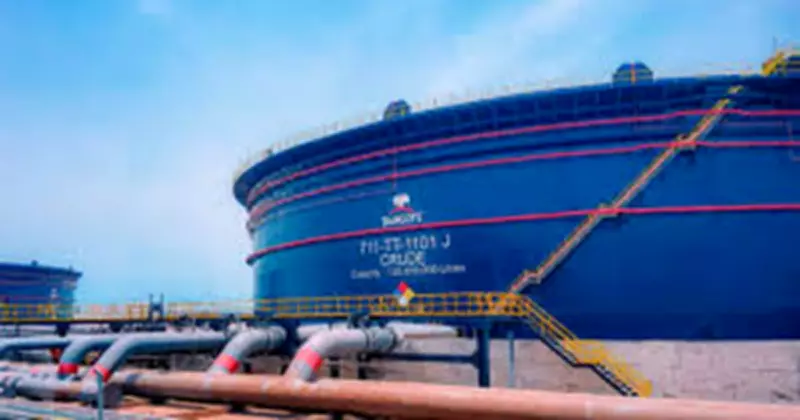
Dangote Refinery Implements Significant Fuel Price Adjustments Amid Global Market Tensions
The Dangote Petroleum Refinery has officially increased its Premium Motor Spirit (PMS) ex-depot price by ₦101, moving from ₦774 to ₦875 per litre. This substantial adjustment was confirmed by a senior refinery official on Monday, March 3, 2026, citing renewed volatility in global crude oil markets as the primary driver behind the price review.
The refinery representative stated plainly: "Yes, the price has been reviewed. The new gantry price is now ₦875 per litre from ₦774. The review became necessary due to changes in global crude fundamentals and replacement costs." In Nigeria's deregulated petroleum market, this language carries significant weight, indicating that refiners and marketers are calculating what it would cost to purchase crude today, refine it, and restock tomorrow.
Market Suspensions and Geopolitical Factors
Prior to the official price confirmation, the refinery took decisive action by suspending PMS loading effective midnight on March 2, 2026. Product lifting operations ceased entirely, with Proforma Invoice (PFI) issuance paused and fresh petrol transactions effectively frozen. This suspension was triggered by international crude prices climbing past the critical $80 per barrel threshold overnight.
While the suspension applied specifically to petrol, Automotive Gas Oil (AGO), commonly known as diesel, continued loading initially. However, this changed as market conditions evolved. The risk premium currently affecting global oil markets is largely tied to escalating geopolitical tensions between the United States and Iran, with traders closely monitoring developments in the strategically vital Strait of Hormuz.
Approximately one-fifth of global oil consumption passes through this critical corridor, meaning any perceived threat there immediately tightens supply expectations worldwide. Nigeria, despite being Africa's largest crude producer, remains heavily dependent on imported refined products, making the nation particularly vulnerable to these international market fluctuations.
Industry Response and Diesel Market Developments
The Petroleum Products Retail Outlets Owners Association of Nigeria (PETROAN) has raised serious concerns about the situation. In a statement signed by its National Public Relations Officer, Dr. Joseph Obele, the association's National President, Dr. Billy Gillis-Harry, described the Middle East tensions as a significant threat to energy-importing nations like Nigeria.
Their apprehension stems from a straightforward economic reality: when crude prices surge globally, local pump prices inevitably respond. Even with expanding local refining capacity, crude feedstock remains dollar-denominated, and exchange rate pressures compound the inflationary effect on Nigerian consumers.
The Dangote Refinery has now suspended sales of Automotive Gas Oil (diesel), with its last known PFI price standing at ₦880 per litre. Industry operators interpret this pause as a clear precursor to an upward price revision. In Nigeria's downstream sector, when a dominant supplier stops issuing PFIs, the market doesn't wait for official announcements.
As of March 2, major Lagos depots were already loading diesel uniformly at ₦1,100 per litre. Key operators including Integrated, African Terminal, Ibachem, Duport, Emadeb, First Royal, Swift, Ibeto, and Wossbab moved in near unison to implement these higher rates. At 6:50 a.m. West Africa Time, Brent crude traded at $79.73 per barrel, representing a 2.56 percent increase.
Economic Implications and Industry Calls for Action
Market participants now expect the refinery's diesel ex-depot price to cross the psychologically significant ₦1,000 per litre threshold. With Lagos depots already loading at ₦1,100, any price significantly lower would distort the supply chain and create operational strains. Crossing this threshold would have far-reaching consequences throughout the Nigerian economy.
Diesel powers critical infrastructure including haulage fleets, telecom base stations, factories, farms, and small businesses. Higher ex-depot prices inevitably flow through to increased transport fares, elevated food distribution costs, higher manufacturing expenses, and ultimately, increased retail prices for consumers across all sectors.
Petroleum marketers are urgently calling for policy stability and enhanced local refining capacity. They specifically urge the Federal Government to sustain the Naira-for-Crude arrangement to ease foreign exchange pressures and reduce import exposure. Additionally, industry stakeholders advocate for accelerated rehabilitation and full operation of Nigeria's four state-owned refineries.
The underlying logic is straightforward: stronger domestic refining capacity reduces national vulnerability to external market shocks. For now, motorists in Lagos, Abuja, and other major Nigerian cities are preparing for further pump price adjustments, which may trigger long queues at fuel stations as consumers anticipate additional increases.
The global crude market remains unsettled, and in Nigeria's deregulated downstream petroleum sector, price pauses rarely last long. Industry observers continue monitoring international developments closely, particularly the evolving situation between the United States and Iran, which continues to exert pressure on energy markets worldwide.




