
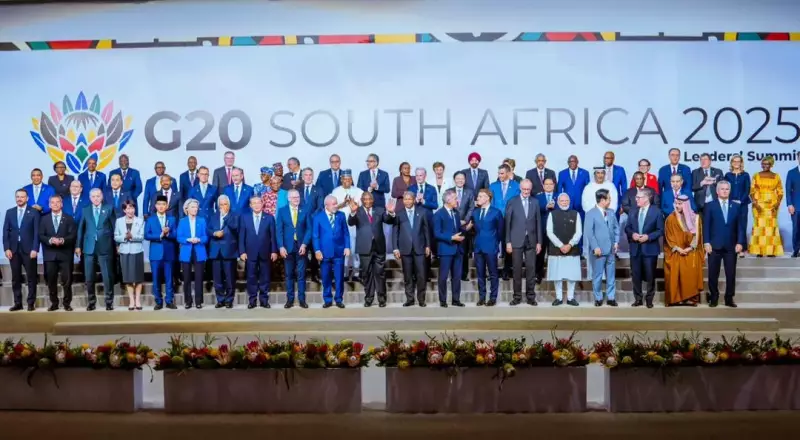
Former Ethiopian Prime Minister Hailemariam Desalegn Boshe has issued a stark warning to G20 nations: Africa cannot finance its sustainable future while drowning in overwhelming debt. The urgent call comes ahead of the upcoming G20 summit in Johannesburg, marking the first time the influential forum meets on African soil.
The Staggering Numbers Behind Africa's Debt Crisis
The financial reality facing African nations presents a sobering picture. According to Boshe, Sub-Saharan Africa requires $143 billion annually to address climate challenges, representing approximately 7% of the region's total GDP. However, current climate finance flows into Africa cover only one-quarter of this critical need.
Meanwhile, African countries spent nearly $90 billion in 2024 alone on external debt servicing. This massive financial outflow directly competes with essential investments in climate resilience and sustainable development. Every dollar directed toward interest payments represents funding diverted from adaptation measures and clean-energy infrastructure projects.
Broken Financial System Demands Immediate Reform
The core problem lies in what Boshe describes as a fundamentally flawed global financial architecture. Between 2022 and 2024, foreign private creditors extracted $141 billion more in debt-service payments from developing economies than they provided in new financing. This negative flow has forced multilateral institutions like the World Bank and IMF into unsustainable roles as lenders of last resort.
The absence of a predictable debt-resolution mechanism has left dozens of African countries in financial distress. Governments fearful of market punishment for default are forced to slash spending on essential services, including education, healthcare, and increasingly, climate action initiatives.
G20's Historic Opportunity for Systemic Change
The upcoming Johannesburg summit represents a pivotal moment for the G20 to demonstrate global leadership. Boshe emphasizes that mere communiqués or working groups will no longer suffice. The forum must commit to concrete action: restructuring liabilities of highly indebted nations with specific timelines and shared accountability among creditors.
This demand for reform is grounded in evidence of systemic bias. A United Nations Development Programme report found that 16 African countries paid $74.5 billion in excess interest between 2000 and 2020 due to inflated risk assessments by credit-rating agencies. This reflects institutional prejudice rather than market logic, perpetuated by an oligopolistic industry.
Boshe advocates for a climate-linked debt-relief mechanism based on survival needs rather than sympathy. Such a framework would recognize climate vulnerability and investment requirements in debt-sustainability assessments, unlocking Africa's green transition potential while restoring faith in multilateral cooperation.
The former prime minister draws inspiration from the African Union's successful campaign for permanent G20 membership, proving that seemingly impossible goals can be achieved. As Nelson Mandela famously noted, "It always seems impossible until it's done." The G20 now faces its own moment of truth: whether it possesses the courage to rebuild global financial foundations for a more equitable and sustainable future.




