
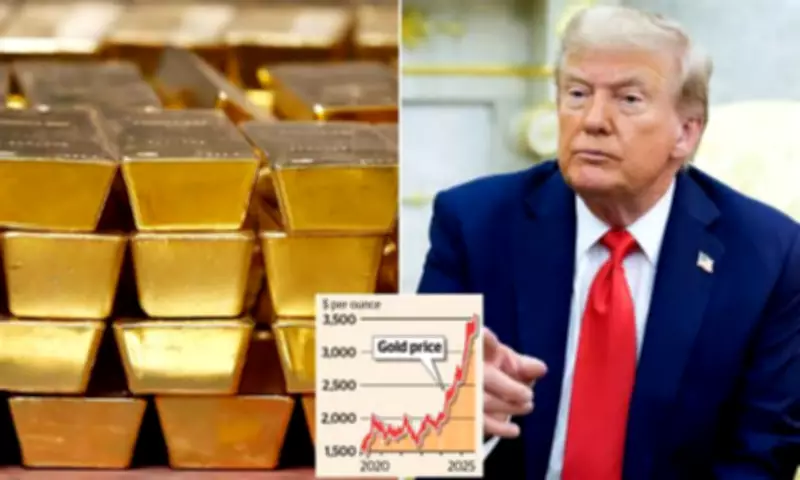
Precious Metals Retreat as Trump's Federal Reserve Choice Reassures Markets
The prices of gold and silver experienced a significant decline on Friday, January 30, as investors responded to US President Donald Trump's announcement regarding the leadership of the Federal Reserve. This development occurred alongside a mixed performance in global stock markets, with European indices closing higher for the week while Wall Street recorded slight losses.
Trump's Nomination Sparks Market Reaction
The sell-off in precious metals commenced following reports, later verified, that President Trump had chosen former Federal Reserve official Kevin Warsh to succeed Jerome Powell as chair of the US central bank. Trump officially confirmed the nomination through his Truth Social platform, expressing strong confidence in Warsh's capabilities. He described Warsh as potentially "one of the GREAT Fed Chairmen, maybe the best," highlighting his reliability and steady presence.
Kathleen Brooks, research director at XTB, commented on the selection, noting that this "interesting pick... may give the market some hope that Fed independence will be preserved." Previously, Trump's frequent public criticisms of Powell, whose term concludes in May, had raised investor anxieties about potential erosion of the central bank's autonomy. Such a scenario is widely perceived as a substantial inflation risk for the US economy.
Sharp Declines in Safe-Haven Assets
Safe-haven assets, which had surged earlier in the week due to uncertainties surrounding Trump's policy direction, fell sharply. Gold plummeted by more than eight percent, dropping below $5,000 per ounce after reaching a record high of $5,595.47 on Thursday. Similarly, silver shed approximately twenty percent, trading near $90 per ounce just a day after achieving an all-time peak above $120.
Volatile Week for Global Financial Markets
Financial markets navigated a highly volatile week characterized by several key factors. These included a weaker US dollar, renewed tariff threats from the Trump administration, escalating tensions with Iran, and concerns about a potential US government shutdown. Asian markets concluded the week lower, influenced by a technology-led sell-off on Wall Street.
Although robust earnings reports from companies such as Meta, Samsung, and SK Hynix had bolstered market sentiment earlier in the week, worries resurfaced following Microsoft's announcement of a sharp increase in spending on artificial intelligence infrastructure. This revived fears that returns on substantial AI investments might take longer to materialize and that valuations could be stretched after years of technology-driven gains.
Oil Prices Recover Amid Geopolitical Tensions
Oil prices recovered from early losses on Friday after surging the previous day as President Trump intensified rhetoric towards Tehran. Megan Fisher, assistant economist at Capital Economics, noted that the building tensions between Iran and the US had driven Brent crude to a six-month high. However, she added that historical precedent, including last year's brief Iran-Israel conflict involving the US, coupled with ample global oil supply, are likely to exert downward pressure on prices by the end of 2026.




