
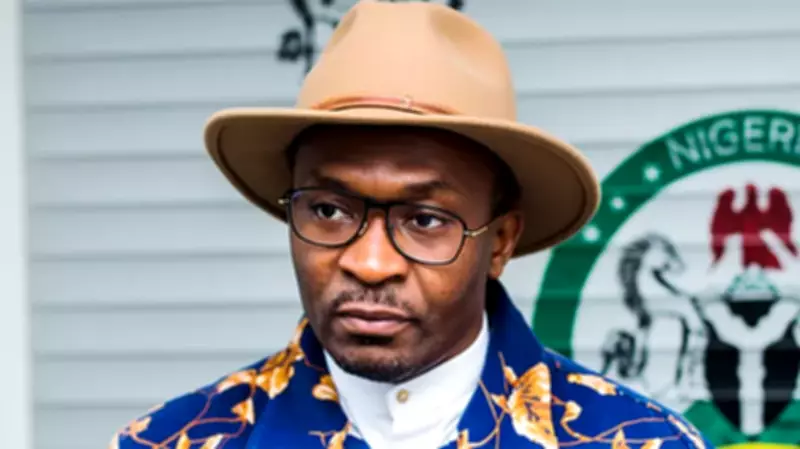
Deputy Speaker Benjamin Kalu Advocates for European Partnerships to Boost Nigeria's Economy
The Deputy Speaker of the House of Representatives, Rt. Hon. Benjamin Kalu, has issued a compelling call for enhanced technology transfer and local production collaborations with European nations. This initiative is designed to leverage Nigeria's abundant raw materials, generate employment opportunities for its burgeoning youth demographic, and mitigate the issue of irregular migration.
Meeting with European Parliamentarians
Kalu made these remarks during a courtesy visit from a delegation of European parliamentarians, part of the First Step Forum and led by Marc Jost. The meeting focused on strengthening bilateral relations and fostering cooperative efforts to address shared global challenges. The Deputy Speaker emphasized the economic strategy known as "near-shoring," which involves relocating technology, finance, and industrial capabilities closer to regions rich in raw materials, particularly in Africa.
"We have a huge youth population. You have the capital and technology; we have the raw materials. Why are we not practising near-shoring?" Kalu questioned, highlighting the untapped potential for mutual benefit. He explained that near-shoring entails establishing industrial processes within countries that produce primary resources, rather than exporting these materials in their unprocessed state.
Focus on Cocoa and Lithium Resources
Kalu specifically pointed to Nigeria's cocoa and lithium as prime examples of resources that could be better utilized. He urged a strategic shift from exporting raw commodities to processing them locally into finished goods, such as chocolate and electric vehicle batteries. "Why should we export cocoa when technology and finance can be brought here to turn it into chocolate? Let our cocoa farms become chocolate factories. That is value addition; that is job creation," he stated passionately.
Regarding lithium, Kalu described Nigeria's deposits as among the finest globally and stressed the importance of partnerships that would enable local battery production. This move aligns with the worldwide transition to cleaner energy sources, positioning Nigeria as a key player in the green economy.
Call for Reset in Africa-Europe Relations
Beyond economic matters, Kalu called for a fundamental reset in Africa-Europe relations. He encouraged both sides to move past historical grievances and build a future grounded in mutual respect, partnership, and shared prosperity. He also addressed Nigeria's religious diversity, portraying it as a strength rather than a source of division. "Our diversity is not a disadvantage; it is a beautiful coloration that allows us to see issues from multiple perspectives. That is how we achieve balanced and inclusive governance," he remarked.
In this context, Kalu commended President Bola Ahmed Tinubu for his inclusive approach, noting that despite being a Muslim, the President has actively promoted religious harmony through policies and symbolic actions, such as the recent unveiling of a chapel at the National Assembly attended by the First Lady.




