Lagos Emerges as Nigeria's Premier Business Destination in 2026 Report
Lagos State has secured the top position as Nigeria's best state for conducting business, according to a comprehensive new assessment released during the 2026 Reform and Diplomatic Roundtable. The event, organized by the Presidential Enabling Business Environment Council in collaboration with UK International Development and the Nigeria Economic Stability and Transformation Programme, highlighted significant progress in subnational economic environments across the country.
Comprehensive Evaluation and Impressive Score
The detailed report evaluated states across sixteen critical indicators, including access to electricity, infrastructure development, digital connectivity, land registration efficiency, small claims courts functionality, investor aftercare services, workforce development programs, crisis resilience mechanisms, dispute resolution systems, market access opportunities, credit availability, export-import facilitation, interstate trade capabilities, tax payment processes, grievance redress mechanisms, and access to skilled labor. Lagos achieved an impressive score of 85.6%, placing it ahead of Kaduna, Oyo, the Federal Capital Territory, Ogun, Enugu, Plateau, Ekiti, Kano, and Nasarawa states in the national ranking.
PEBEC Director-General Zahrah Audu explained during an interview with Arise TV Global Business Report that the ranking reflects tangible improvements resulting from sustained reform efforts across Nigerian states. "It is getting easier to do business in Nigeria, though this remains a work in progress," Audu noted, expressing confidence that the country is beginning to hold itself more accountable in creating favorable business environments.
Digital Transformation as Key Success Factor
Audu identified several specific factors contributing to Lagos's top performance. "One of the key reasons why Lagos ranked top is simply the digitalization and automation of majority of their services," she emphasized. The state has implemented comprehensive digital systems for land registration that now allow end-to-end processing without requiring physical signatures from the executive governor. Similarly, the tax system has been fully automated and digitalized, with levies reduced and streamlined through a convenient one-stop online payment portal.
The state's grievance address mechanism was highlighted as particularly effective compared to other states. Additionally, Lagos stands out as currently the only Nigerian state operating a functional commercial court system, providing investors with confidence in robust legal protections. The state also maintains an excellent Alternative Dispute Resolution system, further enhancing its business-friendly environment.
Governor's Perspective on Deliberate Reforms
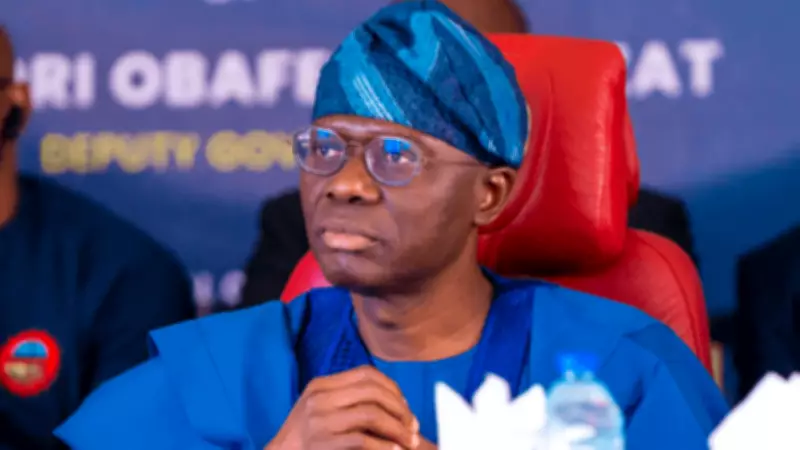
Governor Babajide Sanwo-Olu addressed the roundtable gathering, which attracted policymakers, private sector representatives, development partners, academic institutions, and civil society organizations. He attributed Lagos's dramatic rise from 29th position four years ago to first place to "deliberate efforts" by his administration to implement consistent reforms, infrastructure upgrades, and policies specifically designed to enhance business competitiveness.
"This is the result of deliberate efforts by our government to create a positive environment for local and foreign investments, not just to thrive but to ensure good returns," Sanwo-Olu stated. He reiterated his commitment to continuing efforts to reduce bureaucratic bottlenecks in land administration, construction permits, and digital service delivery while strengthening Lagos's economic landscape to become Nigeria's most attractive market for enterprise and innovation.
Institutional Reforms and Long-Term Planning
Lagos State Commissioner for Commerce, Cooperatives, Trade and Investment Folashade Bada emphasized that the achievement resulted from sustained institutional reforms rather than chance. "Our position is not accidental. It is the outcome of sustained institutional reforms, policy discipline, and a clear recognition that capital flows where there is clarity, confidence, and continuity," she explained.
The state's progress is anchored on the comprehensive Lagos State Development Plan 2052, designed to ensure long-term economic transformation. Beyond digital reforms, Lagos has implemented significant improvements in construction permit processing, with low-risk permits now handled within fifteen working days. The state has also invested substantially in infrastructure development, including fiber-optic networks, transportation systems, and logistics facilities specifically aimed at attracting investors.
National Economic Implications and Private Sector Confidence
Minister of Budget and Economic Planning Abubakar Bagudu expressed optimism that Nigeria's ambition to build a $1 trillion economy could be achieved through continued state-level improvements and private sector engagement. "We feel confident that with that mindset, led by the private sector, we can create a $1 trillion economy, supported by the response that our economy has experienced doing what is right," he stated.
The business community has demonstrated growing confidence in Lagos's economic environment. Nigerian billionaire businessman Alhaji Aliko Dangote has situated multibillion-dollar investments in the state, including the $20 billion Dangote Refinery. In 2018, Dangote described Lagos as Nigeria's most peaceful place to conduct business, encouraging local business communities and residents to support further infrastructure development through tax compliance. Dangote has announced plans to relocate his industrial empire's headquarters to Eko Atlantic City in Lagos, reinforcing his confidence in the state's economic future.
As Nigeria increasingly looks to subnational entities to propel economic growth, Lagos continues to attract both local and foreign investments while setting a benchmark for other states to emulate in creating transparent, competitive business environments that foster sustainable economic development.