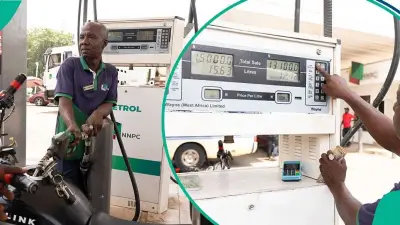
Nigerian Manufacturers Sound Alarm Over Soaring Energy Costs and Vanishing Profits
The Director-General of the Manufacturers Association of Nigeria (MAN), Segun Ajayi-Kadir, has issued a stark warning about the severe implications of rising petroleum product prices for the nation's industrial sector. In a detailed position paper, Ajayi-Kadir emphasized that manufacturers are facing immediate and multifaceted challenges due to their heavy reliance on gas and diesel to power operations.
Global Energy Shock Hits Domestic Production
Ajayi-Kadir explained that the global energy shock is driving domestic pump and depot prices upward, effectively wiping out operating margins for manufacturers. He noted that while geopolitical crises unfold thousands of miles away, their economic consequences threaten to tear at the heart of the Nigerian economy through disruptions to global shipping routes, volatile energy markets, and supply chain bottlenecks.
The intensification of hostilities in the Middle East has fundamentally altered the global energy and logistics landscape, he pointed out, highlighting severe disruptions in the Strait of Hormuz and panic in global markets. Brent crude has rapidly surged past the $84.50 per barrel mark, while global freight and war-risk insurance premiums have skyrocketed as vessels reroute away from the Red Sea corridor.
"For us, global geopolitics is not a television spectacle; it is a direct tax on the cost of production," Ajayi-Kadir stated bluntly.
Macroeconomic Paradox and Trade Threats
The Director-General noted a stark macroeconomic paradox: while a spike in global oil prices should be a fiscal windfall for Nigeria, boosting foreign exchange reserves and stabilizing the naira, domestic crude production remains severely suboptimal. Production hovers around 1.3 to 1.4 million barrels per day due to persistent structural deficits, meaning Nigeria captures only price gains while missing out entirely on volume gains.
Ajayi-Kadir expressed particular concern about Nigeria's vital bilateral trade relationship with the United States. According to recent data, Nigeria's total exports to the U.S. in 2024 stood at $5.91 billion, accounting for 9.3 percent of the country's $63.6 billion total exports. Conversely, imports from the U.S. totaled $4.33 billion in the same period.
"The current conflict severely threatens this bilateral trade flow," he warned. "We anticipate immediate spikes in global freight forwarding costs, prolonged lead times for imported raw materials, and an imported inflation surge."
Sector-Specific Vulnerabilities
While the entire real sector will feel the pinch, Ajayi-Kadir identified specific sectoral groups within MAN facing existential headwinds:
- Chemical and Pharmaceutical Sectors: This group is at the highest risk. In 2023, out of the $154,107,280 total Nigerian-manufactured exports to the US, chemical products alone accounted for a staggering $136,446,180 (approximately 88 percent). Petrochemical derivatives are highly sensitive to crude oil price shocks, and any disruption will immediately inflate the cost of active pharmaceutical ingredients and chemical base materials.
- Basic Metal, Iron and Steel Sector: This heavily energy-dependent sector relies on stable domestic gas and diesel pricing. Should the global crisis trigger local energy price surges, operational expenditure for these manufacturers will become unsustainable.
- Food, Beverage and Tobacco Sector: Highly dependent on imported grains and packaging materials, this sector will suffer severe imported inflation. Escalating freight costs will force price hikes, directly impacting the Nigerian consumer's daily survival.
Historical Precedent and Urgent Recommendations
Drawing on past experience, Ajayi-Kadir recalled that during the US-Iraq war, the effect on Nigeria's manufacturing sector was devastating. Total manufacturing exports plummeted from $901.35 million in 2002 to $496.87 million in 2003, while manufacturing GDP growth collapsed from 17.74 percent to -10.8 percent in the same period.
"We cannot control the geopolitics of the Gulf, but we can and must control our domestic policy responses," he asserted. "The window for reactive measures is closed; the time for proactive manufacturing fortification is now."
To insulate the economy and prevent widespread factory closures, Ajayi-Kadir urged the Federal Government to implement several immediate measures:
- Scale and subsidize the Presidential CNG (Compressed Natural Gas) initiative specifically tailored for manufacturing hubs and heavy-duty logistics to break the sector's reliance on imported diesel.
- Guarantee foreign exchange for critical inputs through the Central Bank of Nigeria.
- Enforce a framework that compels domestic mega-refineries to prioritize the sale of refined fuels and petrochemicals to local manufacturers at discounted, non-import-parity rates.
- Enact an immediate, six-month moratorium on discretionary highway levies, haulage taxes, and multiple transit tolls that currently burden the distribution of manufactured goods.
The manufacturing leader warned that extended transit times and multiplied shipping costs are making raw material procurement prohibitively expensive. As the cost of staple goods rises and consumer purchasing power collapses, manufacturers now face the dual threat of soaring production costs and rapidly accumulating unsold inventories, jeopardizing the target of achieving a 3.1 percent real growth rate for the sector in 2026.