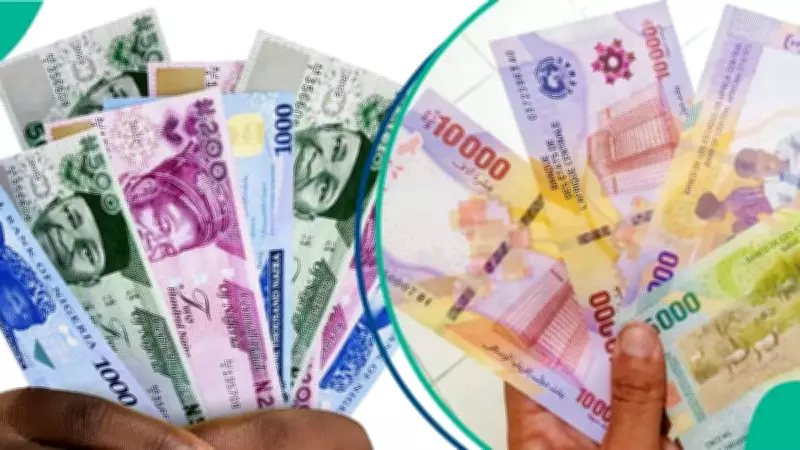
The Nigerian naira has emerged as Africa's best-performing currency in 2026, appreciating 6.7% against the US dollar year-to-date as of April 24, according to a report by United Capital. This performance comes despite volatility from the Middle East conflict and marks a significant achievement for Nigeria's currency.
Naira Outperforms Major African Currencies
The report highlights that the naira surpassed other major African currencies during the review period. The Kenyan shilling depreciated by 0.27%, the Angolan kwanza fell 0.009%, the South African rand dropped 0.34%, and the Ghanaian cedi declined by 5.30%. Ayodele Akinwunmi, United Capital's chief economist, attributed the naira's strength to policy reforms, improved forex supply, and robust external reserves that allowed the Central Bank of Nigeria (CBN) to support the currency. Enhanced oil and non-oil exports, along with tighter monitoring of forex transactions, also contributed to the positive performance.
Mixed Performance Across Markets
Despite the overall appreciation, the naira experienced mixed outcomes in different market segments. Data from the CBN showed that the local currency eased last week as forex liquidity slowed and external reserves declined. The naira shed N14.57 week-on-week to N1,365.24 per dollar at the Nigerian Foreign Exchange Market (NFEM), representing a 1.07% fall from N1,358.44 the previous week. In the parallel market, the naira steadied at N1,400 per dollar, narrowing the gap between official and parallel rates to N36 from N42 the previous week.
External Reserves and Forex Liquidity Decline
Nigeria's external reserves dropped 3.16% to $48.44 billion as of April 23, 2026, down from a peak of $50.02 billion in March. Forex liquidity also thinned, with total market inflows declining 7% month-on-month to $4.1 billion in March, according to FMDQ data. Analysts at Quest Merchant Bank attributed the drop to seasonal factors, noting a similar decline in March of the previous year. However, they flagged a sharp contraction in inflows from individuals, which plummeted to $22.2 million from $697.8 million in February.
CBN Intervention and Remittance Trends
The CBN increased its intervention in the forex market, with FX sales rising 112% month-on-month to $691 million in March. Exporter inflows, a major source of supply, fell 2% to $770.3 million. Experts noted that the naira had already come under pressure in March, depreciating 1.3% month-on-month to close at N1,387 per dollar. Remittance inflows dropped sharply, with CBN data showing a 46.22% decline to $107.47 million in January from $200.31 million in December.
African Currency Landscape
Across Africa, currency performance is diverging, reflecting differences in external buffers, commodity exposure, and policy credibility. Tunisia's dinar trades at about 2.86 per dollar, Libya's dinar at 6.31, Morocco's dirham at 9.01, Botswana's pula at 13.05, and South Africa's rand at 15.87 per dollar. Eswatini's lilangeni and Lesotho's loti both stand at 15.90 per dollar. The naira's strong performance keeps it off the list of Africa's 10 weakest currencies, as reported earlier by Legit.ng in February 2026. Despite recent depreciation due to CBN interventions, the naira avoided inclusion on that list, which highlighted currencies that have sharply declined against major global currencies.