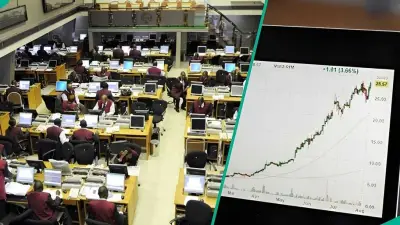
The Nigerian naira depreciated by N27.12 against the US dollar within two trading sessions, closing at N1,361.84 per dollar at the official market on Friday, October 23, 2026, despite the country's external reserves rising to $55.16 billion.
Data from the Central Bank of Nigeria (CBN) showed the local currency weakened from N1,334.72 recorded on Wednesday, October 21. This represents a 2.03% depreciation, raising concerns about the naira's stability and the sustainability of recent gains in Nigeria's foreign exchange market.
CBN Releases New Dollar Exchange Rate
According to figures published by the apex bank, the naira closed Friday's trading at N1,361.84 per dollar at the official Nigerian Foreign Exchange Market. On a week-on-week basis, the naira also weakened by N27.12, reflecting renewed pressure on the local currency.
The latest exchange rate means businesses and individuals purchasing dollars through the official market now face higher naira costs than they did on Wednesday. The depreciation could also increase the cost of imported goods and services if the weaker exchange rate persists.
Naira Weakens at Parallel Market
At the parallel market, commonly operated by Bureau de Change dealers, the currency also depreciated against the dollar. Several currency traders who spoke to DAILY POST confirmed that the naira weakened by N5 to exchange at N1,375 per dollar.
The latest movement places the difference between official and parallel market rates at N13.16 per dollar. Although the parallel market rate remains higher, the relatively narrow gap suggests that both markets are experiencing pressure.
Nigeria's External Reserves Hit $55.16 Billion
The depreciation comes despite Nigeria's external reserves reaching $55.16 billion as of October 22, 2026, according to CBN figures. Foreign exchange reserves provide an important financial buffer, helping countries meet external obligations and manage potential currency market disruptions.
However, rising reserves do not automatically translate into an appreciating currency. Exchange rate movements also depend on dollar demand, foreign exchange supply, investor confidence and broader economic conditions.
What the New Dollar Rate Means for Nigerians
The latest depreciation could put additional pressure on importers, manufacturers and businesses that depend on foreign currency to purchase raw materials, equipment and other essential products. Nigerians paying overseas tuition, international travel expenses and foreign-denominated bills may also face higher costs.
For households already managing elevated living expenses, sustained currency weakness could eventually translate into higher prices for imported products. Attention will now turn to the naira's performance in the coming trading sessions and whether improved dollar supply can help stabilise the exchange rate.