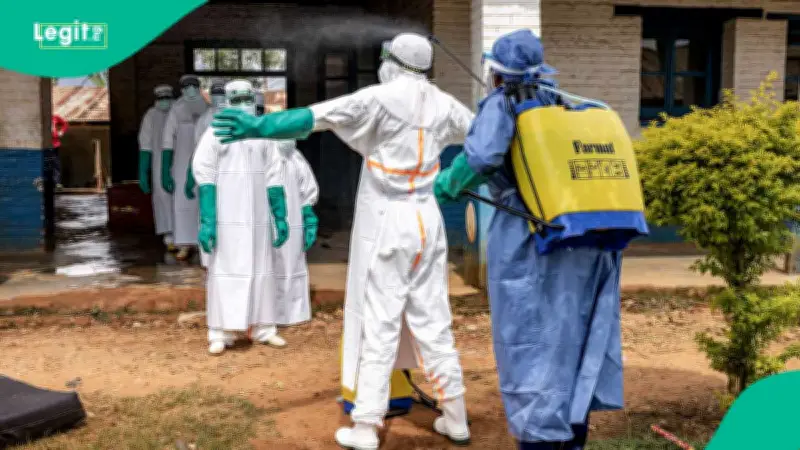
The Nigeria Centre for Disease Control and Prevention (NCDC) has begun paying N100,000 per person weekly to individuals placed under monitoring as part of the country's response to a confirmed Ebola case in Abuja.
NCDC Director-General Dr Jide Idris said the agency acted after contacts raised concerns about the financial strain of complying with isolation and monitoring requirements while being unable to support their households. As reported by The Punch, Idris announced the measure during a press briefing on Sunday, October 25, 2026.
Emergency Payment for Monitored Contacts
"We are paying for their accommodation; we are paying for their feeding. Some of them are asking for a stipend to maintain their families," Idris said. "We are providing N100,000 per person per week just to maintain their comfort and feeding, because they were complaining."
He described the payment as an unplanned emergency intervention and indicated that the arrangement would be kept under review. "This was not planned for, but it is an emergency. We will continue to review it as we go along," he said.
States Urged to Prepare for Similar Obligations
Idris also used the briefing to caution that the burden of supporting contact tracing and isolation activities should not fall solely on the Federal Capital Territory. He warned state governments across Nigeria to begin making financial and logistical preparations in the event that Ebola contacts are identified within their jurisdictions.
"This is not the responsibility of the FCT alone. What we have to do for the FCT, we have to do for any other state, just in case," he said.
53 Primary Contacts Identified
At the time of the briefing, Nigeria had recorded one confirmed case, with 53 primary contacts identified. That group includes healthcare workers, household members, domestic staff and laboratory personnel who handled samples from the patient.
Contacts are being classified by their level of exposure and monitored by public health teams throughout the 21-day incubation window. One contact who reported symptoms tested negative, and surveillance is ongoing.
Imported Case from Uganda
The confirmed case involves a woman who travelled from Uganda to Nigeria and was diagnosed with the Bundibugyo strain of the Ebola virus. She began showing symptoms on October 7, sought care in Abuja on October 11, and received a positive test result on October 20. The World Health Organisation has classified it as an imported infection, with investigations continuing into the probable source of exposure. The wider regional outbreak has also affected the Democratic Republic of the Congo and Kenya.
Nigeria successfully contained an Ebola outbreak in 2014 through rigorous contact tracing, case identification and isolation. Idris said the agency is drawing on those lessons while scaling up preparedness nationally. He called on Nigerians to cooperate with public health officials, avoid spreading unverified claims and rely only on information from credible sources.