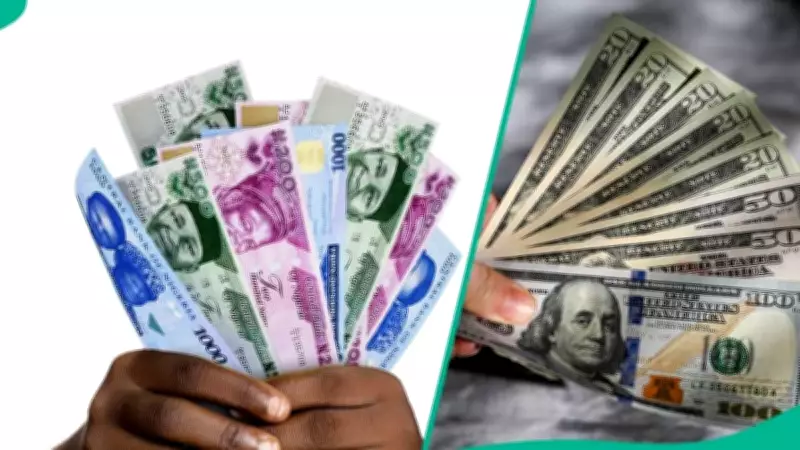
Naira Strengthens 1.58% Amid Improved Dollar Liquidity
Nigeria's currency experienced a significant boost this week, appreciating by 1.58 percent at the official market to close at N1,359.32 per US dollar. This positive performance reflects clear improvements in foreign exchange liquidity and growing investor confidence in the Nigerian economy.
Parallel Market Shows Modest Appreciation
At the parallel market, the naira also demonstrated modest gains, appreciating by 0.36 percent to settle around N1,373 per dollar. This gradual convergence between official and street exchange rates suggests that distortions in the foreign exchange market may be easing, offering a glimpse of stability after months of volatility.
Market analysts attribute the recent currency gains to improved dollar availability and a more predictable policy environment, which has encouraged cautious optimism among traders and investors alike.
Foreign Investors Return as Sentiment Improves
A key driver behind the naira's rebound is renewed interest from offshore investors, many of whom are capitalizing on Nigeria's relatively high yields and improving macroeconomic signals. According to financial experts, this inflow of foreign capital is helping to ease pressure on the currency while boosting liquidity across the financial system.
Charles Abuedu, a research analyst at Cowry Asset Management Limited, noted that the naira's upward movement could persist in the short term if current conditions hold. However, he cautioned that deeper structural challenges, including persistent demand for foreign exchange and external economic vulnerabilities, could limit how far the currency can strengthen.
Oil Market Volatility Adds Uncertainty
While the naira's outlook appears positive, developments in the global oil market are adding complexity to the picture. Crude oil prices continued to trend upward during early Asian trading, driven by geopolitical tensions and lingering uncertainty surrounding international agreements.
With oil remaining Nigeria's primary source of foreign exchange earnings, fluctuations in global prices are likely to play a critical role in determining the sustainability of the naira's recovery. Analysts warn that continued volatility in oil markets could quickly reverse gains if supply disruptions or geopolitical shocks intensify.
Domestic Bond Market Shows Caution
Despite the currency's strong showing, Nigeria's domestic fixed-income market painted a more cautious picture. The secondary bond market closed the week on a weaker note, with demand softening across most maturities. This shift pushed average yields higher by 10 basis points to 15.89 percent, signaling tightening liquidity and growing investor risk aversion.
The subdued appetite for local bonds suggests that many investors remain wary, preferring to stay on the sidelines amid lingering uncertainties about the domestic economic environment.
Eurobond Market Offers Contrasting Picture
In contrast to the domestic bond market, Nigeria's sovereign Eurobond market showed signs of recovery, buoyed by renewed interest from international investors. Average yields declined by 33 basis points to 7.12 percent, reflecting improved sentiment toward Nigeria's external debt and a gradual return of global risk appetite.
This divergence between domestic and external markets highlights a complex reality: while foreign investors are cautiously re-engaging with Nigerian assets, local conditions remain tight and uncertain.
Analysts Express Cautious Outlook
Financial analysts expect the domestic bond market to remain under pressure in the near term, as liquidity constraints and cautious sentiment continue to weigh on demand. Janet Ogocukwu, a senior banker and economist, noted that while improved dollar supply and investor confidence offer support for the naira, structural challenges and external shocks still loom large.
"For the naira, the path ahead may not be straightforward," Ogocukwu explained. "While improved dollar supply and investor confidence offer support, structural challenges and external shocks still loom large."
For now, the currency's rally provides a welcome reprieve for Nigeria's economy, but beneath the surface, the country's financial markets are sending mixed and uneasy signals about the sustainability of recent gains.