
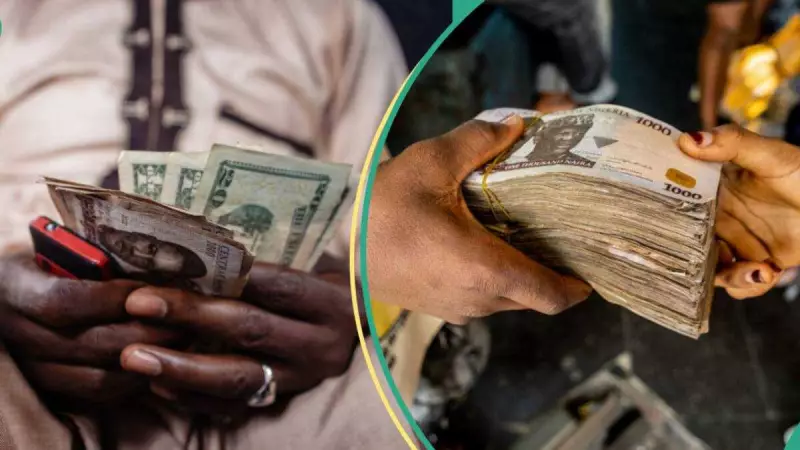
Economy Experts Forecast Naira to Trade at N1,400-N1,500 in 2026 Amid Rising Reserves
Nigerian economic analysts are projecting that the naira will stabilise within a range of N1,400 to N1,500 per US dollar by the year 2026. This optimistic outlook is primarily driven by ongoing reforms in the oil sector, increasing capital inflows, and more resilient diaspora remittances. According to Tilewa Adebajo, the chief executive officer of CFG Advisory, these factors are gradually restoring stability to Nigeria's foreign exchange market after years of significant volatility.
Key Factors Driving Naira Stability
Adebajo highlighted several critical elements that are contributing to this positive forecast. He pointed to clearer pricing signals in the oil and gas sector, improved macroeconomic coordination, and renewed investor confidence as pivotal in supporting the naira's recovery. Speaking at the Finance Correspondents Association of Nigeria 2026 economic outlook forum, he emphasised that recent reforms are beginning to yield measurable gains, particularly in terms of foreign exchange supply.
Recent data from the Central Bank of Nigeria shows that at the official Nigerian Foreign Exchange Market, the naira closed flat on a recent Monday, with the dollar quoted at N1,420.28. This represents a slight 0.2 per cent depreciation from N1,417.95 on the previous Friday. In the parallel market, the currency remained unchanged at N1,490 per dollar, indicating a degree of stability in informal trading channels.
Growth Outlook and Economic Projections
CFG Advisory's 2026 Outlook report projects Nigeria's gross domestic product growth at approximately 5 per cent. This growth is supported by expectations of single-digit inflation, a monetary policy rate of 20 per cent, and a stable exchange rate within the N1,400 to N1,500 band. Adebajo stressed that Nigeria is approaching a critical juncture as it enters the third year of challenging economic reforms. He underscored the urgent need to convert reform gains into productivity-led growth to benefit the broader population.
He noted that the country must now target 8 to 10 per cent GDP growth to lift productivity and improve living standards for over 140 million Nigerians living in multidimensional poverty. This ambitious target highlights the scale of the economic challenges that remain despite the positive exchange rate projections.
Fiscal Discipline and Debt Concerns
Despite the improving economic outlook, Adebajo warned that fiscal discipline remains Nigeria's most urgent challenge. He cited a three-year cumulative budget deficit exceeding N50 trillion, with a projected 2026 fiscal deficit of N23.85 trillion. Additionally, persistent funding gaps for capital expenditure are raising red flags among economic observers.
More concerning is the N15.2 trillion provision for debt service in the 2026 budget, which exceeds the combined allocations for defence, security, education, and health. Adebajo described this imbalance as a serious policy warning, noting that Nigeria's total public debt, estimated at over $100 billion, is increasingly crowding out growth-enhancing spending. Much of the savings from fuel subsidy removal are now being absorbed by debt servicing, limiting the government's ability to invest in critical sectors.
Long-Term Solutions and Investment Strategies
In response to questions about rising foreign portfolio inflows, Adebajo cautioned that such investments are inherently volatile and should not be mistaken for long-term confidence. He emphasised that sustainable economic growth depends on domestic investment and foreign direct investment that expands productive capacity. According to him, quality spending on productive assets delivers stronger multiplier effects than consumption-driven expenditure.
To boost revenues and foreign exchange flows, Adebajo urged the federal government to consider selling down at least 49 per cent of its interest in 74 licensed concession assets. This move could potentially raise about $50 billion, which could be used to improve government revenues, recapitalise the Nigerian National Petroleum Company, and enhance transparency in the sector.
He also called for renewed investment in the oil and gas sector, noting that capital inflows have fallen from about $22 billion in 2009 and 2014 to less than $3 billion in 2024. Restoring investment could raise production to 2.5 million barrels per day, easing pressure on the naira and strengthening Nigeria's foreign exchange reserves.
Monetary Policy and Future Prospects
Adebajo added that as inflation moderates, the Central Bank of Nigeria should consider cutting interest rates to stimulate economic growth. This should be accompanied by deliberate policies aimed at disinflation, productivity enhancement, and long-term exchange rate stability. The naira recently closed 2025 on a historic note, recording its first full-year appreciation in more than a decade. Data from the apex bank shows that the currency strengthened by 6.5 per cent year-on-year, ending December 31 at ₦1,435 to the dollar, compared with ₦1,535 at the close of 2024.
This marks the naira's first annual gain since 2012, when it edged higher to ₦157.29 from ₦158.99 the previous year. The positive trend underscores the potential impact of sustained reforms and prudent economic management on Nigeria's currency stability and overall economic health.




