Nigeria Intensifies Drive for $1 Trillion Economy Through Strategic IsDB Partnership
The Federal Government of Nigeria has significantly ramped up its efforts to accelerate economic growth by forging a strategic partnership with the Islamic Development Bank (IsDB) Group. This collaboration is designed to mobilize large-scale investments aimed at strengthening critical infrastructure, expanding energy access, and driving comprehensive structural reforms across key sectors of the nation's economy.
Minister Edun Outlines Ambitious Economic Vision
Minister of Finance and Coordinating Minister of the Economy, Wale Edun, emphasized that this partnership forms a central pillar of Nigeria's ambitious goal to grow its economy to $1 trillion by the year 2030. He noted that the country is transitioning from a period focused on macroeconomic stabilization to a new phase dedicated to investment expansion and sustained, robust growth.
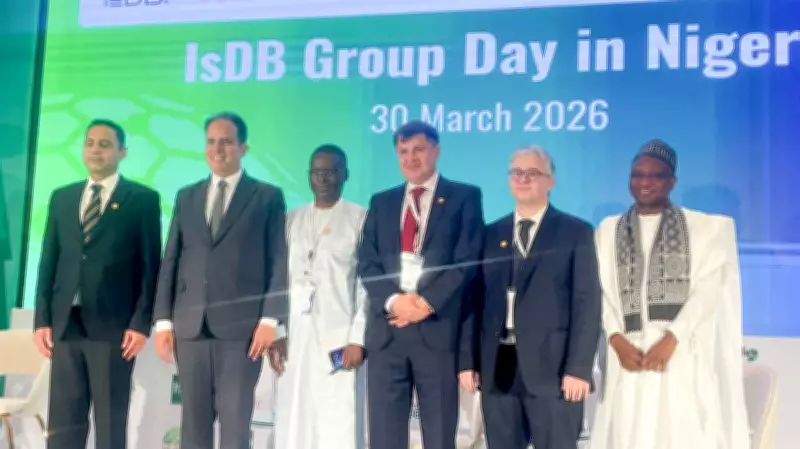
Speaking at the IsDB Group Day event held in Lagos on Monday, which brought together various stakeholders, Edun detailed that the collaboration will prioritize investments capable of delivering measurable economic and social outcomes. Key sectors identified for immediate focus include transportation, agriculture, digital infrastructure, and energy development.
Addressing Infrastructure Financing Gaps
The minister highlighted a critical challenge: Nigeria faces a substantial infrastructure financing shortfall, estimated at approximately $14 billion annually. This gap necessitates the adoption of innovative funding mechanisms and the formation of stronger alliances with development finance institutions and private investors.
Edun pointed out that with declining levels of overseas development assistance, domestic resource mobilization and the attraction of private capital have become increasingly vital to Nigeria's overall development strategy. The government is actively exploring alternative financing models, including Sukuk instruments, to support infrastructure delivery while promoting inclusive and sustainable economic growth.
Trade Reforms to Enhance Competitiveness
Edun also shed light on ongoing reforms targeted at improving trade efficiency. A key initiative is the implementation of a National Single Window platform, designed to harmonize documentation processes across various government agencies. This move is expected to reduce port bottlenecks and lower logistics costs for businesses, thereby enhancing Nigeria's competitiveness within the African Continental Free Trade Area and stimulating export-led growth.
He stressed that sustained investment in highways, rail networks, and port modernization remains absolutely essential to achieving the government's medium-term economic growth target of about seven percent annually.
IsDB Reaffirms Commitment to Nigeria's Development
Representatives from the Islamic Development Bank reaffirmed the institution's strong commitment to deepening its engagement with Nigeria. This will be pursued through a multi-sector development approach that integrates project financing with trade facilitation, private sector investment, and risk management support.
Alassane Aissami, Director-General of Country Programmes at the IsDB, described Nigeria as a key partner and shareholder of the Bank. He noted that ongoing and planned interventions span a wide range of sectors, including infrastructure, agriculture, energy, education, health, and transportation. The Bank's strategy focuses on achieving system-wide economic transformation capable of unlocking productivity and building long-term resilience.
Strategic Framework for 2026-2028
Looking ahead, Aissami announced that the IsDB is finalizing a Country Engagement Framework for Nigeria covering the period from 2026 to 2028. This framework will be anchored on economic transformation through infrastructure investment and private sector development, alongside strengthened human capital programmes.
The Bank reaffirmed its commitment to working closely with Nigerian government institutions and private sector partners to scale up impactful interventions, promote Islamic finance solutions, and contribute to Nigeria's long-term goal of building a resilient, diversified, and inclusive economy.
Aligning Investments with National Priorities
Similarly, Hammad Zafar Hundal, Head of the IsDB Regional Hub in Nigeria, stated that the upcoming Country Engagement Framework will align public and private investments with Nigeria's development priorities. Particular emphasis will be placed on developing transport corridors, upgrading energy systems, and improving social infrastructure.
He added that financing support will be channelled through institutions such as the Bank of Industry, the Nigerian Export-Import Bank, and the Development Bank of Nigeria. This is intended to expand access to funding for small and medium-scale enterprises operating in agribusiness, manufacturing, and export-oriented sectors.
Key Infrastructure Initiatives
Key infrastructure initiatives under this enhanced partnership include the development of major transport corridors. These projects are expected to significantly enhance connectivity, open up agricultural value chains, and improve export access across various regions of the country.
Stakeholders at the event concluded that the strengthened Nigeria-IsDB collaboration reflects a well-coordinated effort to unlock private capital, modernize trade systems, and accelerate infrastructure delivery. This strategic move is seen as crucial for positioning Nigeria for higher productivity and stronger participation in both regional and global markets, paving the way toward the $1 trillion economy target.