
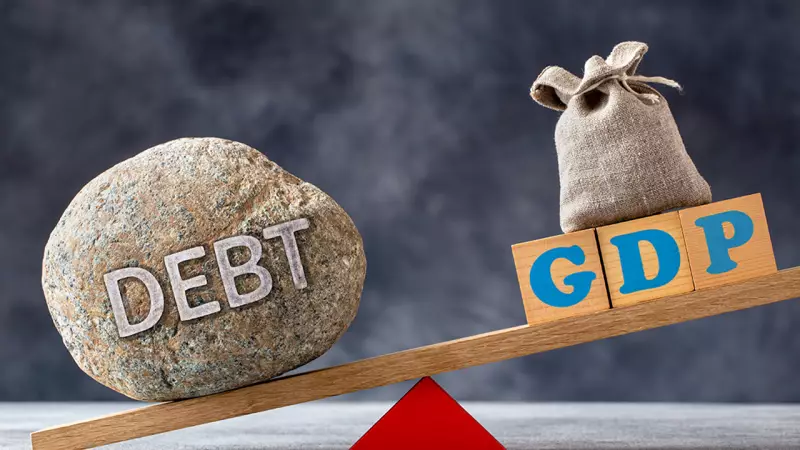
Financial experts have issued a stark warning that Nigeria may be heading toward another severe debt crisis unless the federal government implements immediate reforms to strengthen its debt-management framework and enforce clearer fiscal-responsibility measures.
Symposium Highlights Debt Dangers
During the final virtual symposium roundtable organized by the Capital Market Academics of Nigeria (CMAN), participants emphasized the critical need for Nigeria to address its growing debt challenges. The event, held on November 20, 2025, focused on the theme 'Nigeria's Rising Debt Profile and Sustainability Imperatives'.
Experts at the symposium argued that the effective application of the Medium-Term Debt Strategy is essential for easing refinancing pressures and improving the maturity structure of Nigeria's public debt. They stressed that the government must rebalance the debt mix toward more stable and lower-cost borrowing options to minimize exposure to exchange-rate shocks.
Historical Parallels and Current Risks
Prof. Wilfred Iyiegbunwe, a finance professor at the University of Lagos and chairman of the occasion, drew troubling parallels between current fiscal practices and Nigeria's historical debt challenges. He cautioned that the country may be approaching a debt situation similar to that faced during the Obasanjo administration, which was eventually resolved under the leadership of Dr. Ngozi Okonjo-Iweala.
In his opening remarks, Iyiegbunwe underscored that CMAN possesses exceptional intellectual strength that rivals, and in some cases surpasses, expertise found in federal institutions. He emphasized that Nigeria must focus on rebalancing domestic and external borrowing, enhancing revenue mobilization, and directing loans strictly toward high-value infrastructure projects.
The continued use of Ways and Means financing and other unsustainable fiscal practices could weaken the economy and derail future development plans, according to symposium participants.
Tax Reform Concerns and Market Stability
Oluropo Dada, President of the Chartered Institute of Stockbrokers, urged policymakers to adopt a cautious approach to the proposed Capital Gains Tax. While acknowledging the tax isn't fundamentally objectionable, Dada warned that its immediate implementation could unsettle investor confidence and heighten market volatility.
Dada explained that Nigeria's ambition to achieve a trillion-dollar GDP and sustain double-digit growth depends on a stable, predictable capital market. He called for postponing the tax implementation to allow for deeper consultation and a phased transition that would support growth rather than constrain it.
Prof. Mohammed Mainoma, former Vice-Chancellor of Nasarawa State University, Keffi, highlighted the urgent need for greater clarity in Nigeria's tax framework. He pointed to ambiguities in cultural exemptions, investment reliefs, and offshore-transfer rules that create uncertainty for investors and inhibit compliance.
Proposed Reforms and Solutions
The symposium participants identified several critical areas for reform beyond debt management. They emphasized the need for structural reforms to improve Nigeria's investment climate, including modernizing institutions, lowering business costs, and removing long-standing bottlenecks.
Specific challenges mentioned include subsidy distortions, oil-production inefficiencies, and crude-theft challenges that continue to hamper economic growth.
Experts also highlighted the importance of expanding Public Private Partnerships as complementary infrastructure-financing channels. They recommended clearer regulations, fairer risk-allocation frameworks, and innovative instruments such as Sukuk, Green Bonds, and infrastructure credit guarantees.
Mr. Taiwo Oyedele, Chairman of the Presidential Fiscal Policy and Tax Reforms Committee, presented an overview of tax reforms scheduled to take effect in January 2026. He explained that the reforms aim to modernize the tax system, reduce the burden on businesses, and create a more progressive and equitable fiscal environment.
The reform package includes exempting capital gains tax for retail investors, reducing corporate tax rates, and eliminating minimum tax for companies. Oyedele clarified that these changes were designed to stimulate investment and drive economic growth rather than increase government revenue.
All participants agreed that urgent dialogue and decisive action are necessary to prevent Nigeria from repeating past debt distress and to secure the country's economic future.




