
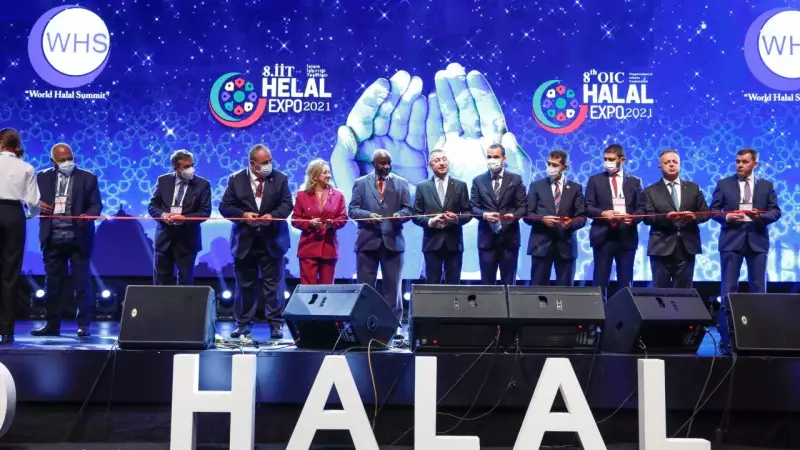
As Nigeria continues to battle persistent inflation and a critical shortage of foreign exchange, a novel economic strategy has emerged from an unlikely source. The Muassasat Nasrul Ilm Wa Da’awat Foundation (MNIDF) has put forward a comprehensive proposal to harness the immense potential of the global halal economy, valued at a staggering $7.7 trillion, as a remedy for the nation's ailing finances.
A Summit of Faith and Finance in Lagos
The foundation hosted its inaugural Muslim Economic Summit at the Nurudeen Alao Auditorium, University of Lagos, under the theme 'Faith, Finance and the Future: Empowering Youths, Women and Businesses for a Prosperous Ummah'. This gathering aimed to reframe the halal market not merely as a religious obligation but as a sophisticated global ecosystem with transformative economic power.
Inclusive and Ethical Economic Framework
Alhaji Ibrahim Olayinka Adigun, National President of MNIDF, emphasized that the halal economy transcends religious boundaries. "The halal economy is inclusive, ethical, and it doesn't discriminate. It is another goldmine for Nigeria to explore," he stated. He highlighted that leading exporters in this sector include non-Muslim nations such as Brazil, Thailand, and Australia, underscoring its universal appeal.
Adigun announced the development of a five-year blueprint, the Roadmap to Halal Economy 2030, which will be presented to policymakers and regulatory agencies. The goal is to create a win-win scenario for Nigeria's Gross Domestic Product (GDP) and the livelihoods of its citizens, leveraging this ethical market for broad-based growth.
Nigeria's Unique Position in Africa
Professor Ahmad Bello Dogarawa, a lecturer in the Department of Accounting at Ahmadu Bello University, Zaria, argued that Nigeria is uniquely positioned to dominate the African halal market. With a population exceeding 200 million and vast arable land, the potential for exports in halal food, beverages, and livestock is described as marvelous.
However, Dogarawa identified a primary hurdle: "remains a fear of the unknown." He clarified that the halal ecosystem is not about Islamisation or Shariah law enforcement but focuses on investment and growth. Citing the over-subscription of the government's 2025 Sukuk bonds by more than 350 percent, he noted, "Humans are naturally afraid of what they don't know, but people are rational, they will tap into what is beneficial once they are educated."
Technicalities and Governance in the Halal Sector
The summit also delved into the technical aspects of Shariah governance, emphasizing that ethics in the halal sector extend beyond prayer to include:
- Food safety and hygiene standards
- Avoidance of usury (Riba) in financial transactions
- Transparent and ethical business practices
Sheikh Sulaimon Abou-Nolla, Chief Imam of Lagos, praised the initiative as a welcome development, reminding attendees that in Islamic tradition, knowledge is considered the lost property of the believer, urging its pursuit for economic empowerment.
Government Support and Awareness Challenges
Representing the Lagos State Government, Mr. Jebe Ahmad, Special Adviser on Islamic Affairs, noted that Governor Babajide Sanwo-Olu has facilitated access to loans for small businesses through the Lagos State Employment Trust Fund (LSETF). However, he lamented that many remain unaware of these facilities due to a lack of education and outreach, highlighting a critical gap in leveraging existing resources for economic growth.
This summit marks a pivotal step in positioning Nigeria to tap into the lucrative halal economy, offering a path to economic diversification and resilience amid ongoing financial challenges.




