Nigeria Vigilantly Tracking Middle East Geopolitical Tensions to Shield Economic Stability
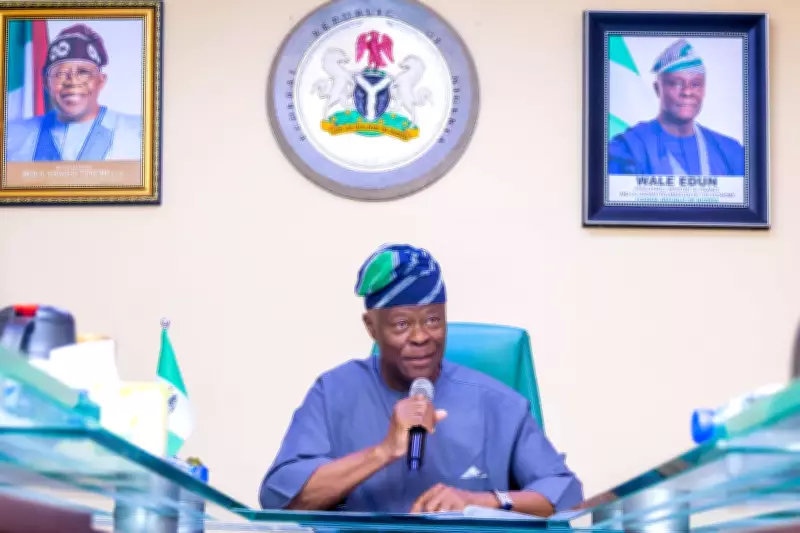
The Federal Government of Nigeria has announced it is maintaining a close watch on the escalating geopolitical tensions in the Middle East, involving the United States, Israel, and Iran, to proactively protect the nation's economic stability. This strategic monitoring follows a crucial meeting of the Economic Management Team, which was chaired by Wale Edun, the Minister of Finance and Coordinating Minister of the Economy.
Economic Risks and Government Response
According to an official statement released by the Federal Ministry of Finance, the meeting conducted a thorough review of potential economic risks associated with the ongoing conflict and its possible implications for Nigeria. The government highlighted that global uncertainty triggered by the conflict, particularly fears of disruptions to major energy supply routes such as the Strait of Hormuz, has already led to significant volatility in crude oil prices and global financial markets.
The Economic Management Team issued a warning that the crisis could impact Nigeria through multiple channels, including:
- Rising global energy prices that could increase domestic costs
- Elevated logistics expenses affecting trade and transportation
- Shifts in international capital flows toward safer assets, potentially reducing investment inflows
Officials emphasized that the government is actively monitoring key economic indicators, such as crude oil price movements, exchange rate fluctuations, and patterns of capital inflows, to assess the situation in real-time.
Positive Economic Fundamentals Amid Uncertainty
Despite these external uncertainties, the government asserted that Nigeria's economic fundamentals are showing signs of improvement. Authorities pointed to real GDP growth of 4.07 percent recorded in the fourth quarter of 2025 as evidence of underlying economic strength. The government assured citizens that appropriate measures would be implemented where necessary to protect the economy and sustain growth momentum.
Evacuation Plans for Stranded Nigerians
In a related development, the government also addressed concerns about Nigerians stranded in various parts of the Middle East due to the conflict. The chairperson of the Nigerians in Diaspora Commission, Abike Dabiri-Erewa, confirmed that evacuation flights would commence once regional airspace becomes safe for operations.
Responding to specific complaints from a Nigerian citizen stranded in Qatar, Dabiri-Erewa explained that repatriation efforts cannot begin immediately because many airspaces in the region remain closed due to security concerns. "And as for repatriation flights, the skies are currently unsafe to fly," she stated, noting that a flight from the United Arab Emirates had arrived in Lagos shortly before another strike forced widespread airspace closures.
She added that a multi-agency federal government team responsible for crisis response and evacuation is on standby, ready to initiate repatriation operations as soon as the airspace reopens and conditions permit safe travel.