
Nigeria's Failure to Plan for Global Oil Crisis Exposes Economic Mismanagement
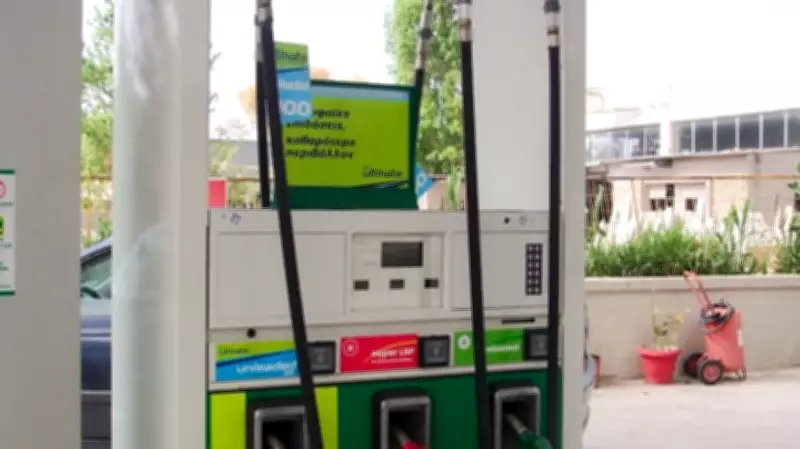
The adage "failure to plan is planning to fail," often attributed to Benjamin Franklin, rings painfully true for Nigeria as it grapples with the fallout from the Middle East conflict. The erratic fluctuations in petrol pump prices starkly illustrate the nation's unpreparedness for such a global energy shock. In less than a month, Dangote Refinery and the Nigerian National Petroleum Company Limited (NNPCL) have repeatedly adjusted prices for petrol and diesel, leaving citizens at the mercy of distant geopolitical events. For a major oil-producing country, this reflects a troubling legacy of living hand-to-mouth, devoid of strategy or discipline to leverage its natural advantages.
Missed Warnings and Inadequate Responses
The war in the Middle East did not erupt without forewarning. Diplomatic talks between the United States and Iran spanned from April 12, 2025, to February 27, 2026, followed by U.S. military mobilizations, including the deployment of the USS Abraham Lincoln on January 26, 2026, and the USS Gerald R. Ford on February 13, 2026. Astute governments worldwide anticipated the conflict's significant impact on global energy markets. However, the Bola Tinubu administration failed to establish any committee to assess the potential effects on Nigeria's oil and gas sector.
Instead, the government's primary oil-related action was signing Executive Order 9 of 2026, which mandated that all government entitlements from oil and gas production be remitted directly into the Federation Account. This order halted NNPCL's previous deductions of a 30 percent management fee and 30 percent frontier exploration fund. While supporters praised it for expanding the Federation Account, they overlooked critical issues of accountability and transparency. Given the administration's failure to fund capital budgets in 2025 and its eagerness to channel resources into 2027 election campaigns via third parties and compliant governors, EO9 appears more as a rush to increase distributable funds than a strategic planning measure.
Governance Distractions and Fiscal Irresponsibility
As the Middle East crisis loomed, the National Assembly was preoccupied with manipulating amendments to the Electoral Act to facilitate electoral fraud, rather than scrutinizing EO9. No substantive critique was conducted to evaluate whether warehousing funds in the Federation Account Allocation Committee (FAAC) ensures greater safety or accountability. A more prudent approach would have been to engage lawmakers and stakeholders to refine the Petroleum Industry Act (PIA), but President Tinubu's administration showed no inclination for such deliberation.
In response to the turmoil, the government appointed a task force led by Fola Adeola to design structural reforms for Nigeria's petroleum sector, aiming to unlock capital and enhance the country's appeal as an energy investment destination. Notably, the task force's mandate omitted any mention of the ongoing war or urgent measures to mitigate its impact on upstream and downstream operations. When announced on March 13, 2026, petrol prices had already soared to N1,175 per litre at Dangote Refinery, rising further to N1,245 per litre shortly after. The task force was not tasked with cushioning the effects of these spiraling prices or utilizing potential windfalls from excess crude sales.
FAAC Disbursements and State-Level Failures
Since the removal of fuel subsidies on May 29, 2023, FAAC disbursements have tripled, distributing trillions of naira monthly to federal, state, and local governments. Between July 2023 and February 2024, over N5 trillion was shared among the 36 states, providing unprecedented revenue inflows. Yet, this surge has yielded minimal tangible benefits for citizens. Many states lack access to potable water, forcing residents to sink boreholes independently. Healthcare systems remain underfunded, with rising costs for medicines and essentials.
Governors, historically negligent in saving excess allocations, often squander funds on property acquisitions without accountability. The Federal Government, instead of enforcing transparency, uses legal instruments for political coercion. While some states have ceased borrowing to pay salaries, others have not implemented the N70,000 minimum wage, and overall state debt stood at N4.002 trillion as of September 2025, exacerbated by naira depreciation. Without the petrol tax from subsidy removal, many states would face insolvency, highlighting the unsustainable nature of relying on shared petrol revenues.
Failed Fiscal Buffers and Infrastructure Deficits
Nigeria's fiscal buffers have proven inadequate. The Excess Crude Account (ECA), established in 2004 as a buffer against oil price volatility, dwindled from around $22 billion in 2008-2009 to less than $1 million by 2022, largely due to governors' preference for sharing over saving. Current efforts to revive it have only raised the balance to approximately $534,823.39, offering no protection against the current crisis.
Similarly, the Nigeria Sovereign Wealth Fund (NSWF), created in 2011 to stabilize the economy and invest in infrastructure, has fallen short. The economy remains vulnerable to global shocks, with infrastructure stock at only 30 percent of GDP, requiring an estimated $2.3 trillion to $3 trillion over 20-30 years to bridge the gap. The Nigeria Sovereign Investment Authority (NSIA) aims to double its $3 billion coffers in three years, but this depends on governmental sincerity, given that savings from subsidy removal—reportedly $7.5 billion annually—have not curbed borrowing, with national debt exceeding N153 trillion by early 2026.
Refinery Failures and Economic Consequences
The dysfunction of state-owned refineries in Port Harcourt, Kaduna, and Warri exacerbates Nigeria's vulnerability. Despite President Tinubu's commendations in late 2024 for rehabilitation efforts, with Warri operating at 60 percent capacity, these refineries have consumed around $20 billion since the Fourth Republic began, compared to the $3 billion Dangote spent to build Africa's premier refinery. No accountability has been enforced for these failures, epitomizing poor planning.
Functional public refineries could have insulated the economy from the Gulf crisis, but Nigeria's priority remains maximizing FAAC disbursements. This short-sighted approach endangers the nation's future, underscoring a profound gap between rhetoric and delivery in governance.




