
Nigeria Enters New Era of Economic Stability After Ambitious Reforms
Nigeria has successfully transitioned into a period of macroeconomic stability following two years of comprehensive economic reforms that have significantly reduced inflation, strengthened the national currency, and positioned the economy for sustainable growth, according to Central Bank Governor Olayemi Cardoso.
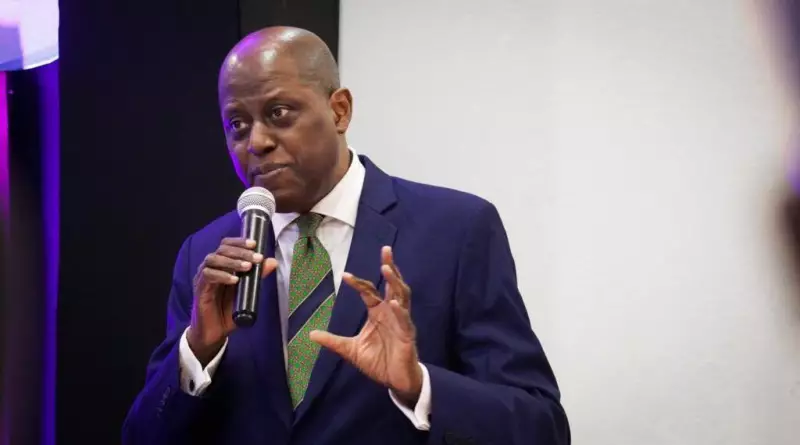
The CBN governor made this declaration during his keynote address at the 60th Annual Bankers' Dinner organized by the Chartered Institute of Bankers of Nigeria (CIBN) on Friday, November 29, 2025.
Remarkable Progress on Inflation and Economic Growth
Inflation has shown dramatic improvement, falling from its peak of 34.6% in November 2024 to just 16.05% currently. This represents seven consecutive months of declining inflation rates, with food inflation dropping even more significantly from 21.87% in August to 13.12% in October.
Cardoso attributed this sustained disinflation to the Central Bank's strengthened policy framework, stating: "Our transition to an inflation-targeting framework is gaining traction. We have improved data analytics, strengthened communication, and ended monetary financing of fiscal deficits."
On economic expansion, Nigeria recorded 4.23% growth in the second quarter of 2025, marking the strongest performance in four years. This growth was driven by improved output in telecommunications, financial services, and a modest recovery in oil production.
Foreign Exchange Transformation and Reserves Boost
The foreign exchange market has undergone a remarkable transformation, with the Central Bank fully clearing the $7 billion FX backlog that previously hampered market operations. The implementation of the Nigerian Foreign Exchange Code and the Electronic FX Management System (EFEMS) has brought unprecedented transparency to the market.
As a result, the gap between official and parallel exchange rates has narrowed dramatically from over 60% to under 2%. This stability has attracted substantial foreign capital, with inflows surging to $20.98 billion in the first ten months of 2025, representing a 428% increase compared to 2023 levels.
Nigeria's external reserves have strengthened to $46.7 billion, the highest level in nearly seven years, providing more than 10 months of import cover. The current-account balance also saw an impressive 85% increase in the second quarter, reaching $5.28 billion.
International Recognition and Banking Sector Strength
Global financial institutions have taken notice of Nigeria's economic progress. Fitch upgraded Nigeria to B (stable), Moody's raised its rating to B3, and S&P revised its outlook to positive. The successful $2.35 billion Eurobond issuance, which attracted $13 billion in orders, demonstrated strong international investor confidence.
The banking sector is showing robust health, with recapitalization efforts progressing ahead of the March 2026 deadline. Sixteen banks have already met or exceeded the new capital requirements, while digital finance continues to expand with over 12 million contactless cards in circulation.
Looking toward 2026, Cardoso outlined five key priorities: strengthening the banking system, delivering durable price stability, modernizing payments, supporting responsible fintech innovation, and building a more agile, digitally enabled Central Bank.
"Nigeria is more resilient to external shocks today than at any point in our recent history," Cardoso concluded. "In 2026, we will continue to anchor monetary policy on discipline, evidence and transparency. Nigeria's economy is stable, inclusive and primed for sustainable growth."




