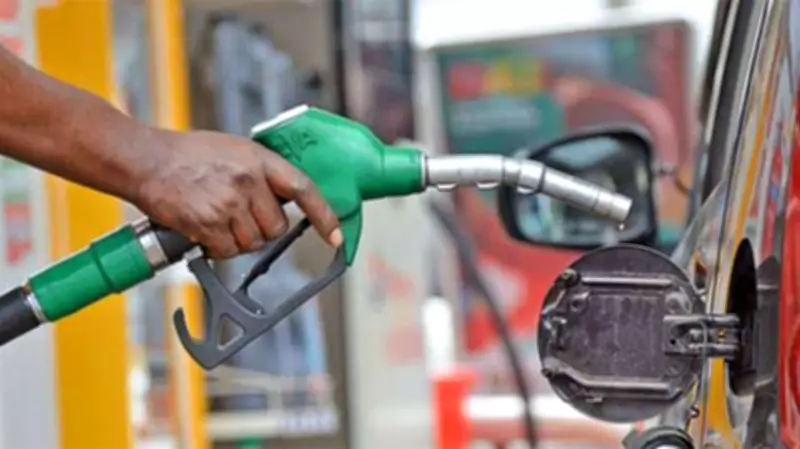
Petrol Prices Experience Marginal Increase in February 2026 Amidst Yearly Decline
The average retail price of Premium Motor Spirit (PMS), commonly known as petrol, saw a slight rise in February 2026, according to the latest report from the National Bureau of Statistics (NBS). This increase occurred even as prices remained substantially lower compared to the same period last year, indicating a complex pricing landscape for Nigerian consumers.
NBS Data Reveals Price Fluctuations and Regional Disparities
Consumers paid an average of N1,051.47 per litre in February, marking a 1.62 per cent increase from the N1,034.76 recorded in January. However, on a year-on-year basis, the price declined significantly by 15.60 per cent from N1,245.80 in February 2025. These figures suggest a period of relative price stability in recent months, following the sharp adjustments observed over the past year.
Analysis of state-level data highlights considerable disparities in petrol prices across Nigeria. Yobe State recorded the highest average price at N1,134.73 per litre, followed closely by Sokoto at N1,116.81 and Akwa Ibom at N1,109.44. In contrast, Lagos posted the lowest average price at N966.61, with Oyo and Kaduna among the most affordable at N973.45 and N1,000.07, respectively.
The difference between the highest and lowest states stood at N168.12 per litre, underscoring ongoing supply and distribution challenges, particularly in the northern regions of the country. Zonal analysis further reflects this pattern, with the North-East recording the highest average price at N1,084.41, largely driven by elevated costs in states such as Yobe, Borno, and Gombe.
Regional Variations and Monthly Movements
The South-West had the lowest zonal average at N1,023.89, supported by relatively lower prices in Lagos and Oyo. Other zones showed moderate price levels, with the North-Central averaging N1,044.20 and the North-West N1,044.79. The South-East and South-South recorded N1,058.75 and N1,056.33, respectively.
Month-on-month movements were uneven across states. Some areas experienced notable increases, including Sokoto (up 9.57 per cent), Niger (9.06 per cent), and Gombe (8.77 per cent). Yobe also saw a sharp rise of 7.99 per cent. Conversely, declines were recorded in states such as Rivers (down 11.21 per cent), Nasarawa (-9.26 per cent), and Cross River (-8.80 per cent), suggesting that local supply dynamics continue to influence retail pricing significantly.
Dangote Refinery Faces Crude Supply Shortages
In a related development, the Chief Executive Officer (CEO) of Dangote Refinery, David Bird, revealed that the facility is receiving far below its agreed crude oil supply under the Federal Government's crude-for-naira arrangement. During an interview on Arise News, Bird noted that the refinery gets only about five cargoes of crude monthly, against an expected 13 to 15 cargoes.
He explained that this shortfall affects the refinery's ability to fully optimise local crude supply despite existing agreements. "What we see under that agreement, we should be getting about 13 to 15 cargoes a month. That's what we could process to meet the domestic fuel requirements. We're only getting five. So, that's an underperformance against that pre-agreed volume contract," he stated.
According to Bird, the gap has forced the refinery to source preferred Nigerian crude grades from the international market at higher costs. He clarified that the crude-for-naira policy was designed to stabilise Nigeria's foreign exchange market rather than provide financial advantages to the refinery, noting that the company still purchases crude at international benchmark prices.
The combination of rising petrol prices in February and the ongoing supply challenges at Dangote Refinery highlights the complexities of Nigeria's fuel market. While consumers benefit from lower prices compared to last year, regional disparities and supply chain issues continue to impact affordability and availability across the nation.