
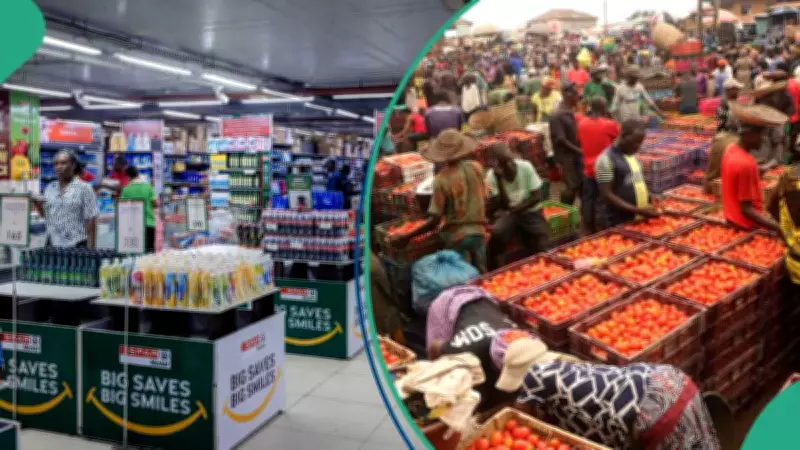
Nigeria's Food Inflation Crisis: Rice Hits N61,000 Amid Eid al-Fitr Demand Surge
Food prices across Nigeria have experienced a dramatic surge in the lead-up to Eid al-Fitr, as heightened Ramadan demand and escalating logistics costs place immense pressure on household budgets. Market surveys conducted in major urban centers, particularly Lagos, reveal that staple items essential for traditional meals like jollof rice and stew have become significantly more expensive compared to the beginning of 2026. This trend marks a sharp reversal from the brief period of easing inflation recorded earlier in the year, signaling renewed economic challenges for consumers.
Staple Food Items Record Notable Price Increases
The cost of rice, a fundamental staple for countless Nigerian households, has risen noticeably. A standard 50kg bag now sells for approximately N61,000, up from an average of N56,000 in January. Prices vary depending on brand and grain quality, but the overall upward trajectory is clear and concerning for families preparing for Eid celebrations.
Tomatoes and peppers have witnessed even steeper price hikes. A large basket of fresh tomatoes now averages N41,000, representing a substantial 17 per cent increase from N35,000 earlier in the year. Similarly, a bag of fresh pepper has jumped to around N46,000 from N30,000 in January. Traders attribute these spikes partly to reduced farming activity during Ramadan, as many farmers temporarily scale back operations during the fasting period, tightening supply and pushing prices upward. However, prices are expected to ease slightly once normal farming activities resume after Ramadan concludes.
Cooking Oil Prices Offer Limited Relief Amid Overall Surge
Despite the surge in key food items, consumers have found some relief in the prices of cooking oils. A 25-litre keg of vegetable oil now sells for about N55,000, down from N66,000 in January. Palm oil prices have also declined to around N48,000 from N58,000 over the same period. Traders explain that this mixed trend reflects uneven market forces, with some commodities benefiting from improved supply conditions while others remain severely constrained by logistical and seasonal factors.
Rising Fuel Costs Threaten Further Price Escalation
Market participants warn that the current price levels may not hold for long, as rising fuel costs begin to feed directly into transportation expenses. Bose Idowu, a trader at Ketu Market in Lagos, noted that transporters have already started increasing haulage fees, forcing traders to pass the additional costs on to consumers. This impact is particularly significant in Nigeria, where food items are often transported over long distances from northern farming regions to southern urban markets. Any increase in fuel prices typically triggers a corresponding rise in food prices, exacerbating the inflationary spiral.
Inflation Rebounds on Ramadan Spending and Global Pressures
Recent data from the National Bureau of Statistics (NBS) shows that food inflation is already reacting to these mounting pressures. The rate rose to 12.12 per cent in February, up from 8.89 per cent in January, marking a sharp reversal after months of decline. Analysts attribute this spike largely to Ramadan-driven demand, where increased bulk buying and stockpiling by households during the fasting period have intensified pressure on already stretched supply chains.
Global developments are also compounding the local situation. Ongoing geopolitical tensions, particularly involving the United States and Iran, have disrupted international oil markets, contributing to higher fuel prices domestically. With petrol prices approaching N1,200 per litre in major cities, the cost of transporting goods continues to climb relentlessly.
Muhammed Magaji, president of the All Farmers Association of Nigeria, issued a stark warning that rising logistics costs could significantly push up food prices in the coming months. He added that higher production and transportation costs may discourage farmers from expanding operations, potentially deepening financial strain across the entire agricultural sector and threatening long-term food security.
Outlook: Tougher Weeks Ahead for Nigerian Consumers
With Eid celebrations approaching and fuel costs still rising, consumers may face even higher food prices in the coming weeks. While some relief could emerge from post-Ramadan farming activities resuming normalcy, persistent logistics challenges and global uncertainties suggest that food inflation pressures are far from over. The complex dynamics shaping consumer prices in Africa's largest economy highlight the urgent need for coordinated policy responses to mitigate the impact on vulnerable households and stabilize the market.




