
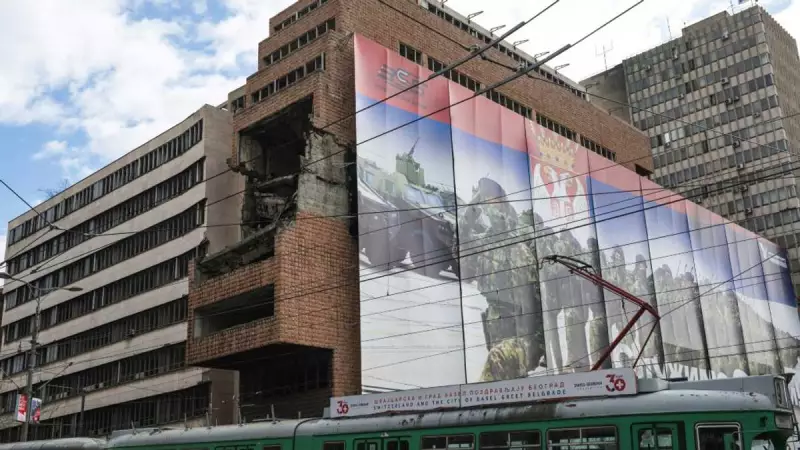
Serbia's parliament has taken decisive action to accelerate the demolition of the former Yugoslav Army headquarters in Belgrade, clearing the way for a luxury hotel project backed by Donald Trump's son-in-law Jared Kushner.
Controversial Fast-Tracking Decision
Lawmakers voted overwhelmingly on Friday to classify the redevelopment as urgent national interest, requiring state institutions to issue permits without delay. The special law passed with 130 votes in favor and 40 against, overcoming previous obstacles that had stalled the project since May.
The move comes despite ongoing investigations into allegations that a public official forged documents used to revoke the site's protected status as a cultural asset. The building's protection was lifted last year, shortly before Kushner's Miami-based investment firm, Affinity Partners, signed a 99-year land deal with the Serbian government.
Historical Significance and Public Division
The mid-20th-century modernist complex holds deep significance for Serbians, having been partially destroyed during NATO's 1999 bombing campaign that ended the Kosovo war. The building has stood in ruins for 26 years, serving as a stark reminder of the conflict.
Public opinion remains sharply divided over plans to transform the site into a high-rise hotel. President Aleksandar Vucic, who has hosted Kushner multiple times in Belgrade, has thrown his personal support behind the scheme, arguing it represents progress and improved US relations.
Heritage Concerns and Opposition
Opposition voices have raised strong objections to the project. Radomir Lazovic of the Green-Left Front accused the government of trying to flatten the army headquarters under false pretenses of national interest.
Heritage experts have expressed alarm at the precedent being set. Estela Radonjic Zivkov from Serbia's Institute for the Protection of Cultural Monuments warned that the law creates a dangerous model allowing protected monuments to be stripped of status, sold, and demolished.
Architect Miljan Salata described the building as a unique architectural and urban masterpiece that could be reconstructed and preserved as a memorial to NATO bombing victims. Meanwhile, a small group of protesters gathered outside parliament during the vote, supporting a hunger strike by a mother seeking accountability for a separate tragedy at Novi Sad train station.
The project represents another chapter in Belgrade's controversial urban redevelopment, with Affinity's partner UAE company Eagle Hills previously involved in riverfront developments that sparked public outcry in 2016.




