Shettima Calls for African-Led Economic Transformation at World Economic Forum
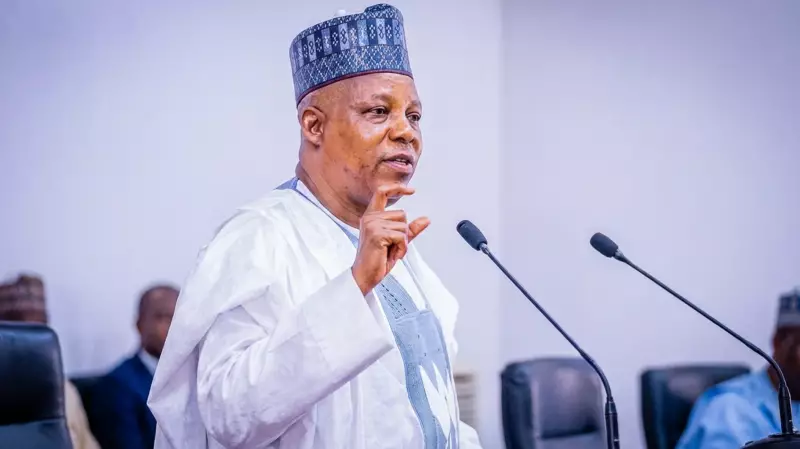
Vice President Kashim Shettima has delivered a powerful message at the World Economic Forum 2026 Annual Meeting in Davos, advocating for a fundamental shift in Africa's economic approach. Speaking during the High-Level Accra Reset Initiative meeting, Shettima emphasized that Africa must move away from dependency on foreign aid and imports toward building domestic productive capacity and attracting investment.
From Periphery to Pulse: Africa's Demographic and Economic Future
"Africa is no longer the periphery; it is the pulse of the world's demographic and economic future," declared Shettima during his address. He stressed that true prosperity cannot be "parachuted in" from external sources but must be "homegrown and earned" through deliberate policy and industrial development.
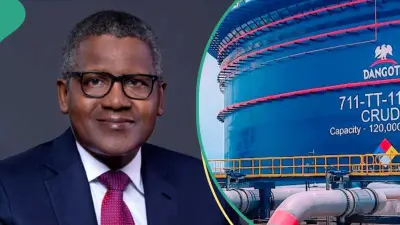
The Vice President pointed to Nigeria's experience with the Dangote Refinery as concrete evidence of what African capital and industrial ambition can achieve. He noted that this massive facility is positioning Nigeria to transition from a net importer to a net exporter of refined petroleum products, demonstrating the transformative power of local production.
"Africa cannot rise on applause alone. We rise when we build," Shettima asserted. "Nations move from price takers to value makers when production is matched with infrastructure and policy clarity."Addressing Manufacturing Decline with Technological Leapfrogging
Shettima acknowledged concerning statistics about Africa's manufacturing sector, noting that its share of GDP declined from 16 percent in 1980 to under 10 percent by 2016. However, he presented this challenge as an opportunity for technological leapfrogging.
The Vice President outlined how Africa can accelerate industrialization through:
- Modular factories that can be rapidly deployed
- Artificial intelligence applications in manufacturing
- Robotics and automation technologies
- 21st century industrial strategies
Human Capital Mobility and Diaspora Contributions
Shettima highlighted the crucial role of human capital mobility in Africa's economic development. He recalled that Africans in the diaspora remitted approximately $95 billion in 2024, representing roughly five percent of Africa's GDP and comparable to total foreign direct investment.
"That is not charity," Shettima emphasized, noting that free movement across Africa would allow skills and ideas to circulate more freely, accelerating shared prosperity throughout the continent.
Nigeria's Domestic Lessons and Healthcare Strategy
Drawing from Nigeria's experience, Shettima observed: "Markets and talent exist, yet resilience remains thin until demand is translated into domestic capability. Wealth given from outside is fragile; wealth created from within is enduring."
He highlighted Nigeria's health-industrial strategy under the Presidential Initiative for Unlocking the Healthcare Value Chain (PUHVAC), launched in October 2023, as part of efforts to build vaccine and medicine manufacturing capacity and secure "health sovereignty" for the nation.
The Accra Reset Initiative: A Bold African Vision
Shettima welcomed the Accra Reset Initiative as a bold, African-led reimagining of the continent's future, anchored on sovereignty, cooperation, and tangible results rather than mere rhetoric.
"The Accra Reset is a call to move from dependency to dignity, from aid to investment," Shettima declared. "If we answer this call, the world will witness an African boom built on innovation, industry, and interdependence."
African Leaders Echo Call for Economic Sovereignty
Other prominent African leaders at the forum reinforced Shettima's message. Ghana's President John Mahama lamented Africa's transactional relationship with the global north, warning that unilateral pursuits by global actors have kept the continent trapped in cycles of conflict and poverty.
Former Nigerian President Olusegun Obasanjo cautioned that in an era of disruption and reconfigured supply chains, countries unprepared for negotiation and execution risk becoming "bargaining chips" in global economic arrangements. He emphasized that true sovereignty requires discipline, coordination, and the capacity to implement decisions at scale.
Former Vice President Yemi Osinbajo noted that the forum aims to galvanize African governments to rethink economic transformation strategies and confront the challenges facing their people in a rapidly evolving global system.
The collective message from African leaders at WEF 2026 represents a significant shift in continental economic thinking, moving from passive reception of aid to active creation of wealth through domestic production, technological innovation, and strategic investment partnerships.