
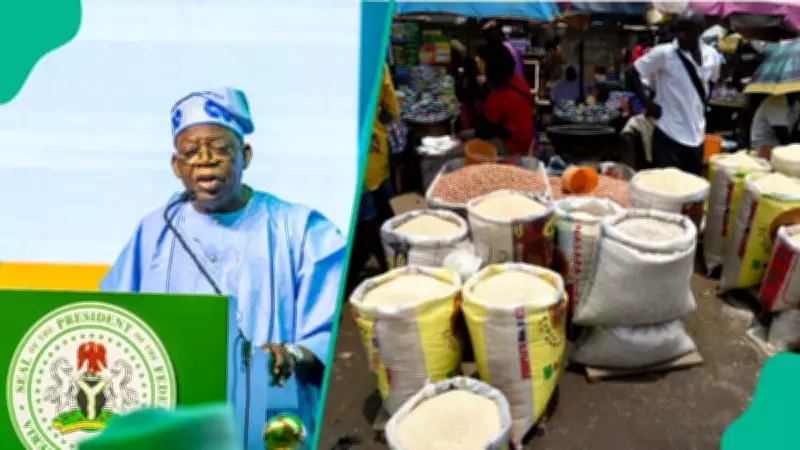
Tinubu Declares Nigeria's Economy Improving, States No Longer Borrow for Salaries
President Bola Tinubu has announced that Nigeria's economy is beginning to recover from the initial difficulties faced by his administration, with state governments now in a stronger financial position. Speaking at an interfaith breaking of fast event at the Presidential Villa in Abuja on Monday, Tinubu highlighted that economic reforms have stabilized the country's finances, leading to positive changes.
Inherited Economic Challenges and Reform Efforts
During the event, Tinubu acknowledged inheriting a challenging fiscal environment but emphasized his administration's commitment to implementing reforms aimed at economic stabilization. "I am grateful for the opportunity to serve," he stated, reaffirming his dedication to fulfilling his responsibilities faithfully. The president noted that pensioners are gradually receiving relief as these government reforms take effect, indicating a broader improvement in the economic situation.
State Governors' Financial Independence
A key claim made by Tinubu is that state governors are no longer approaching banks to obtain loans solely for paying workers' salaries, a practice that was common in the past. This shift, he argued, demonstrates the strengthened financial standing of state governments across Nigeria, resulting from the administration's policies. Tinubu also assured Nigerians of the government's continued efforts to safeguard national unity and stability, while praising religious and traditional leaders for their role in fostering peace and social harmony.
Support Measures and Economic Initiatives
In related developments, the Minister of Finance and Coordinating Minister of the Economy, Wale Edun, reported that about nine million of Nigeria's poorest households have received direct cash transfers, with over 12 million Nigerians enrolled through digital ID integration, nearly 60% of whom are women. Edun reflected on the timing of the International Development Association (IDA20) initiative, introduced during global uncertainties like the COVID-19 pandemic aftermath and supply chain disruptions. He listed structural reforms such as:
- Unification of exchange rates
- Removal of petrol subsidy
- End of deficit monetization
These measures, supported by IDA's development policy operations, have provided financial and technical backing to bolster Nigeria's economic recovery. Additionally, the federal government has announced plans to empower market women, small-scale traders, and artisans with zero-interest loans up to N100,000 through programs like MarketMoni and TraderMoni, targeting micro-entrepreneurs nationwide.




