
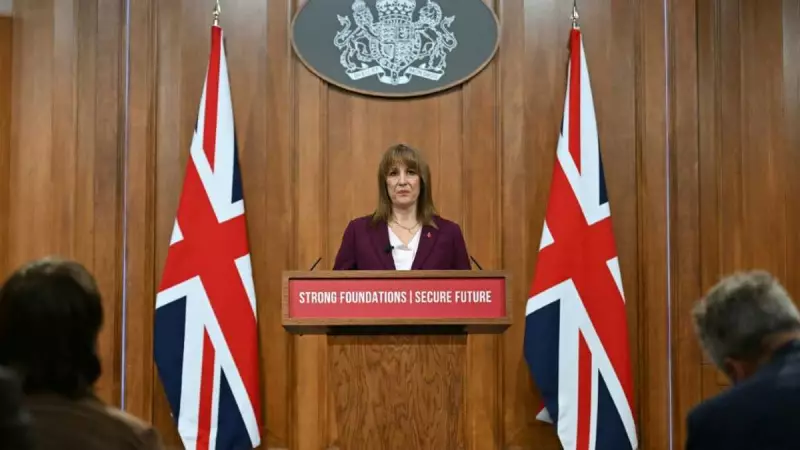
The United Kingdom's economic outlook has darkened significantly as new data reveals a sharp slowdown in growth, creating major challenges for Prime Minister Keir Starmer's Labour government ahead of its crucial annual budget announcement.
Economic Slowdown Deepens
Official statistics released on Thursday showed the UK economy grew by just 0.1 percent during the July-September period, marking a substantial decline from the 0.3 percent growth recorded in the second quarter. The Office for National Statistics confirmed the disappointing figures, which fell short of analysts' expectations of 0.2 percent growth.
This economic deceleration comes amid growing concerns about the Labour government's ability to stimulate consistent growth since taking power in July 2024 after 14 years of Conservative rule. The latest quarterly performance represents a dramatic drop from the 0.7 percent growth achieved in the first three months of the year.
Rising Unemployment and Budget Pressure
Compounding the economic troubles, recent data showed UK unemployment rising more than anticipated to 5.0 percent in the third quarter. This dual blow of slowing growth and rising joblessness creates a difficult backdrop for Finance Minister Rachel Reeves as she prepares to deliver the government's budget on November 26.
Many economic experts attribute the weak performance largely to Reeves' decision to increase taxes on businesses in her first budget last year. The finance minister has indicated that additional tax increases on certain salary ranges might be necessary in the upcoming budget to reduce government debt and fund essential public services.
Ruth Gregory, deputy chief UK economist at Capital Economics, noted that 'the economy is struggling to gain decent momentum in the face of higher taxes' and pointed to weak exports as another contributing factor. She warned that with potential tax rises looming, 'there is little reason to think that GDP growth will accelerate much from here.'
Manufacturing Setback and Policy Response
The economic challenges were further highlighted by September's单独 data, which showed the UK economy contracting by 0.1 percent for the month. This decline was partly driven by a cyberattack on car manufacturer Jaguar Land Rover that significantly impacted the manufacturing sector.
ONS director of economic statistics Liz McKeown explained that 'growth slowed further in the third quarter with both services and construction weaker than in the previous period.' She specifically highlighted 'a particularly marked fall in car production in September, reflecting the impact of a cyber incident.'
In response to the troubling figures, Finance Minister Reeves acknowledged that 'there's more to do to build an economy that works for working people.' She promised that 'at my budget later this month, I will take the fair decisions to build a strong economy.'
Despite the weak growth indicators, the Bank of England maintained its current interest rate in November, as annual inflation remains significantly above the central bank's two-percent target. However, some analysts, including Rob Wood of Pantheon Macroeconomics, predict the disappointing growth and employment data 'all but seals a December rate cut.'




