
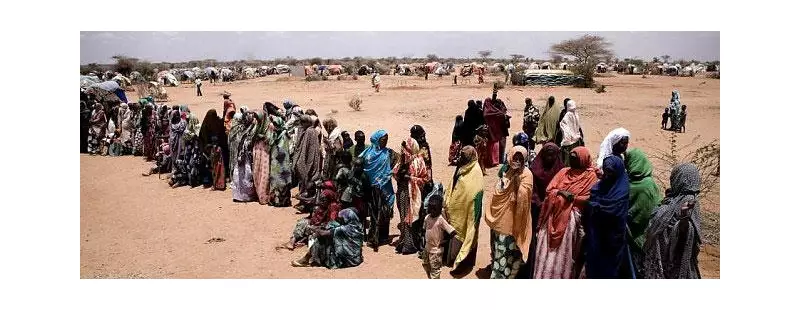
The World Bank has officially sanctioned a substantial performance-linked financing package totaling up to $12 million specifically for Nigerian states that are hosting internally displaced persons (IDPs). This initiative is part of a broader federal project designed to address persistent data deficiencies regarding displacement and to enhance the integration of IDPs into national development frameworks.
Performance-Based Financing Structure
This allocation forms a component of a larger $300 million concessional credit approved on August 7, 2025, under the Solutions for the Internally Displaced and Host Communities Project. Crucially, disbursement of funds is contingent upon the achievement of independently verified results, marking a significant departure from conventional development lending practices.
Disbursement Criteria and Timeline
According to detailed project documentation, the disbursement under Performance-Based Condition Two will reward states that successfully execute the registration and profiling of IDPs residing within host communities. Payments are scheduled to be distributed over a three-year period, with amounts escalating as states meet progressively more stringent requirements.
In the initial year, participating Tier 1 and Tier 2 states are mandated to commence registration and profiling activities in selected host communities. They must also complete comprehensive demographic and vulnerability assessments in a minimum of two wards. States achieving this threshold will each receive an allocation of $250,000.
By the second year, Tier 1 states are required to conduct detailed intention surveys and stability index assessments. Additionally, they must produce in-depth analyses covering the drivers of displacement, socioeconomic impacts, outward migration pressures, and risks associated with trafficking and smuggling. Fulfilling these criteria will unlock a further $500,000 per state.
The final and most substantial payout occurs in the third year. To qualify, states must ensure that 80 percent of IDPs in host communities across all participating states are registered and profiled. Meeting this target will grant each state $500,000, culminating in the total $12 million allocation under this specific condition. The agreement anticipates that by the fourth year, displacement-related data gaps will be comprehensively addressed, though no additional payments are attached to this phase.
Additional Performance Conditions
Beyond the focus on IDP data, the financing agreement incorporates two further performance-based conditions. Performance-Based Condition One requires participating local governments to enhance their asset management systems. Tier 1 states must issue asset inventory guidelines and operations and maintenance standards that align with international benchmarks, followed by rigorous audits and approvals. Up to $9 million is allocated to this condition, with disbursements of $500,000 at each verified stage of compliance.
Performance-Based Condition Three is centered on the long-term integration of IDPs. States must facilitate access to essential legal documentation, including birth, marriage, education, and residence certificates, as well as travel documents and driving licenses. States completing this stage become eligible for $1 million each. Subsequent milestones involve legalizing transparent land and property transfers to IDPs, establishing monitoring mechanisms to prevent tensions with host communities, and opening development programs in skills, livelihoods, or infrastructure to displaced populations. A total of $12 million is earmarked under this condition.
Eligibility and Verification Requirements
Participation in this program is restricted to states meeting stringent eligibility criteria. Tier 1 states must host more than 150,000 IDPs, representing over two percent of their total population. Tier 2 states qualify with at least 100,000 IDPs or more than one percent of the population. Additionally, states must formalize their involvement by signing subsidiary agreements with the federal government and adopting approved security management plans.
All performance claims submitted by states must undergo verification by independent agents acceptable to the World Bank. The Bank retains the authority to withhold or reallocate funds if specified milestones are not satisfactorily met, ensuring accountability and adherence to the project's objectives.
Broader Financial Context and Impact
The overarching $300 million financing package is designated to support infrastructure development, livelihood programs, institutional strengthening, and project management across northern Nigeria. Repayment of this concessional credit is scheduled to commence on January 15, 2031, with semi-annual installments continuing until July 15, 2050.
This development underscores the World Bank Group's pivotal role in Nigeria's development financing landscape. Currently, the World Bank stands as Nigeria's largest external creditor, with outstanding commitments amounting to $19.39 billion, which equates to 41.3 percent of the nation's total external debt. This latest approval reinforces the institution's continued engagement in addressing critical humanitarian and developmental challenges within the country.




