
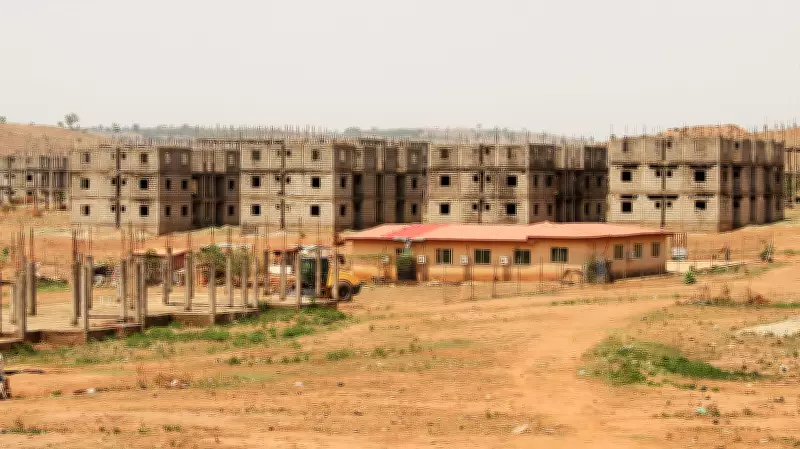
Delegates from 176 countries at the thirteenth World Urban Forum (WUF13) held in Baku, Azerbaijan, have called for renewed action to address the growing global housing crisis. The Baku Call to Action, issued at the end of the forum, captures shared priorities and practical actions emerging from discussions and contributions across the Forum. It seeks to provide a roadmap for collective responsibility and stronger collaboration in responding to housing challenges across different contexts.
With over 57,000 participants, including more than 3,000 online, from various countries, alongside contributions from local governments, grassroots organisations, civil society, businesses, researchers and practitioners, the document reflects one of the most diverse stakeholder engagement processes in the Forum’s history. With an estimated 2.8 billion people living in inadequate housing globally, the document highlights the need for stronger action across all levels of government to address growing pressures on housing systems.
Integrated Housing Systems Needed
A central message emerging from the Baku Call to Action is that housing cannot be viewed simply as the construction of homes. The document calls for housing systems that are more closely connected with land, infrastructure, transport, public services and economic opportunity. Discussions throughout WUF13 highlighted that the housing crisis is shaped by interconnected pressures, including rising costs, land speculation, displacement, weak governance systems and climate impacts. The Baku Call to Action asserts that addressing these challenges requires moving beyond fragmented approaches toward more integrated and people-centred solutions.
Climate Change and Housing
The document also places strong emphasis on the growing relationship between housing and climate change. It highlights that those facing the greatest housing insecurity are often the same communities most exposed to climate risks, including floods, extreme heat and environmental degradation. The document encourages stronger investment in climate-resilient housing systems through approaches such as nature-based solutions, upgrading and retrofitting existing housing, community-led action and stronger disaster preparedness.
Implementation and Shared Responsibility
Besides identifying challenges, the document places strong emphasis on implementation and shared responsibility. It calls for stronger multilevel governance, expanded financing approaches, improved access to data and greater support for local governments and opportunities for communities to deliver solutions on the ground.
Earlier, United Nations Deputy Secretary-General Amina Mohammed, who was addressing ministers, ambassadors, investors, development partners, the private sector and other key actors during the Special Session on the Africa Affordable Housing Compact, placed housing at the centre of Africa’s urban future and progress toward the Global Goals. “Housing sits at the heart of the Sustainable Development Goals,” she said. “Secure, adequate housing and you create the conditions in which every other goal can take root.” Mohammed is also the Chair of the United Nations Sustainable Development Group and a former Nigerian Minister of Environment. Her remarks came at a critical moment, midway through implementation of the New Urban Agenda, with only a few years remaining to achieve the 2030 Agenda for Sustainable Development and as Africa advances Agenda 2063 through a growing focus on urbanisation and housing.
Africa's Housing Deficit
Introducing the session, Executive Director of UN-Habitat, Anacláudia Rossbach, highlighted the scale of the housing crisis facing the continent. “Africa already has a housing deficit that exceeds 60 million units and on current trajectories, it will surpass 130 million by 2030,” she said. “We do have a financing gap of more than $1.4 trillion.” She stressed that Africa’s rapid urban growth presents opportunities for investment in housing, municipal infrastructure, climate resilience and green building transitions. The continent’s urban transformation represents one of the world’s largest long-term investment opportunities.
Central to the session was the Nairobi Declaration, adopted during the second Africa Urban Forum in April 2026 and convened by the African Union and the Government of Kenya. The declaration is a political commitment by African Member States to accelerate affordable housing delivery across the continent. “The Nairobi Declaration carries the voice of the continent,” said Rossbach. “Governments, mayors, African Union development partners, the private sector and civil society aligned around a single proposition: Africa’s urban future will be decided by what we build, finance and deliver in this decade.”
From Declaration to Implementation
The Special Session focused on translating that commitment into implementation through the African Affordable Housing Compact, a platform convened by the Regional Office for Africa of UN-Habitat. Rossbach noted that the compact is designed to move “from declaration to action to implementation” through four pillars: the Africa Affordable Housing Fellowship, the Affordable Housing Deal Platform, the Housing Data Hub and Country Housing Compacts. Deputy Secretary-General described the compact as “the U.N.-anchored platform built to move us beyond just the declarations,” noting that it connects policy reform, project pipelines and finance without duplicating existing efforts.
Rossbach linked housing to nearly every Sustainable Development Goal (SDG), arguing that affordable housing drives progress on poverty eradication, health, gender equality and climate resilience. She also stressed the importance of sustainable urban growth. “Africa’s housing stock has not yet been built,” she said. “Every decision we take now locks in decades of emissions or avoids them.” The Deputy Secretary-General also highlighted inequalities in global financing systems, noting that Africa receives less than 3 per cent of global housing finance despite accounting for nearly 20 per cent of the world’s urban population. Calling for urgent partnerships and investment, she urged governments to provide “regulatory clarity, land tenure security and fiscal incentives” while stressing that “Africa’s housing market is not the next frontier, it is the present one.”




