
X Users Debate Rising Cost of Living: Budgeting vs. Income Crisis in Nigeria
A recent post on X, formerly known as Twitter, has ignited a heated online discussion about the state of Nigeria's economy, focusing on the escalating cost of living and its impact on citizens. The conversation was sparked by a user who boldly declared that no amount of personal budgeting can compensate for insufficient income in the current economic climate.
Viral Post Highlights Economic Frustrations
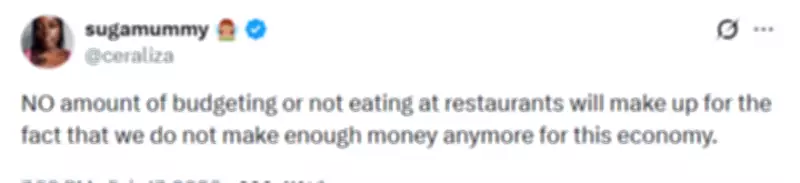
The original post, which quickly went viral, stated: "NO amount of budgeting or not eating at restaurants will make up for the fact that we do not make enough money anymore for this economy." This sentiment resonated widely, drawing numerous reactions from users who shared similar experiences of financial strain.
Many respondents agreed that rising costs for essentials like rent, groceries, and insurance have far outpaced wage increases, making it increasingly difficult for average Nigerians to make ends meet. One user emphasized this point, arguing: "People be actin like a latte is the problem when rent, groceries, and insurance jump like crazy. Budgeting helps with control, but it can’t fix wages not keepin up."
Divergent Views on Consumer Habits and Income
Another user added a critical perspective, noting: "People really be like 'just stop buying coffee and avocado toast' as if the $7 latte is the reason nobody can afford a $2000 one bedroom apartment. You could cut every single unnecessary expense and still be barely surviving because wages haven't kept up with anything in 20 years. The problem was never the spending, it was always the income."
However, not all participants in the debate concurred with this assessment. One counterargument highlighted the role of consumerism in exacerbating financial pressures. This user pointed out: "Partly because we have also become a consumerism dominated economy. People want convenience, convenience cost money. Wants are becoming defined as needs. People don't want roommates, old used cars aren't acceptable anymore, internet and smartphones cost money. Are things more expensive? Yep, we also want more."
Broader Implications for Nigeria's Economic Landscape
The debate underscores a broader tension in Nigeria's economic discourse, where discussions often oscillate between individual responsibility and systemic issues. On one side, proponents argue that stagnant wages and inflation are the core drivers of financial hardship, rendering personal budgeting insufficient. On the other side, critics suggest that changing consumer expectations and spending habits contribute significantly to the cost-of-living crisis.
This online exchange reflects growing public concern over economic conditions in Nigeria, with many citizens feeling the pinch of rising prices and limited income growth. The conversation has sparked calls for more comprehensive solutions that address both income disparities and consumer behavior, highlighting the need for a multifaceted approach to economic challenges.
As the discussion continues to unfold on social media platforms, it serves as a barometer of public sentiment, capturing the frustrations and hopes of Nigerians navigating an increasingly complex economic environment. The viral nature of the post indicates that these issues are top of mind for many, prompting further reflection on the path forward for the nation's economy.




