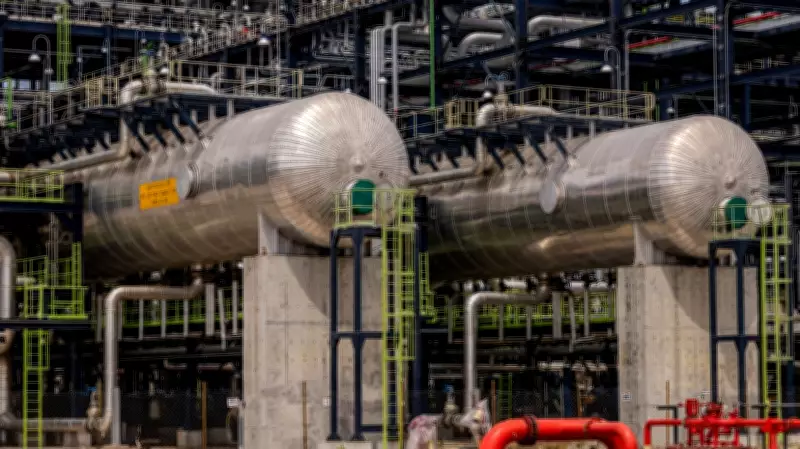
Africa Seeks $120 Billion for Six Dangote-Scale Refineries Amid Energy Crisis
Financial experts and energy stakeholders across Africa are mobilizing to raise approximately $120 billion to construct six refineries on the scale of the Dangote Petroleum and Petrochemicals Refinery in Lagos. This ambitious initiative aims to insulate the continent against rising global supply disruptions and meet growing energy demand, as highlighted during the African Refiners and Distributors Association (ARDA) Week in Cape Town, South Africa.
Addressing Africa's Energy Security Challenges
The stakeholders warned that persistent crude supply constraints, pricing inefficiencies, and financing gaps continue to undermine Africa's energy security. They emphasized that the continent must urgently scale up its refining capacity to avoid deepening dependence on imported petroleum products, despite abundant natural resources. Momoh Oyarekhua, Chairman of OPAC Refineries and founder of OMSA, noted that Africa's refining landscape is evolving, particularly in Nigeria, where private sector participation has grown steadily after decades of state dominance.
"We have many licensed operators within the refining space, including a number of private refineries, ours among them. Other licence holders are at various stages of development, reflecting a gradual transition from government-owned to privately driven refining capacity," Oyarekhua stated.
Global Energy Market Shifts and Coal Resurgence
Meanwhile, disruptions to energy supplies from the Middle East have triggered a resurgence in global coal demand, as countries in Europe and Asia turn to the fuel to secure power amid tightening Liquefied Natural Gas (LNG) markets. According to a report by Wood Mackenzie, constraints on LNG flows through the Strait of Hormuz, a critical global energy chokepoint, have forced utilities and industrial users to switch back to thermal coal, pushing prices sharply higher.
Benchmark coal prices have climbed in recent months, with FOB Newcastle 6,000 kcal/kg coal averaging $126 per tonne in March 2026, rising to around $132 per tonne in recent trades, up from $114 per tonne in February. Other key benchmarks, such as FOB Richards Bay and CIF ARA, have followed a similar upward trend. Sushmita Vazirani, Principal Analyst for Bulk Commodities at Wood Mackenzie, explained that with supply shocks of this scale, coal becomes a critical fallback for energy security, despite global commitments to decarbonization.
Civil Society Demands and Economic Fallout
In response to the crisis, more than 130 civil society organizations (CSOs) have urged global finance ministers attending the International Monetary Fund (IMF) and World Bank spring meetings in Washington, D.C., to push for an end to the ongoing conflict in South West Asia and impose windfall taxes on oil and gas companies benefiting from the situation. The coalition warned that rising energy prices linked to the conflict are worsening global hardship and deepening debt burdens across developing countries, particularly in Africa.
Activists projected the message "No Bombs, No Barrels" on the headquarters of the IMF and World Bank during the meetings, which are taking place amid warnings of a possible global recession. The groups called for governments to redirect profits from energy companies into public services and support for vulnerable households, outlining four key demands:
- A permanent end to the war
- Taxation of fossil fuel windfall profits
- Investment in renewable energy and sustainable agriculture
- Cancellation of debt owed by Global South countries
Oil Sector Profits and Nigeria's Production Recovery
An analysis by The Guardian of the UK, citing data from Rystad Energy, indicates that the world's largest oil and gas companies, alongside major producers such as Saudi Arabia and Russia, could see massive gains if crude prices average $100 per barrel this year. The surge is linked to the ongoing United States-Israeli conflict involving Iran, which has tightened supply expectations and buoyed market sentiment. In the first month of the conflict, the top 100 oil and gas firms reportedly generated over $30 million per hour in paper profits.
Market indicators remain firm, with Brent crude for June delivery rising to $95.60 per barrel, while West Texas Intermediate traded at $91.87. Among the biggest beneficiaries, Saudi Aramco is projected to earn an additional $25.5 billion, followed by Kuwait Petroleum Corporation with $12.1 billion. ExxonMobil and Chevron are also expected to post significant gains of $11 billion and $9.2 billion, respectively.
Meanwhile, Nigeria's oil sector is showing signs of recovery. Data from the Nigerian Upstream Petroleum Regulatory Commission (NUPRC) shows that production rose by 4.2 per cent to 1.546 million barrels per day (mbpd) in March, up from 1.483mbpd in February. Crude output alone increased by 5.2 per cent to 1.382mbpd. Despite the improvement, production remains below the Organisation of the Petroleum Exporting Countries (OPEC) quota of 1.5mbpd and the government's 2026 budget benchmark of 1.84 mbpd.
Petrol Supply Dynamics in Nigeria
Latest data from the Nigerian Midstream and Downstream Petroleum Regulatory Authority (NMDPRA) reveal that total Premium Motor Spirit (PMS) supply declined to 39.5 million litres per day in February 2026, down from 64.9 million litres recorded in January. The 25.4 million litres per day contraction was driven primarily by a significant reduction in import volumes, even as domestic supply, boosted by the Dangote Refinery, remained relatively strong.
A breakdown of the supply structure indicates that local refining contributed 36.5 million litres per day in February, while imports collapsed to just three million litres per day, marking one of the lowest import levels in recent months. This compares with January figures, where domestic supply stood at 40.1 million litres per day alongside 24.6 million litres per day of imports, highlighting the scale of the adjustment in external sourcing.
Osam Iyahen, Senior Director and Head of Infrastructure (Transport & Logistics) at the Africa Finance Corporation (AFC), emphasized that Africa's energy sovereignty requires control of the entire value chain, from upstream production to downstream refining and distribution, ensuring that African resources are processed and consumed within the continent.