
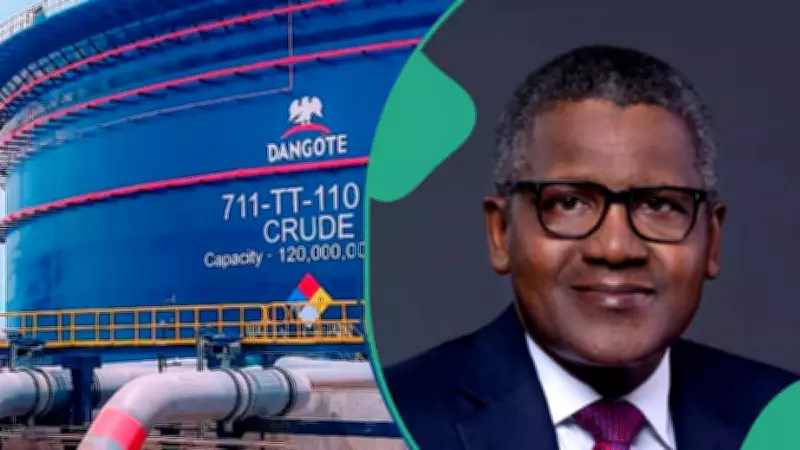
Three African Nations Secure Fuel from Dangote Refinery Amid Global Supply Disruptions
In a significant development for continental energy security, three major African economies are actively pursuing fuel supply agreements with Nigeria's Dangote Petroleum Refinery and Petrochemicals facility. This strategic move comes as geopolitical tensions involving Iran and other Middle Eastern nations continue to create substantial disruptions across global energy markets, forcing governments to seek alternative and more reliable petroleum sources.
African Countries Seek Alternative Fuel Sources
According to detailed reports from Bloomberg, South Africa, Ghana, and Kenya have all initiated formal discussions and inquiries with the Lagos-based Dangote Refinery in recent weeks. These nations are exploring various supply arrangements to cushion their economies against tightening fuel availability worldwide, with energy security taking precedence over pricing considerations in current negotiations.
South Africa is reportedly considering a comprehensive 12-month fuel supply arrangement that would provide substantial petroleum product stability. Meanwhile, Ghana and Kenya have entered preliminary discussions as part of broader governmental efforts to secure stable petroleum supplies for their growing economies and populations.
Industry stakeholders and government officials cited in the Bloomberg report emphasized that the surge in interest toward Dangote Refinery is primarily driven by concerns over fuel availability rather than pricing dynamics. Governments across the continent are prioritizing energy security as uncertainties persist in global oil markets, with traditional supply chains becoming increasingly unreliable.
Middle East Disruptions Reshape Continental Fuel Flows
The renewed scramble for alternative petroleum suppliers follows significant disruptions in global oil and fuel supply chains tied to escalating geopolitical tensions involving the United States, Israel, and Iran. These tensions have substantially affected refined fuel exports from the Middle East, which has historically served as a critical supplier to many African markets.
Data from CITAC, a leading energy consulting firm, reveals that approximately 75 percent of refined fuel imports in eastern and southern Africa originate from Middle Eastern sources. This heavy dependence has increased the continent's vulnerability to external shocks, particularly as refining capacity across several African nations has declined over recent decades.
As supply uncertainties in the Middle East intensify, governments are being forced to fundamentally rethink their petroleum sourcing strategies and strengthen regional supply networks. The Dangote Refinery emerges as a particularly attractive alternative due to its geographical proximity and growing production capacity.
Dangote Refinery Capacity and Strategic Outlook
The Dangote Petroleum Refinery, currently Africa's largest refining facility, boasts an impressive processing capacity of 650,000 barrels per day. Approximately 75 percent of its output is dedicated to domestic consumption within Nigeria, while the remaining volume is available for export to international markets, including neighboring African nations.
In a recent interview with The Economist, industrialist Aliko Dangote noted that current market conditions are being driven more by supply availability concerns than by pricing dynamics, suggesting that this trend toward regional supply security could persist throughout the near term. The facility reached full operational capacity in February 2026, marking a significant milestone in Nigeria's ambitious push to become a net exporter of refined petroleum products.
Looking ahead, expansion plans announced in October 2025 indicate that the refinery could potentially increase its capacity to 1.4 million barrels per day. This substantial expansion would further strengthen Dangote's position as a key supplier to African and global markets, potentially transforming continental energy dynamics.
Regional Energy Security Implications
As supply uncertainties continue to ripple across global energy markets, the Dangote Refinery is rapidly emerging as a strategic hub for fuel distribution within Africa. The facility offers participating countries a geographically closer and potentially more reliable alternative to traditional import sources from the Middle East and other distant regions.
South Africa's government has issued an official statement confirming that it is working with industry players to diversify sources of both crude oil and refined petroleum products. Authorities have also noted that contingency measures have been implemented to manage potential supply disruptions effectively.
Meanwhile, Kenya has indicated that it currently maintains short-term fuel buffers and does not face an immediate shortage, even as it carefully evaluates additional supply options to enhance long-term energy security. This proactive approach reflects a broader continental shift toward reducing dependence on volatile international supply chains.
The growing interest from multiple African nations in Dangote Refinery's output signals a potential transformation in how the continent sources its petroleum products. As global energy markets face ongoing disruptions, regional solutions like the Dangote facility are becoming increasingly vital for maintaining economic stability and energy security across Africa.




