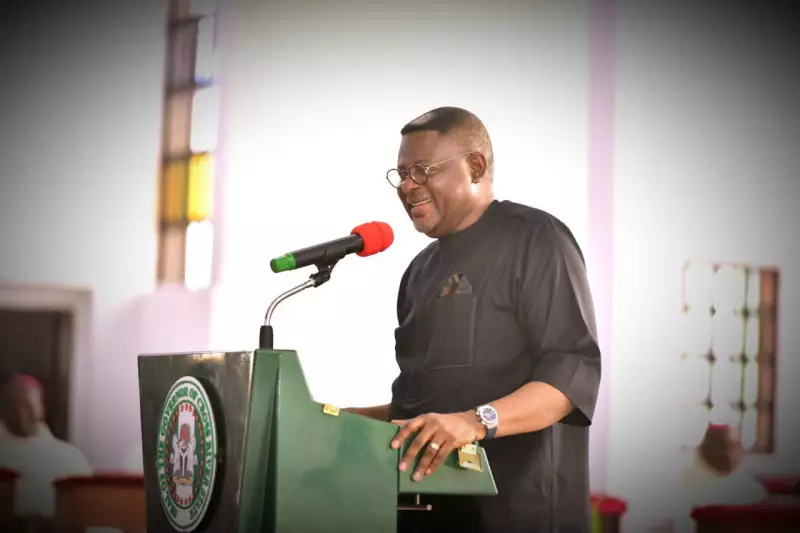
The Cross River State Government has joined forces with the Rural Electrification Agency (REA) in a major push to solve the persistent electricity crisis affecting millions of residents in rural communities across the state.
Critical Power Situation Demands Immediate Action
During a high-level strategic roundtable held in Abuja on Tuesday, Governor Bassey Otu revealed the alarming reality of Cross River's electricity deficit. Only three out of the state's 18 local government areas currently enjoy consistent power supply, leaving the majority of residents and businesses dependent on expensive generators.
Represented by Deputy Governor Peter Agbe Odey, Governor Otu described the energy situation as critical. He highlighted that Ikom, the state's commercial nerve center, has been without public electricity for over six months, while Ogoja has suffered from frequent blackouts and low voltage for years.
"This has severely disrupted businesses, hospitals, and smallholder agro-processing activities across our state," the Governor emphasized during the roundtable themed "Sustainable Impact, Beyond Policies: Powering Cross River State's Blue & Green Economies Through Clean Energy Investments."
Renewable Energy as Economic Catalyst
Governor Otu positioned the partnership as a turning point for Cross River's development, stating that enhanced clean energy infrastructure would unlock the state's vast natural resources while preserving the environment for future generations.
"As Governor, I pledge that the 'People First' administration will continue to support policies and projects that promote sustainable energy access and invite increased investments and partnerships to power our state's economic transformation," Otu declared.
The Governor specifically commended the REA and its partners for successfully delivering the 10-megawatt solar farm at the University of Calabar, a project executed with German government support and private developers. This facility has significantly reduced the university's power bills, enhanced campus safety, and guaranteed steady electricity for research activities.
Data-Driven Approach to Rural Electrification
REA Managing Director, Dr. Abba Aliyu, announced that the agency has completed a comprehensive national geo-spatial mapping exercise that identifies communities without electricity, their population sizes, economic activities, and growth potential if electrified.
"Our analysis tells us how much electricity can catalyse small businesses, how many new micro-enterprises would emerge, how much agricultural processing would expand, and the scale of post-harvest losses we can reduce," Aliyu explained.
He emphasized that electrifying rural areas would boost local GDP, create youth employment opportunities, and enhance the competitiveness of the agricultural value chain, which serves as the backbone of Cross River's rural economy.
Secretary to the State Government, Prof. Anthony Owan-Enoh, described energy as the biggest missing link in Cross River's development journey. "We have the land, the tourism, the agriculture, the culture, the minerals, but without power, these assets cannot reach their full economic meaning," he stated.
Francis Ekpo, Director General of the Cross River State Electrification Agency, confirmed the state's readiness to immediately begin implementation. "We are ready. If developers come tomorrow, we will start tomorrow. Cross River State is open for business," he declared, adding that a steering committee would be constituted to fast-track project engagement with Renewable Energy Service Companies (RESCOs).