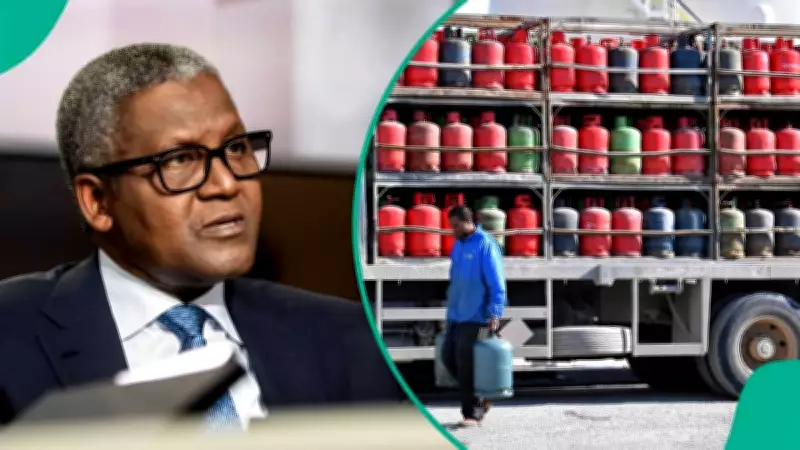
Dangote Refinery Implements Second Cooking Gas Price Hike in Two Days
The Dangote Petroleum Refinery has announced another increase in the price of Liquefied Petroleum Gas, commonly known as cooking gas, marking the second adjustment in less than forty-eight hours. The refinery raised its ex-gantry price from N800 to N825 per kilogram on Monday, following a previous increase from N760 to N800 over the weekend.
Retail Prices Climb Toward N1,000 Per Kilogram
According to the Nigerian Association of Liquefied Petroleum Gas Marketers, retail prices have already surged to approximately N1,000 per kilogram at various outlets across the country. This significant increase reflects the mounting pressure on household energy budgets as marketers prepare to implement further price adjustments in response to rising supply costs.
Damilola Owolabi-Osinusi, the association's Publicity Secretary, confirmed in an interview with The PUNCH that consumers should anticipate additional price increases in the coming days. She emphasized that logistics expenses, including transportation and loading costs, have escalated dramatically, contributing to the widening gap between wholesale and retail prices.
Multiple Factors Driving Price Increases
Industry operators have identified several interconnected factors behind the cooking gas price surge:
- Logistics Challenges: Rising transportation costs linked to higher diesel prices and operational difficulties
- Global Oil Market Trends: Increased crude oil prices directly impact propane and butane costs, key components of LPG
- Supply Chain Issues: Infrastructure gaps and distribution challenges throughout the supply network
- Foreign Exchange Volatility: Currency fluctuations affecting import costs and pricing structures
Despite Nigeria's status as a major natural gas producer, the country remains partially dependent on imports and market-based pricing for LPG. This dependence exposes domestic consumers to global energy market fluctuations and international pricing pressures.
Impact on Households and Clean Energy Goals
The continuous price increases present significant challenges for Nigerian households, particularly in urban and semi-urban areas where cooking gas has become increasingly popular. Many families already struggling with rising food costs now face additional pressure on their energy budgets.
These developments also threaten to undermine the federal government's clean energy transition strategy, which has promoted LPG adoption as an alternative to traditional cooking fuels. Repeated price hikes could reduce affordability and slow the adoption rate among lower-income households.
Marketers have warned that prices may remain elevated unless global crude oil prices decline substantially or the government introduces targeted interventions to address logistics and distribution challenges. The current situation highlights the complex interplay between domestic energy policies, global market forces, and local economic conditions.
Regional Export Activities Continue
Despite domestic price increases, Dangote Refinery continues to expand its regional presence through fuel exports. The facility has shipped twelve cargoes totaling 456,000 tonnes of refined petroleum products to five African countries: Côte d'Ivoire, Cameroon, Tanzania, Ghana, and Togo.
These exports occurred after the refinery reached its full production capacity of 650,000 barrels per day in February 2026. The development comes as many African nations continue to experience fuel shortages and price volatility exacerbated by geopolitical tensions affecting global supply chains.
The current cooking gas price situation illustrates the broader challenges facing Nigeria's energy sector as it balances domestic needs with regional market opportunities while navigating complex global economic conditions.