
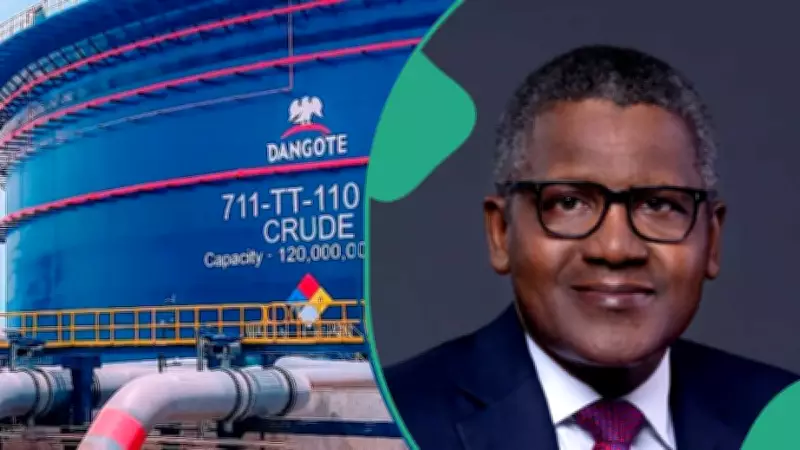
Dangote Refinery Exports Aviation Fuel to UK Amid European Supply Crisis
Nigeria has commenced the export of aviation fuel to Europe as disruptions linked to geopolitical tensions involving the United States and Iran tighten traditional Middle Eastern supplies. A significant shipment from the Dangote Petroleum Refinery has successfully arrived in the United Kingdom, marking a pivotal shift in global energy trade dynamics.
European Buyers Turn to Nigerian Supply
A source at the Dangote Refinery confirmed to PUNCH that European countries are increasingly relying on the Lagos-based facility for jet fuel due to severe supply constraints. This development follows a report by the Financial Times, which highlighted that the last known shipment of jet fuel from the Middle East to the UK is expected soon, raising alarms over potential shortages as the Strait of Hormuz remains blocked.
Industry data indicates that a Nigerian cargo arrived at Milford Haven in the UK on Monday, reflecting a rapid adjustment in global supply chains. According to the source, European buyers have become major off-takers of aviation fuel from the refinery, driven by geopolitical tensions that disrupt conventional supply routes.
Market Adjustments and Price Surges
Market analysts note that the disruption is leading to a rerouting of supply rather than an outright shortage. Matt Stanley, head of market engagement for EMEA and APAC at Kpler, explained that the situation reflects significant adjustments in trade flows and pricing structures.
The UK has historically depended heavily on Middle Eastern imports for jet fuel, sourcing approximately half of its needs from the region in recent months. However, the current crisis has compelled buyers to seek alternative suppliers, including West Africa and the United States.
Data from Argus Media reveals that benchmark north-west European jet fuel prices have surged to about $1,744 per tonne, nearly double pre-crisis levels. Europe typically sources around 40 percent of its jet fuel through the Strait of Hormuz, making this disruption a substantial shock to the supply chain.
Dangote Refinery's Expanding Role
This shift underscores the increasing prominence of West African refiners in the global energy market, with the Dangote Refinery at the forefront. Aliko Dangote, President of the Dangote Group, stated in an interview with Al Jazeera that demand for aviation fuel has escalated sharply.
He emphasized that the refinery is nearing the exhaustion of its jet fuel and diesel supplies due to high demand, while petrol remains in surplus. "The demand is so high... we have almost sold out our jet fuel," Dangote remarked, highlighting the refinery's critical role in meeting international needs.
Potential Impacts and Future Outlook
Consultants warn that airlines could begin to experience the effects of these supply constraints by the end of April if the situation persists. Janiv Shah, vice-president of oil markets at Rystad Energy, cautioned that fuel shortages could emerge in some countries, with higher costs expected to ripple across the aviation sector.
Despite the pressure on supply, the UK government affirmed that it continues to receive shipments from various countries, including India, the United States, and the Netherlands. The arrival of Nigerian cargoes emphasizes the growing importance of alternative suppliers as Europe adapts to ongoing disruptions in traditional energy routes.
Broader Implications for Nigeria
In a related development, the Dangote Refinery has reportedly threatened to fully supply the international market and deny Nigerians fuel if Nigerian authorities continue to grant import licences to importers. Sources within the mega refinery disclosed that management is considering exporting all petroleum products in response to the continued issuance of petrol import licences, despite official claims to the contrary.
Experts warn that such a move could lead to fuel shortages and renewed price hikes in Nigeria's downstream petroleum market, underscoring the complex interplay between domestic needs and global export opportunities.




