
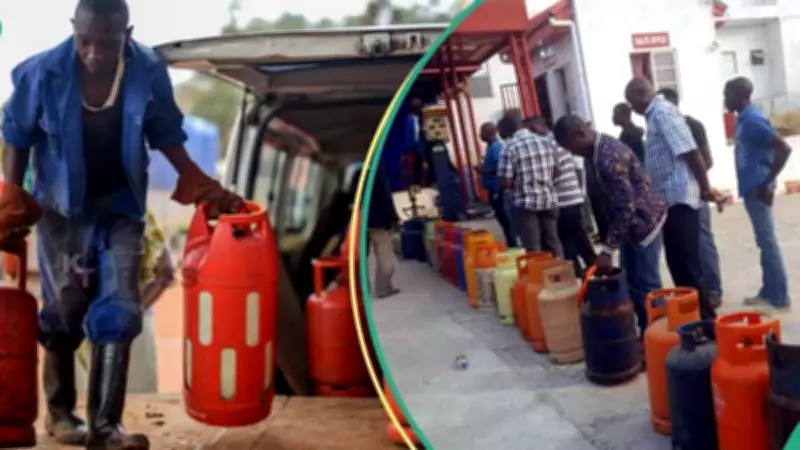
Dangote Refinery Cuts Cooking Gas Price to N760/kg Amid Nationwide LPG Decline
The price of liquefied petroleum gas (LPG), commonly known as cooking gas, has continued to decline across Nigeria, with the Dangote Refinery leading the latest reduction. Fresh market data reveals that Dangote Refinery has slashed its ex-depot price to N760 per kilogram, while other private depot operators now sell at an average of N800 per kilogram.
LPG Records Sharpest Drop Since January 2026
This development marks one of the most significant price drops recorded in recent months. Cooking gas prices have maintained a downward trend since January 2026, following a sharp decline in imports and a rise in domestic supply. Industry players attribute the fall to improved foreign exchange stability and increased local production capacity.
According to data from PetroleumPriceNG, the refinery's new rate has intensified competition among depot owners and retailers nationwide. The strengthening of the naira and improved access to foreign exchange for importers have also contributed to the steady decline in prices. Exchange rate stability has reduced landing costs for imported LPG, while increased local refining capacity has eased supply pressure.
Retailers Crash LPG Prices in Competitive Market
While depot prices average between N760 and N800 per kilogram, major retail outlets such as Gasland currently sell at around N950 per kilogram, reflecting distribution and operating costs. Retailers who spoke confirmed that the market has become more competitive since the beginning of the year.
John Otu, a dealer in the Iju area of Lagos, explained that prices began easing in early January. "We started noticing a drop in prices from early January. Unlike before, retailers can now access the product more easily," he said. He added that improved availability has eliminated the long queues previously seen at major supply points.
Another dealer, Solomon Olarenwaju, said intense competition among retailers has further pushed prices downward. "The competition has gotten fierce, and pricing is now the main strategy to attract customers," Olarenwaju noted. According to him, profit margins have narrowed significantly as dealers struggle to balance affordability with sustainability.
Experts Predict Further Drops and Relief for Consumers
Analysts predict that if current trends continue, cooking gas prices could drop further in the coming months. However, they caution that global energy market fluctuations and logistics costs remain key factors that could influence future pricing.
For millions of Nigerian households, the price crash offers much-needed relief. Over the past year, many families have turned to firewood and charcoal as alternatives due to soaring LPG prices. The renewed affordability of cooking gas is expected to ease financial pressure on homes and encourage a shift back to cleaner energy sources.
With supply improving and competition intensifying, consumers across the country are beginning to feel the impact of a more stable and better-supplied LPG market. New data from the Nigerian Midstream and Downstream Petroleum Regulatory Authority (NMDPRA) indicate that increased product inflows into local depots have stabilised availability across key markets, reversing the severe shortages that drove prices as high as N1,800 per kg in September 2025.
In its January report, the NMDPRA disclosed that Nigeria currently has about 18 days of national LPG sufficiency, reflecting improved stock levels nationwide. This development, coupled with Dangote Refinery's price cut, signals a positive shift for Nigeria's energy sector and household budgets.




