
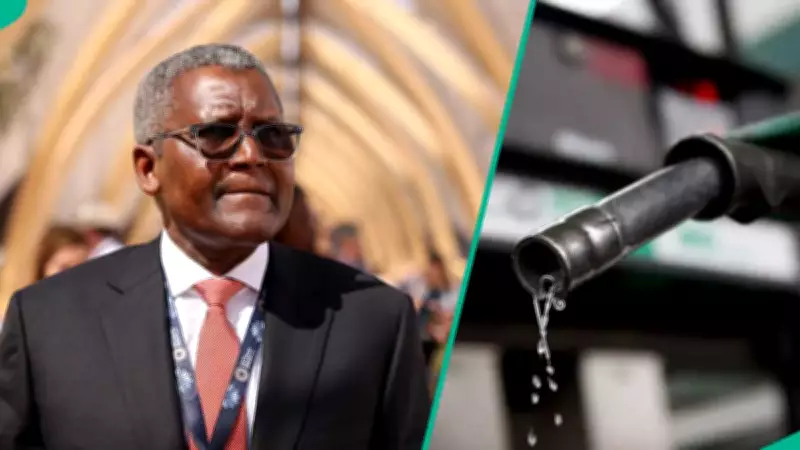
Dangote Issues Stark Warning on Potential Petrol Price Increases
Aliko Dangote, Africa's wealthiest industrialist, has expressed serious concerns about the recent surge in petrol prices across Nigeria and warned that further increases could be imminent. The billionaire businessman cautioned that if global energy market volatility and ongoing geopolitical tensions continue unabated, Nigerian consumers could face even higher fuel costs in the coming weeks.
Global Factors Driving Price Pressures
Dangote specifically pointed to several international factors that could exacerbate the current situation. Geopolitical tensions, particularly conflicts involving major energy producers, along with supply chain disruptions and rising production costs are creating perfect storm conditions for continued price escalation. "If this situation doesn't de-escalate, we will end up paying high prices," Dangote stated emphatically during recent comments.
The industrialist emphasized that energy costs influence nearly every sector of the economy, making this issue particularly critical for Nigeria's economic stability. He noted that transport, manufacturing, and small businesses would be among the hardest hit by any additional price increases, with low-income earners and informal workers being especially vulnerable to economic hardship.
Meeting with President Tinubu
Dangote made these remarks following a meeting with President Bola Tinubu in Abuja on Monday, March 23. While the primary purpose of the visit was to exchange Eid Mubarak greetings and pay respects, the discussion also touched on broader economic matters. Dangote praised recent international engagements by Nigeria's leadership, noting they were improving investor confidence in the country's economic prospects.
"The world saw how he was received in the UK," Dangote commented regarding President Tinubu's diplomatic efforts. "Part of what he said he had to do was open the ways for business investors across borders." The billionaire specifically mentioned a reported £746 million infrastructure financing deal as evidence of growing international confidence in Nigeria's economy, particularly in ports and infrastructure development.
Recent Price Adjustments at Dangote Refinery
In a related development, Dangote Petroleum Refinery has recently implemented two consecutive price increases for petrol at its gantries. Within just 24 hours, the refinery raised prices from N1,245 to N1,275 per litre, marking its second adjustment in a brief period. This follows an earlier increase that had already pushed prices upward.
These refinery adjustments mirror broader trends in Nigeria's fuel market. The Nigerian National Petroleum Company Limited (NNPCL) has similarly increased petrol prices across its retail outlets, with pump prices rising from N1,230 to N1,330 per litre in Lagos and from N1,260 to N1,361 per litre in Abuja. Surveys indicate new prices of N1,335 per litre in Anambra and N1,330 per litre in Borno, reflecting nationwide adjustments.
Broader Economic Implications
Dangote warned that rising fuel costs could significantly deepen economic hardship, particularly affecting households and informal sector workers who operate on tight margins. "If people don't work that day, they won't eat," he noted starkly, highlighting the direct connection between transportation costs and daily livelihoods for millions of Nigerians.
The industrialist called for increased global cooperation to stabilize energy markets, stressing that prolonged instability could intensify inflationary pressures and widen economic strain across Africa. He emphasized that Nigeria's import-dependent economy remains particularly vulnerable to external shocks in the energy sector, making market stabilization efforts critically important for the country's economic wellbeing.
Dangote concluded by reiterating that while international investment confidence in Nigeria is growing, as evidenced by recent financing agreements, the country must remain vigilant about global energy market dynamics that could undermine economic progress and increase hardship for ordinary citizens.




