
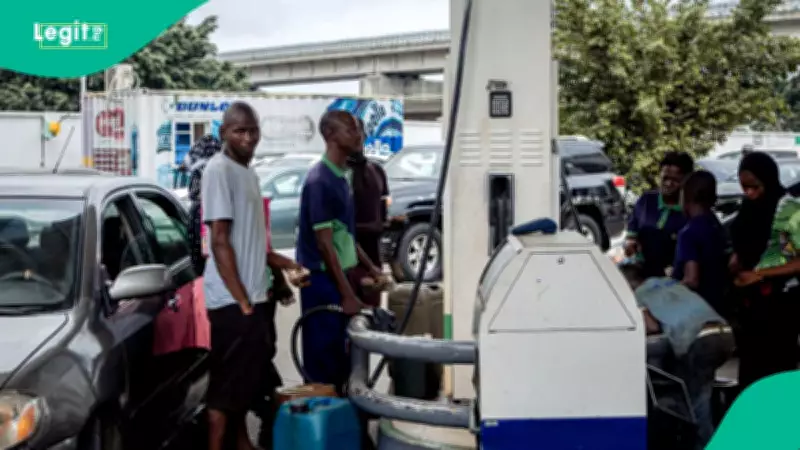
Nigeria's Fuel Price War Intensifies as Depot Owners Cut Rates to Compete with Dangote Refinery
Nigeria's downstream petroleum sector is embroiled in an escalating price war, with depot owners aggressively slashing petrol prices to rival the Dangote Refinery. This fierce competition follows recent reductions by the Lekki-based refinery, triggering a chain reaction that is reshaping the nation's fuel supply dynamics.
Depot Operators Join the Fray with Strategic Price Cuts
In response to Dangote Refinery's price reduction to N744 per litre, depot owners have swiftly adjusted their gantry rates to remain competitive. Data from PetroleumPriceNG reveals that several operators have lowered prices to approximately N780 per litre, just N4 above the refinery's offering.
Key players making adjustments include:
- Eterna Oil reducing to N788 per litre
- Fatgbems cutting to N788 per litre
- Bono and Emadeb matching at N788 per litre
These coordinated reductions reflect mounting pressure on depot owners who must now compete directly with Africa's largest refinery, which has rapidly transformed Nigeria's fuel supply chain.
Dangote's Market Dominance and Competitive Edge
Industry analysts highlight the refinery's commanding position in the downstream sector. Energy analyst Adeola Yusuf notes that Dangote currently controls roughly half of the market share and dominates distribution channels.
The refinery's integrated structure, access to crude supply, and large-scale refining capacity enable it to operate at lower costs compared to import-dependent competitors. This advantage allows Dangote to respond quickly to market shifts and sustain competitive pricing strategies.
Consumers Emerge as Primary Beneficiaries
While operators battle for market dominance, Nigerian consumers stand to gain significantly from the ongoing rivalry. The cascading price cuts at depot levels are gradually filtering down to retail stations, easing pump prices across various locations.
Market watchers believe sustained competition could usher in a new era of price stability and transparency in Nigeria's fuel market. However, some caution that prolonged undercutting may squeeze profit margins and potentially force weaker operators out of business.
Importers' Role in Escalating Competition
The current price war intensified after fuel importers lowered their own prices amid reports that Dangote Refinery's petrol production unit was undergoing maintenance. Shortly after marketers reviewed their rates downward, the refinery responded with another price slash, accusing importers of attempting to destabilize its operations through aggressive pricing tactics.
This back-and-forth reduction strategy has escalated into a full-scale price war, with imported premium motor spirit (PMS) emerging cheaper than petrol produced by Dangote Refinery. According to the Major Energies Marketers Association of Nigeria (MEMAN), the average landing cost of imported petrol stood at N721.80 per litre in February 2026, significantly lower than the refinery's N799 per litre gantry price at that time.
Market Implications and Future Outlook
The petrol price war shows no immediate signs of cooling, with Dangote Refinery defending its market foothold and depot owners determined not to lose ground. The downstream sector remains in a state of strategic recalibration as pricing strategies continue to evolve.
Industry observers suggest the coming weeks will determine whether this intense competition results in long-term market balance or deeper structural shifts within Nigeria's petroleum industry. The ongoing rivalry between depot owners and the Dangote Refinery represents a significant transformation in how fuel pricing and distribution operate in Africa's largest economy.




