
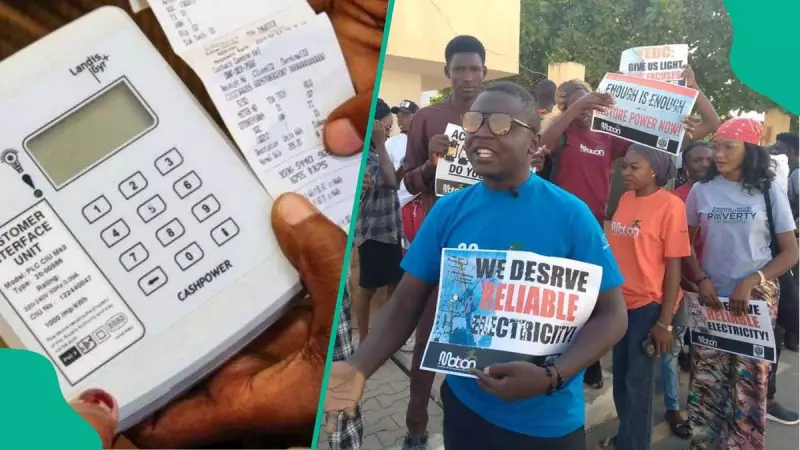
Nigerians Protest as DisCos Fail to Meet Promised Electricity Hours Despite Tariff Hikes
Published 25 Jan 2026 at 12:35 PM by Victor Enengedi
Nigerians across major urban centers are expressing mounting frustration and anger as electricity distribution companies (DisCos) continue to fall short of delivering the minimum supply hours mandated by the Nigerian Electricity Regulatory Commission (NERC). This widespread discontent comes despite consumers, particularly those on higher tariff bands who are entitled to longer daily electricity supply, reporting significantly reduced power availability in recent months.
Service-Based Tariff System Under Scrutiny
The Service-Based Tariff (SBT) framework, introduced by NERC in 2020, categorizes electricity customers into Bands A through E. Under this system, Band A subscribers are entitled to at least 20 hours of electricity daily, while those in Band E should receive a minimum of four hours. However, numerous consumers nationwide claim that actual supply has plummeted well below these established benchmarks, with many experiencing prolonged and frequent blackouts that disrupt daily life and business operations.
Consumer Complaints and Grid Challenges
In Lagos, a resident identified as Jude reported receiving fewer than 10 hours of electricity per day since November 2025, despite being classified under a higher tariff band. Similar grievances have emerged from various regions, with customers on lower bands enduring even more extensive outages. These complaints coincide with a period of weak national grid performance, where available electricity generation reportedly hovered around 3,617 megawatts—significantly below Nigeria's estimated power demand.
The Abuja Electricity Distribution Company (AEDC) issued an apology, attributing supply disruptions to system limitations and assuring customers of efforts to restore stability. Nevertheless, many consumers and civil society voices have rejected this explanation, describing the situation as intentional and inequitable. They argue that customers are paying increased tariffs without receiving the promised level of service, leading to calls for stricter enforcement and accountability.
Regulatory Warnings and Government Assurance
The Nigeria National Grid, in a statement shared on social media, reaffirmed that Band A customers are legally entitled to no fewer than 20 hours of power daily and warned that DisCos risk sanctions for non-compliance. In cities like Awka, residents have questioned why they are billed at Band A rates despite frequent outages, highlighting the negative impact on local businesses and everyday activities.
As dissatisfaction builds, stakeholders are urging NERC to tighten enforcement and hold DisCos accountable, insisting that service-based tariffs must translate into consistent and reliable electricity for consumers. Meanwhile, Adebayo Adelabu, Nigeria's Minister of Power, assured citizens that the federal government is committed to providing a reliable and sustainable power supply across the nation. During a recent visit to the Niger Delta Power Holding Company's Calabar power plant in Cross River State, Adelabu emphasized ongoing efforts to enhance the electricity sector through collaboration with relevant stakeholders.
This situation underscores the growing tension between electricity consumers and distribution companies, with many Nigerians demanding tangible improvements in power supply to match the higher tariffs they are now required to pay.




